
Man Finds Late Father’s Corvette On KSL Classifieds

CLEARFIELD, Utah – A discovery on KSL Classifieds led to a family reunion of sorts for one Utah man.
Nic Samuels, who collects cars, thought his father’s 1980 Chevrolet Corvette was gone forever.
His father, Michael Samuels, sold it while Nic was serving overseas in the U.S. Air Force 10 years ago.
“I honestly thought I would never find it, it was just kind of high hopes and wishful thinking,” Samuels said. “Spur of the moment — at the time I just kind of felt like hopping on and taking a look. And little do you know. I didn’t even go to the second page. It was like the fourth one in.”
He popped the hood to verify it was his father’s car and was overcome with emotion when he saw his parents’ initials.

“He was diagnosed to live six months, and he lived like eight years with his cancer,” Samuels said.Old Row Nature Walk Pocket Tee – Maroon / XLOld Row Nature Walk Pocket TeeAd by Old RowSee More
His father died in 2014. Never did he think he would say hello to this car again, buying it to bring it back home.
“Kind of feel like he is there with me,” Samuels said.

For the man who loves to fix things, finding this car is in a sense, fixing him.
“Life’s not permanent,” he said. “Appreciate what you have while it is there. Enjoy the little things.”
Success Rate “Speaks Volumes” for New Corvette C8.R

Corvette Racing carries momentum to collect 101st victory in IMSA competition…

Corvette Racing’s second win in only the third IMSA WeatherTech SportsCar Championship race this season “speaks volumes” for the new Chevrolet Corvette C8.R according to Jordan Taylor.
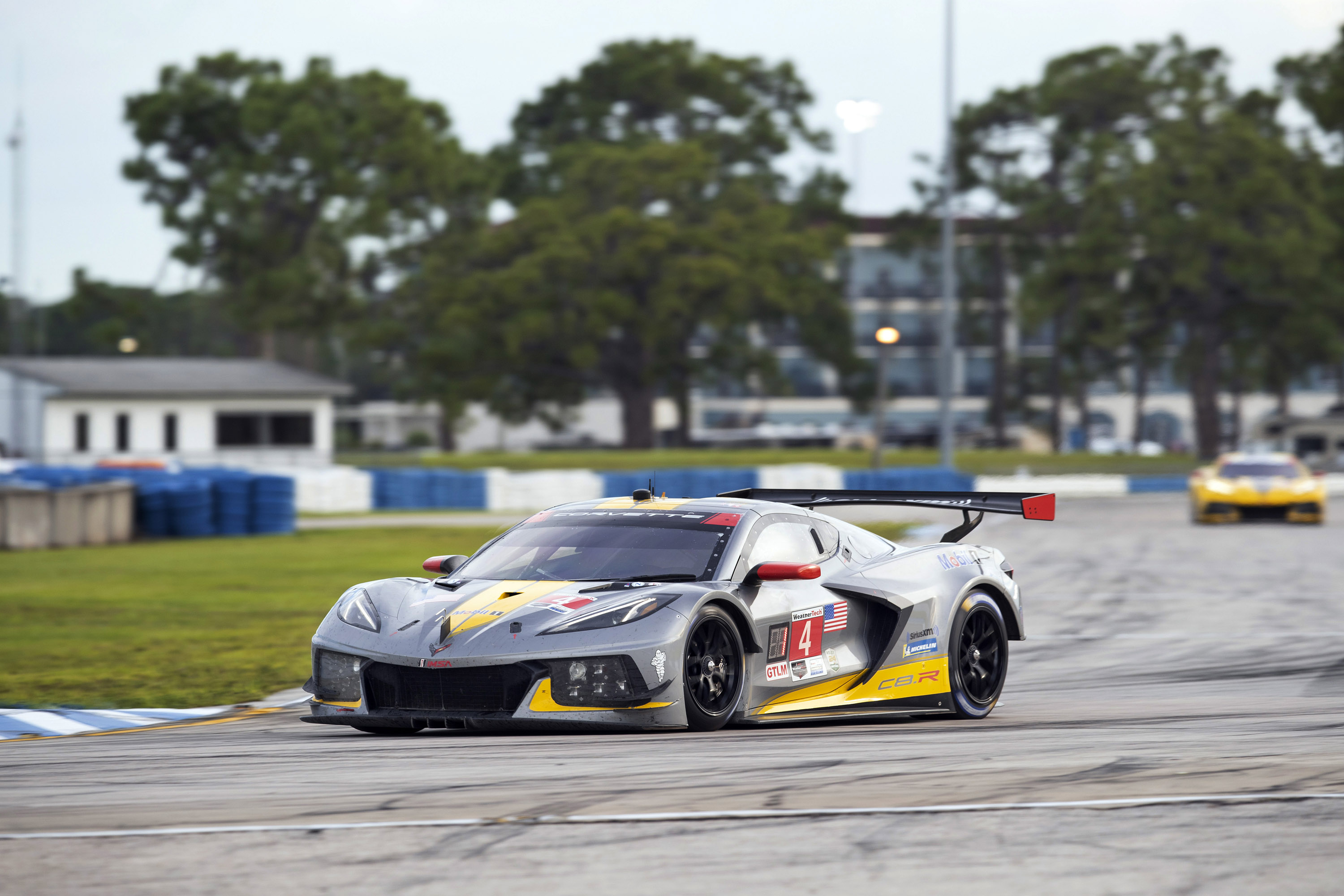
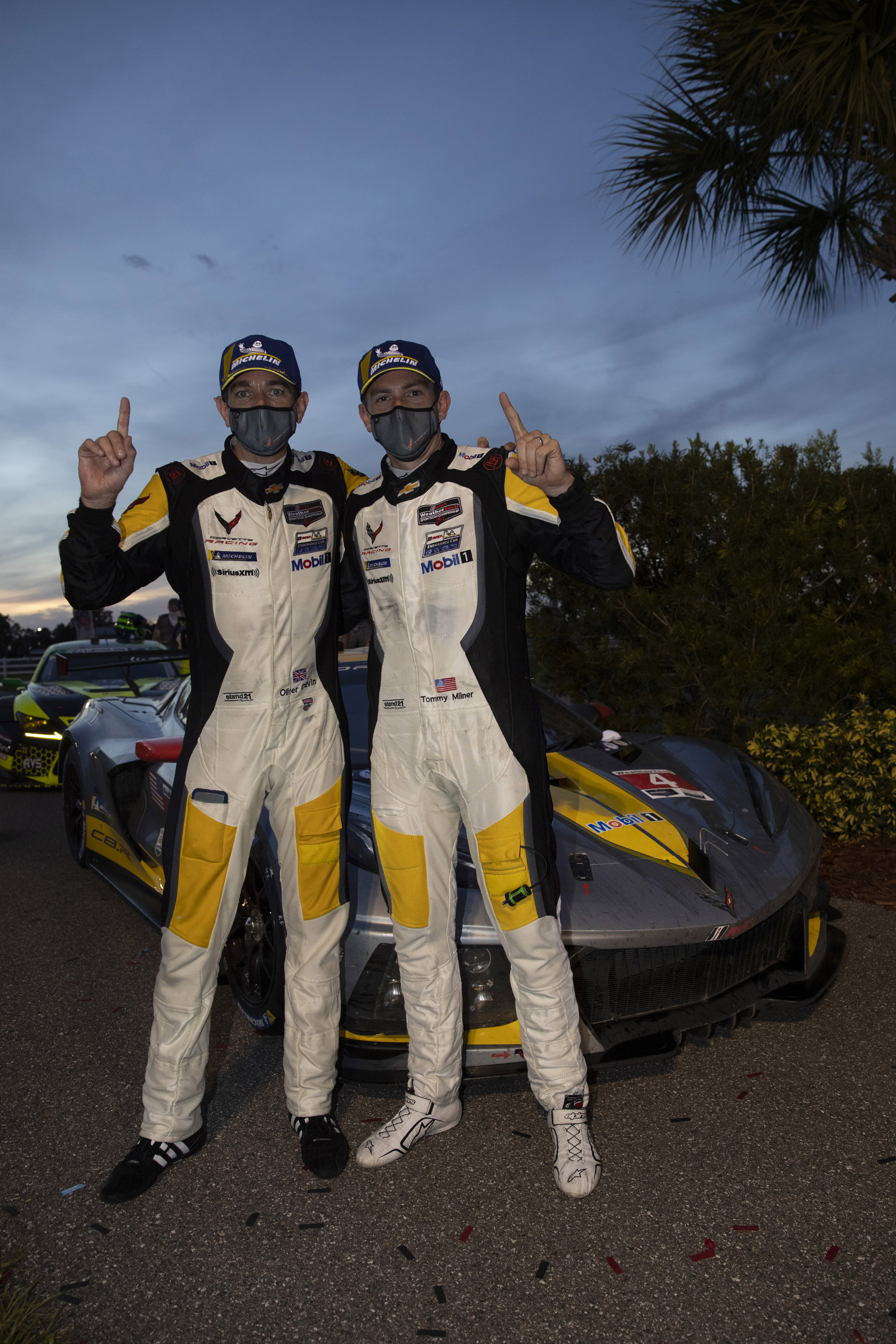
The No. 4 entry of Tommy Milner and Oliver Gavin led home a 1-2 finish for Corvette at the Cadillac Grand Prix of Sebring, marking the team’s first sweep since Lime Rock Park in 2016.
It gave the Pratt & Miller-run factory GT Le Mans squad its 101st victory in IMSA competition after notching up the century last time out at Daytona.
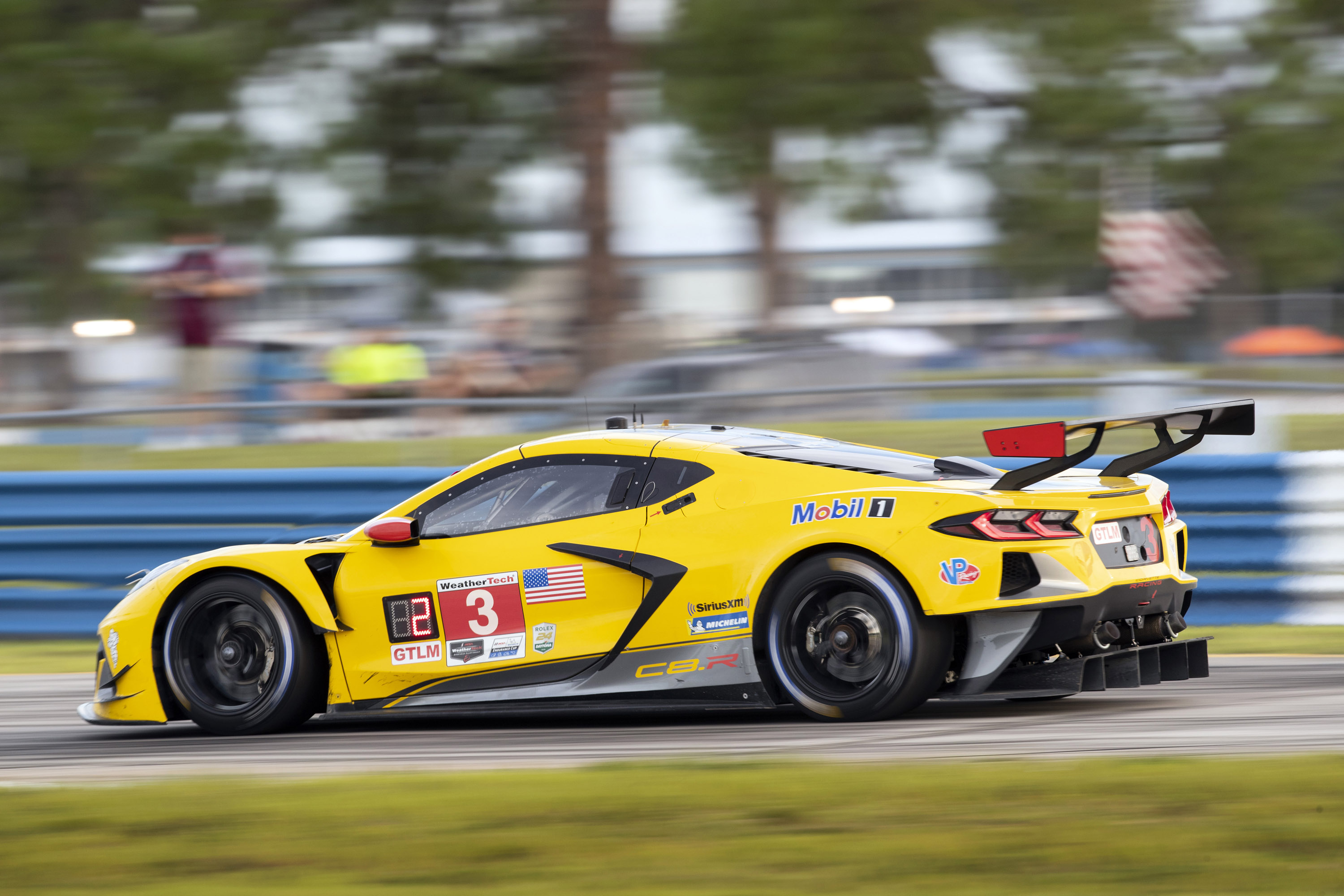
Milner led home the sister car of Antonio Garcia by less than five-tenths of a second but says the final laps were not as easy as it looked.
“I know it took us a while to get to 100 but it’s nice to get over the hump and get 101 so you’re not talking about that one,” he said.
“Today was all about strategy, all about not making mistakes. It looked like we were going to have a pretty good race there with the Porsche. It was all pretty close but then it fell apart as far as that goes.
“In the end, it was just left to myself and Antonio and Olly and Jordan there to put on a show a little bit there.
“Olly really made the race for us there saving fuel and that allowed us to have a bit of a better pit stop and get out in front of the No. 3 car and that was the race for us.
“It got pretty close there at the end, he was close but he was a little bit nicer to me than he could have been.”
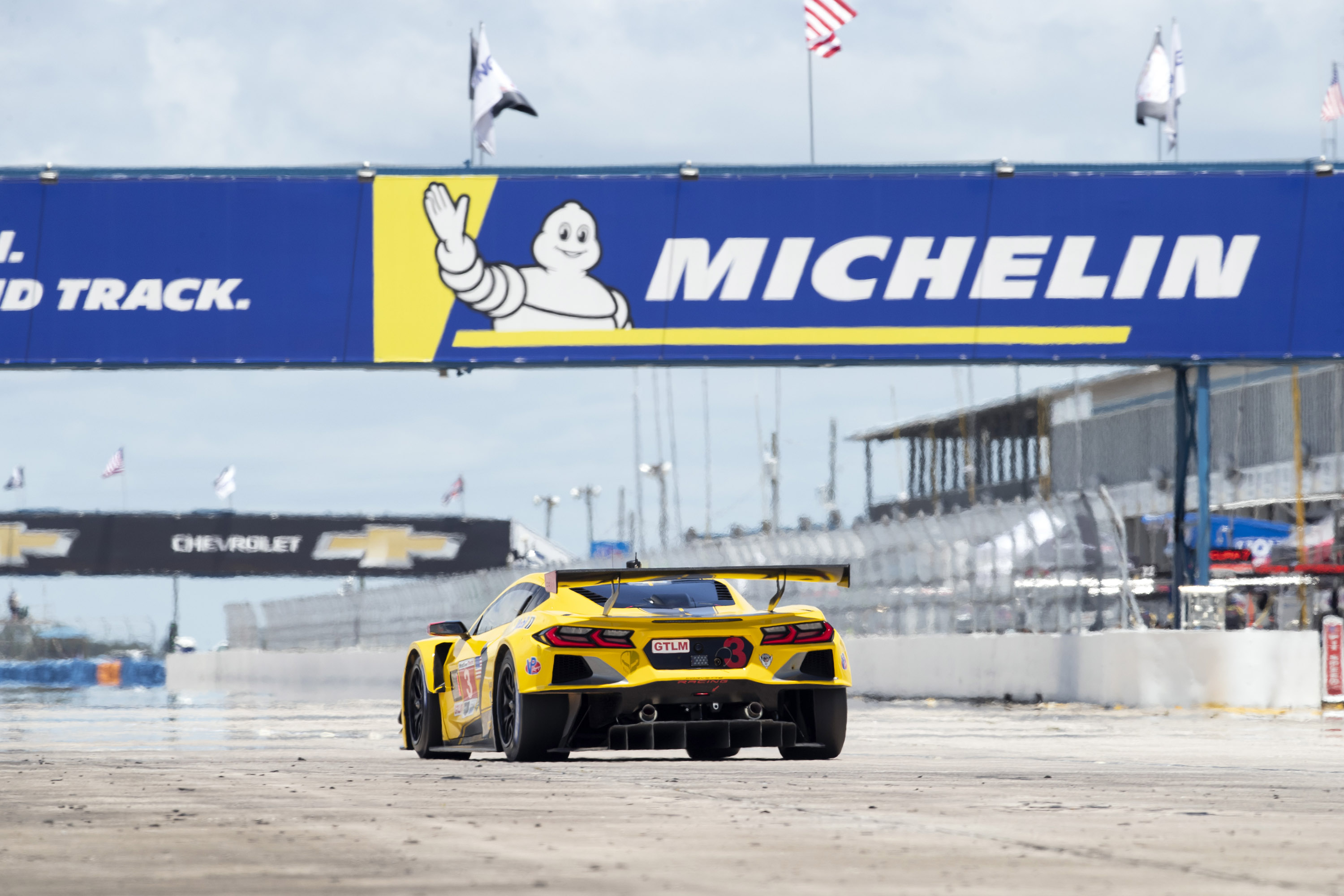
Co-driver of the second-placed No. 3 Corvette, Taylor, was pleased with the team’s double podium.
“It’s a great day for Corvette Racing,” he said. “It’s our third race and to get two wins, our first 1-2 since 2016, I think it speaks volumes for the team and this new C8.R.”
Porsche Incident Spoiled Potentially Close GTLM Race
While Corvette’s run was without trouble, the same could not be said for the factory Porsche 911 RSR-19s, with both the Nos. 911 and 912 car’s chances of victory being dashed in seconds.
The pair came together in the first round of pit stops which resulted in the No. 912 losing its nose and the No. 911 suffering a puncture from the contact a few laps later.
Laurens Vanthoor and Earl Bamber impressively recovered to third in the No. 912 Porsche. However, Milner believes the race would have been closer had the Porsches not collided.
“It was looking like it was going to be very close pace-wise and everything,” he said.
“You saw in the pit stop as well we came in together and we were going to leave together. In terms of strategy details, it looked like it was going to be a close race, fuel numbers, tires whatever it was.
“They’ve been fast all season and continue to be quite quick so for sure we have some work to do to find an advantage somewhere if we can and ultimately not make mistakes throughout the race.
“We saw today how one little mistake can ruin your race. We just need to be extra vigilant, no pit lane incidents like that. All those little details that aren’t quite sexy in some way but make the race for you in the end.”
Gavin was on pit road in the fast lane and was caught up in the incident but did not sustain any damage.
“I didn’t know anything about it. I just saw one of the Porsches left missing its front bumper,” he said. “I think it was all of us trying to leave together and there just wasn’t enough room.
“I was already in the lane so when it’s like that I have priority.”
Slade Perrins for Sportscar 365
Chevy Teaser Video Hints At Something Colorful For The 2021 Corvette

The Gulf livery’s iconic colors make an appearance.

We’re quickly approaching the first anniversary of Chevy’s introduction of the 2020 Corvette C8, which happened on July 18. Now, less than two weeks ahead of that date, the Chevy Corvette’s official Facebook page shared a short, 14-second teaser video that hints at something new for the Corvette for the 2021 model year.
The post says, “It’s time to earn some new racing stripes,” while the quick-hitting teaser hints at what Chevy is “Adding to the [Corvette’s] legacy.” However, we have no idea what that means exactly. The teaser shows off some stylized Corvette footage with colored stripes crisscrossing the video. There are also four overhead shots of striped Corvettes that flash on the screen. Two are black, one with a pair of red stripes while the other has yellow ones. There’s a blue-on-white one, and another that mimics the iconic blue-and-orange Gulf livery.
For as much fanfare as the 2020 Corvette created, the Stingray model the automaker introduced was just the beginning. We expect Chevy to add more high-performance models to the Corvette lineup, like the Z06. But we don’t think Chevy is ready to reveal that top-tier model just yet. Instead, we’d bet that Chevy is planning to introduce a new appearance package, or packages, that help enhance the car’s appearance. It could be similar to the Competition Sport package Chevy introduced for the 2009 Corvette C6.
We know for sure that Chevy still has a ton of Corvette excitement to reveal going forward. Fans are eagerly awaiting the next Z06, and the numerous spy photos and videos don’t help. We know it should pack a 5.5-liter flat-plane crank V8 that’ll leapfrog the Stingray in power, performance, and price. We don’t expect that model to arrive until the 2022 model year, so until then, we can look forward to Chevy’s latest, which the automaker should reveal soon.
Source: Chevrolet Corvette / Facebook
GM reveals price, features of 2021 Corvette Stingray, including two new colors

General Motors said Wednesday it will keep the price of its 2021 Chevrolet Corvette Stingray the same as the introductory 2020 model.
The 2021 Corvette, which goes on sale late in the fourth quarter, will start at $59,995, matching this year’s model, which is about a $4,000 increase over the 2019 Corvette. Comparatively, the mid-engine Porsche 718 Cayman starts at $61,250. All prices include destination charges.
There will also be some new content in the 2021 model, GM said.
“Our mission was to develop a new sports car, combining the successful attributes of Corvette with the performance and driving experience of mid-engine supercars,” said Tadge Juechter, Corvette executive chief engineer. “We are thrilled with the enthusiasm the mid-engine Corvette brought following its launch and are keeping it fresh with new content for the 2021 model.”

Here is what will be new on the 2021 Corvette:
- Magnetic Selective Ride Control suspension, which is new for non-Z51 models.
- Standard wireless Apple CarPlay/wireless Android auto
- Red Mist Metallic Tintcoat exterior color
- Silver Flare Metallic exterior color
- Sky Cool Gray/Yellow Strike interior color
- New full-length dual racing stripe package colors: blue, orange, red and yellow
- Stinger Stripes in three colors: Carbon Flash/Edge Red, Carbon Flash/Edge Yellow and Carbon Flash/Midnight Silver
- Driver mode on-screen visualization and new track digital tachometer
- Standard Buckle To Drive, a safety technology that, when active, can prevent the driver from shifting the vehicle out of park if the driver’s seat belt is not buckled for up to 20 seconds
GM will also offer on the next-generation car Chevrolet’s first eight-speed dual-clutch transmission to allow for faster shifting and more power.
Here are some other engine features on the 2021 model:
- Engine: 6.2-liter LT2 V-8 with direct injection, variable valve timing and active fuel management
- Transmission: eight-speed dual-clutch with manual and automatic modes
- Six modes of Driver Mode Selector — Tour, Sport, Track, Weather, and MyMode and Z Mode customizable modes
- Brakes: four-wheel antilock, four-wheel disc, four-piston calipers (12.6-inch front rotors, 13.3-inch rear rotors)
- NEW: Available Magnetic Selective Ride Control suspension. It reads the road better, providing more precise data.
- Available Z51 Performance Package: brakes, suspension, exhaust among other features
- Z51 Performance with Magnetic Selective Ride Control, includes Performance Traction Management
- Front lift: adjustable height with memory
Jamie L. LaReau Detroit Free Press
‘Murica! Corvette Racing Scores 100th IMSA Win – And First for C8.R – On July 4


Corvette Racing’s 100th victory in IMSA competition has been coming for more than two years. The last one came in the Acura Grand Prix of Long Beach in April 2018.
Tonight, the iconic American sports car team’s drought finally ended, appropriately enough, on the Fourth of July at Daytona International Speedway. Antonio Garcia and Jordan Taylor will go down in the history books as the driver pairing to deliver the milestone victory – also the first for the revolutionary, midengined C8.R race car – in the No. 3 Velocity Yellow machine.
Fuel strategy was the name of the game in the GT Le Mans (GTLM) class tonight at Daytona. And while every car in the class led at one point or another throughout the evening, it was the No. 3 team that hit the strategy just right.

Garcia won the high-speed game of musical chairs by 1.977 seconds ahead of defending WeatherTech Championship GTLM champion Earl Bamber in the No. 912 Porsche GT Team 911 RSR-19.
“The engineers spotted very early how close we’d have been with fuel and how early we should start working on that,” Garcia said. “Jordan did a great job and saved a lot there and I saved another one. We didn’t know about the 912. We didn’t know if they could make it or if we were fighting them and the 911.
“We were expecting the Porsche to follow the 4 car (Tommy Milner and Oliver Gavin), but we realized it was a fight. As soon as I had an opportunity early in the stint when I knew my tires were good, I waited for Earl to make a little mistake, and because I was able to follow very close I took advantage of that position. After that I worked my way through traffic really, really well.”
It was Taylor’s first GTLM win after moving from his father’s Wayne Taylor Racing Cadillac DPi team to the Corvette factory program this season. The significance of the Independence Day victory wasn’t lost on him either.
“It’s obviously very special,” Taylor said. “I was Antonio’s third driver for so many years and we finished second at Sebring, and Petit and Le Mans, and had so many podiums. It’s great to finally get a win with Antonio. And to get a win on the Fourth of July in an American car and being an American driver is pretty sweet.”


Bamber and co-driver Laurens Vanthoor finished second, matching their result from January’s Rolex 24 At Daytona. The same can be said for No. 911 Porsche co-drivers Nick Tandy and Frederic Makowiecki, who claimed their second straight third-place trophies in Daytona’s Victory Lane.
The Corvette Assembly Plant Has 10 Truckloads of 2020 Corvettes Ready to Ship


A member of the MidEngineCorvetteForum.com is offering even more proof that Corvette production has returned pretty much back to normal by sharing Saturdays shipping manifests of new 2020 Corvette Stingrays headed to dealerships. Each Jack Cooper Transporter can hold a maximum of 10 new C8 Corvettes and so this batch of 10 transports contains just under 100 cars which is nearly identical to one shift’s production totals.
From the printouts we see the VIN sequence numbers range from #805 to #4126 which was just completed last week. The cars are sorted by destination and the trucks will soon be headed to Texas, Oklahoma, Florida, South Carolina, and Maryland. The NCM is receiving two trucks and one load will be headed north to Canada.


There are going to be some very happy Corvette owners next week! If one of these is yours, let us know in the comments below!
To find the shipping status of your 2020 Corvette, go to https://www.palsapp.com/, then click on the search icon on the top right of the page (looks like a magnifying glass). Enter your VIN and click the search icon to the right of the input field.
Source:
MidEngineCorvetteForum.com
General Motors, Honda Producing 12,000 Gallons Of Hand Sanitizer


Sponsored Links
General Motors and Honda have announced they will produce around 12,000 gallons of hand sanitizer that will be provided to workers at their respective production facilities.
The hand sanitizer is being produced by both companies through their joint Fuel Cell System Manufacturing (FCSM) partnership. The hand sanitizer is being made at the Brownstown, Michigan facility where the GM-Honda FCSM team has been working on to develop fuel-cell fuel stacks for the next generation of hydrogen-powered road cars. Honda says the sanitizer is made using an “apparatus designed to manufacture the electrodes used in the fuel cells,” that was repurposed.

“It is inspiring to see how the automotive industry continues to find new and innovative ways to help society during this crisis,” said Honda North America general counsel Cathy McEvilly. “The commitment shown by Honda associates and their counterparts at GM is a source of pride to us and we are happy to provide something to help the brave health care professionals fighting this pandemic every day.”

Honda also said it will donate 75 percent of the hand sanitizer to healthcare facilities and other places that may be in need of it and will keep 25 percent for Honda North America workers. It has already sent some bottles of the sanitizer to ProMedica Toledo Hospital in Toledo, Ohio, Memorial Health in Marysville, Ohio, and the DMC Children’s Hospital of Michigan in Detroit, Michigan.

GM and Honda formed the FCSM partnership back in 2013 and, more recently, announced a collaboration on electric vehicles as well. Under the new EV partnership, Honda will use GM’s new BEV3 electric vehicle platform an Ultium battery technology in its future line of EVs and will also incorporate other GM technology such as OnStar and Super Cruise.
“This collaboration will put together the strength of both companies, while combined scale and manufacturing efficiencies will ultimately provide greater value to customers,” executive vice president of American Honda, Rick Schostek, said in a statement previously.
Subscribe to GM Authority for Honda-related GM news, GM-related COVID-19 news and ongoing GM news coverage.
SAM MCEACHERN for GM Authority
REPORT: C8 Corvette Ranks 8th on 2020’s Most American Made Cars Index

The mid-engine C8 Corvette’s clean-sheet redesign resulted in just a couple of parts carried over from the C7 generation, but there is enough “baseball and apple pie” in the sports car to keep it in the Top 10 of the 2020 American Made Index as compiled by Cars.com.
Chevrolet landed two vehicles on the 2020 List with the Corvette coming in at a very appropriate 8th place and it was joined by the Colorado that landed in 10th place. They were the only two GM vehicles to make the list.
The American Made Index, or AMI, “is an independent annual list that ranks the new vehicles that contribute most to the U.S. economy based on criteria ranging from U.S. factory jobs and manufacturing plants to parts sourcing.” Manufacturers are required by law to annually report the percentage of US and Canadian parts and that information appears on the window sticker of all new vehicles sold in the USA.
The AMI studied 91 vehicles and the ranking looks at four key factors:
- Origins of the engine and transmission
- Origin of parts in the car (as reported by the American Automobile Labeling Act)
- Final assembly location
- U.S. manufacturing workforce relative to production footprint
The were some new additions to the list for 2020 with the Ford Ranger leap-frogging the Jeep Cherokee to #1 while Tesla landed three vehicles on the list.

Cars.com says that 70% of shoppers consider a car’s impact on the US economy a significant or deciding factor in their vehicle choice and the COVID-19 pandemic has increased the desire of Americans to “buy local.” The survey found that nearly 40% of consumers report they are more likely to buy an American-made car due to the current health and economic crisis, while just 4% said they were less likely. A whopping 26% said it was “unpatriotic” to buy a non-American-made car, compared to just 18% in 2019.
“This marks the 15th year we have released the American-Made Index, and for the first time, we are ranking a full, comprehensive list of qualifying American-made cars available in the U.S. Of some 350 cars on the market for 2020, 91 models qualified for our index,” said Kelsey Mays, Cars.com’s senior consumer affairs and vehicle evaluations editor. “The auto industry is highly globalized, but these 91 models bring jobs to America and investments to our local communities — a growing concern for Americans in the current climate.”
You see find reviews of the Top 10 American Made Vehicles at Cars.com as well as view several videos that discuss the 2020 American Made Index.
Source:
Cars.com
Composites-intensive masterwork: 2020 Corvette, Part 1

Eighth-generation vehicle sports more composites, and features parts produced using unique materials and processes.
#weaving #discontinuousfiber #outofautoclave
here and in Part 2 next month.
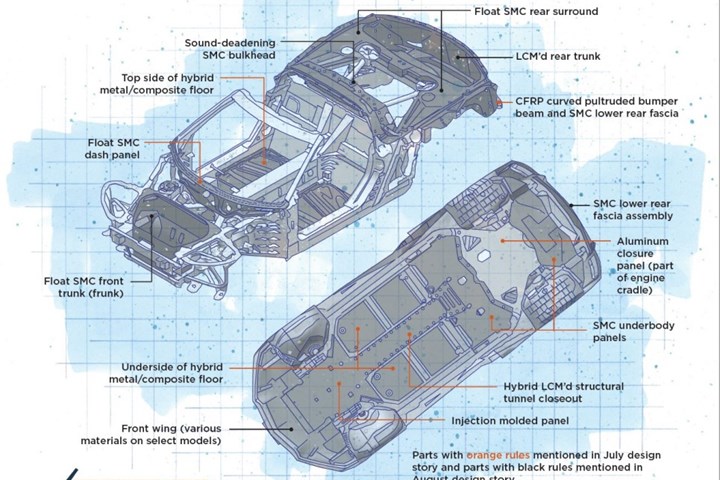
here and in Part 2 next month.
New engine configuration changes everything
GM engineering went into preliminary design knowing they’d be working on a mid-engine vehicle — the first production Corvette in eight generations to sport that configuration. “We evolved the front-engine architecture as far as we could for performance, so shifting to a mid-engine design was the next logical step to improve an already great car and be the segment leader,” explains GM’s Tadge Juechter, executive chief engineer-Global Corvette. Equipped with the Z51 performance package, the 2020 Corvette Stingray can accelerate 0-60 mph (0-97 kmh) in 2.9 seconds and reach top speeds of 194 mph (312 kmh). Pushing the engine toward the vehicle’s rear affected many things, including the car’s center of gravity, the relative position of occupants, transmission location and design of underbody panels and trunk storage. The mid-engine design also introduced higher operating temperatures and noise to new areas of the car.
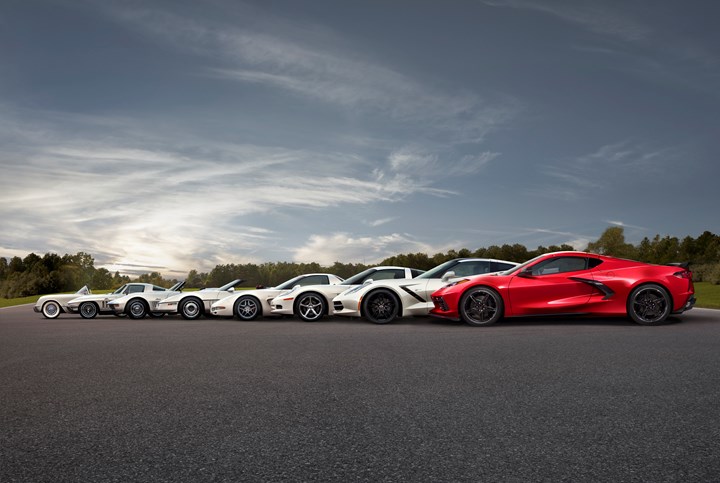
The eighth-generation Chevrolet Corvette — all eight generations (C1-C8) shown above, left to right respectively — from General Motors Co. started production earlier this year. This mid-engine sports car is not only impressively fast, and the most composites-intensive Corvette yet, but it features an array of genuinely innovative composites applications. Source | General Motors Co.
“Because of the mid-engine, we had to do things differently,” explains Ed Moss, Corvette body structure engineering group manager. “From the start, we had so many discussions about how to lay out the body structure. At one point, everything was on the table as we discussed the best way to design and build each system. For example, we debated metallic versus composite for wheelhouses. If we’d kept the C7’s composite wheelhouses, we’d have to bond to the hinge pillar [A pillar], which is immediately adjacent to the front wheel in a mid-engine vehicle, leaving very little package space. We went with metal there. We even briefly discussed metal versus composite body panels. However, it would’ve been economically infeasible to create the C8’s styling lines in metallics.”
“A real challenge we faced was how to handle air induction,” recalls Chris Basela, Corvette body structure lead engineer, explaining the need for a different method to funnel cooling air into and across the naturally aspirated, 495-horsepower, 6.2-liter V8 engine, which generates 470 foot-pounds (637 Newton-meters) of torque. “We tried all kinds of designs that forced air to take really torturous paths, creating eddies and flows we didn’t want. It took lots of iterative work with the powertrain team to develop the best path for airflow because the car needs to breathe freely with no restriction. We also needed access to the air box and had to work around rear trunk space. Another issue was heat and engine noise in the passenger compartment, because occupants no longer sit behind the engine but are positioned directly in front of it. And we were especially conscious of cabin air quality as laws had changed in Europe and elsewhere since the C7, so we worked really hard to reduce VOCs [volatile organic compounds].”
“Even working out how to assemble the car was a challenge,” adds Moss. “With a front-engine design, you have a long hood and large engine compartment, providing operators plenty of room to build the car from inside the compartment, even with the front bumper beam already welded on. On the mid-engine Corvette, with its very short front clip, we keep the front of the car open as the vehicle is built out, then bolt on the front bumper.”
“It was quite a balancing act to get the proper shapes, while ensuring our suppliers could produce the parts and our team in Bowling Green [GM’s Kentucky-based Corvette assembly plant] could assemble them,” continues Basela. “In the end, there was only one carryover composite from the C7’s body to the C8.” This was tough Class A, 1.2 specific gravity (SG) sheet molding compound (SMC) developed for the 2016 Corvette and used in a variety of exterior closures on the new vehicle.
Vehicle architecture
For four generations (C5-C8), Corvettes have featured a three-layer, multi-material body structure: the frame, usually a mix of aluminum or steel — this time with a carbon fiber-reinforced composite (CFRP) part; the body structure, which is largely bonded composite to capitalize on design and manufacturing flexibility; plus bolt-on closeouts (body panels), which have been composite since Covette’s June 1953 debut. This layered hybrid structure not only provides affordable lightweighting in high production volumes — particularly for cars of this performance class — but also permits multiple vehicle variants to be produced at low tooling investment. In fact, for the current C8, GM managed to produce all Class A composite body panels (bonded inners and outers) on both the base model coupé and convertible using just 20 tools.

GM and its suppliers have already won many awards for innovative composites use on the 2020 Corvette Stingray. Among those standing above are key GM engineering team members at last November’s 49th annual Automotive Innovation Awards Gala, where GM won SPE Automotive Div.’s Vehicle Engineering Team Award. A number of composite parts on the vehicle also were finalists or category winners at the event. Source | SPE Automotive Div.
In addition, Corvettes have always been engineered with an open-roof architecture, regardless of whether they are actually convertibles or coupés with fixed or removable roof panels. Because open-roof vehicles are generally less stiff than those with fixed roofs, an important focus for each Corvette’s engineering is always to create the stiffest foundation possible to improve suspension and steering. Historically, tunnels(housing transmissions and driveshafts on front-engine vehicles) have dominated Corvette body structures and have been key enablers for achieving high torsional rigidity. In the case of the new Corvette, GM achieved even higher rigidity. With the roof removed, the C8 body is 53.78% stiffer than a benchmark high-performance mid-engine competitor, 29.27% stiffer than a second high-performance mid-engine competitor, and 13.79% stiffer than the C7. Two composite parts made important contributions to vehicle stiffness—one directly attached to the frame structure (rear bumper beam) and another attached to the underbody (lower tunnel closeout).
Frame structure
The C8’s frame is largely aluminum alloy with one CFRP part developed to meet GM’s stringent dollar-per-kilogram targets. In contrast, the C7 frame was all-aluminum and the C6 was mostly steel.
The only composite part directly mounted to the frame that travels with the body-in-white (BIW) through the electrophoretic rust-coat process (which GM calls ELPO), is a unique CFRP rear bumper beam. This part helps stiffen the frame and contributes to rear-impact performance. Its curved shape — possible thanks to a novel process called radius pultrusion developed by Thomas GmbH + Co. Technik + Innovation KG (TTI, Bremervörde, Germany) — enables it to match rear styling cues and fit in limited package space while maintaining dimensional integrity close to engine-bay heat. As the auto industry’s first curved pultruded part (see our full feature on this part in the CW May 2020 issue), the hollow, two-chambered beam was produced by Shape Corp. (Grand Haven, Mich., U.S.) on equipment developed and built by TTI. The beam weighs just 1.3 kilograms and features a bonded/bolted tow-hook eye capable of 25 kilonewtons of pull-out force.
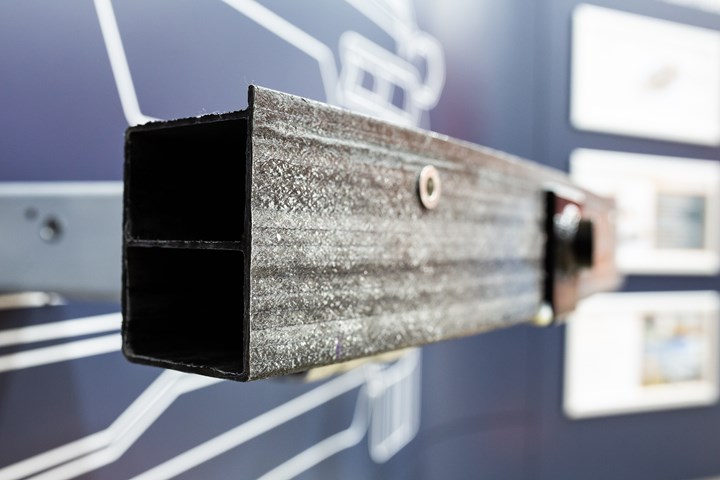
An auto industry first, the 2020 Corvette sports a curved rear bumper beam in pultruded carbon fiber composite produced with 87 individual carbon tows and eight carbon fiber non-crimp fabrics (NCFs) impregnated with polyurethane-acrylate resin. The hollow, two-chambered beam is 66% lighter than the outgoing aluminum beam and met GM’s demanding dollar-per-kilogram targets. Source | Shape Corp.
Body Structure: part A
Virtually all of the C8’s body structure components are composite and are bonded and/or bolted to the frame after the latter undergoes ELPO. Notable composite parts at this level include structural underbody closures and the floor — which we’ll cover in this issue — and front and rear trunks, induction ducts and the rear surround and bulkhead — which we’ll cover, along with body panels and trim, next month.
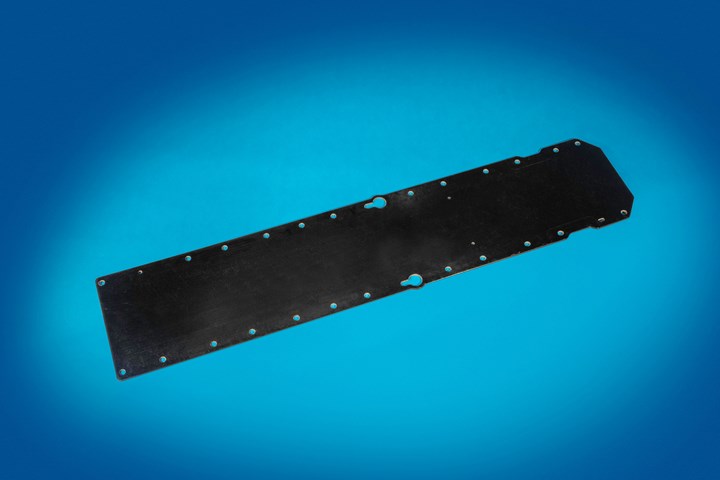
This hybrid-composite, lower-tunnel closeout is produced using a variant of liquid compression molding. It eliminated secondary attachments, lowered mass by 3 kilograms and reduced labor, tooling and capital costs vs. aluminum. Source | SPE Automotive Div.
The removable lower-tunnel structural closeout on the C8, which acts as an access door, contributes more than 10% of the vehicle’s torsional rigidity and acts as a primary load path during a crash. This hybrid-composite panel consists of three layers of glass fiber preform. These consist of continuous/woven and chopped/random fibers at 38% fiber volume fraction (FVF), with veils added to top and bottom face layers on each stack for improved surface finish. Glass preforms are interleaved with two layers of preforms made using Toray (Tokyo, Japan) T700 12K standard-modulus carbon fiber in the form of NCF biaxial fabric at 21% FVF and a vinyl ester (VE) matrix. The closeout is produced by Molded Fiber Glass Co. (MFG, Ashtabula, Ohio, U.S.) using its proprietary PRiME (Prepositioned Reinforcement ensuring Manufacturing Excellence) process, a type of liquid compression molding (LCM).
Aside from a single aluminum closeout near the rear wheels that is part of the engine cradle, the remaining underbody panels consist of either compression molded SMC or injection molded thermoplastics. Among other benefits, these panels reduce underbody turbulence and drag, improve fuel efficiency and keep moisture, dust and stones out of the vehicle’s engine and driveline. Further, they provide the dimensional foundation for multiple exterior and interior interfaces.
The low-density but structural SMC panels feature new formulations (in this case, 40% FVF chopped fiberglass/unsaturated polyester (UP) resin) developed by MFG. The material is called “float” SMC because each panel’s density is less than 1.0 (average SG=0.97) and thus can float in water. MFG produced all structural SMC and LCM’d parts on the car.
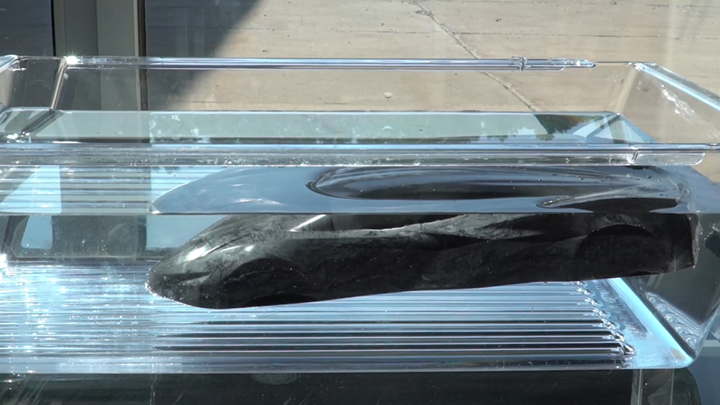
An important contributor to vehicle lightweighting on the C8 is the extensive use of “float” SMC. With specific gravity values less than 1.0, this low-density but structural SMC developed by MFG is used in a variety of non-Class A parts, including underbody panels, the dash panel, air-induction ductwork and the front trunk. Source | Molded Fiber Glass Co.
The vehicle also sports a hybrid floor optimized for torsional bending and side-pole impact protection (engaging the rocker panels and tunnel, to which it is joined). Floor panels feature cabin-facing stamped aluminum bonded to sheets of road-facing 1.5-SG composite (60 wt-% continuous and woven glass fiber/VE) produced via the PRiME process. Before heat-bonding both layers with Pliogrip 9100 polyurethane structural adhesive from Ashland Global Holdings Inc. (Wilmington, Del., U.S.), MFG cleans and preps the materials.
All composite parts directly bonded to the C8 frame are first subjected to laser ablation, a process developed by GM, MFG and Adapt Laser Systems LLC (Kansas City, Mo., U.S.) for the 2016 Corvette, and adapted from a composites industry method for mold cleaning. Laser ablation replaces hand sanding and reduces labor, time and cost, eliminates dust and improves repeatability. Laser path, angle of attack and energy level are customizable for each part’s material and geometry. To maximize manufacturing flexibility, the entire underbody, including the floor, is connected to the frame and itself via bonding and screws.
In the August issue of CW, we’ll continue covering composites innovation on the new Corvette, resuming with additional components at the body structures level and finishing with exterior closures (body panels), plus additional trim and upgrades.
Peggy Malnati for Composites World
Dale Earnhardt Jr. headlines NASCAR Hall of Fame Class of 2021


Dale Earnhardt Jr. spent his whole life chasing meaningful rewards.
He waited for a pat on the back from his famous father, worked diligently to generate compliments from crew members and other drivers, and reveled in the roar of his fans — those he inherited from his father and the new ones he brought along for the ride.
NASCAR’s longtime fan favorite received the sport’s biggest honor Tuesday, when he was selected to join his father in the series’ Hall of Fame. Earnhardt will be inducted in Charlotte, North Carolina, along with the late Mike Stefanik and 87-year-old Red Farmer, who is planning to race on Talladega’s dirt track this weekend. Ralph Seagraves was named the Landmark Award winner for his contributions to the sport.
Despite never winning a series championship, Earnhardt received 76% of the votes cast on the modern era ballot.
“Just talking about it, it’s really emotional because I feed off affirmation,” he said wistfully. “It’s such a great feeling to know people think I made an impact. I know what my numbers are, and I feel like I was chosen because of that, but also for the impact I made off the track, being an ambassador for the sport.”
Junior’s grandfather, Ralph, went into the International Motorsports Hall of Fame in 1997 and was named one of NASCAR’s 50 Greatest Drivers in 1998. Junior’s father, The Intimidator, also made the list, even before finishing his career with 76 wins and a record-tying seven Cup titles.
The team-owning father gave Dale Jr. his first big break: a full-time ride in the Busch Series in 1998. It didn’t take long for Junior to prove he was a natural — on and off the track.
He won Busch championships in each of his first two seasons and two races as a rookie Cup driver in 2000.
When the elder Earnhardt was killed during the 2001 Daytona 500, Junior suddenly found himself in a place he never imagined.
“I knew when Dad died, I was going to assume most if not all of his fan base, and I feel like I took care of that,” he said. “I didn’t squander that, I didn’t ruin that, and I also introduced myself to a lot of people who never heard of Dale Earnhardt.”
Suddenly, the brash, 26-year-old Earnhardt emerged as the face of the sport and started adding his chapter to the family legacy. He won 26 races — including two Daytona 500s and the 2001 Pepsi 400, the first Cup race held at Daytona after his father’s death — before retiring as a full-time Cup driver following the 2017 season.
Fans watched to see if he could replicate the fearless style that made his father so popular. But Junior never tried to compete with that image.
“There was a point in my career where I started to think I’m not going to win seven championships; I might not even win one. I’m not going to win 100 races; I might not even win 40,” he said. “There were a lot of people that wanted me to be as successful as he was and be as aggressive as he was and spin people out or whatever. So I started to think about what I could do outside of that and what else I could do to help the sport.”
Junior introduced new fans to stock car racing through different news outlets, social media and podcasts. The result: 15 consecutive Most Popular Driver awards.

Stefanik won seven titles in NASCAR’s modified series and two more in the Busch North series. His nine total championships are tied with that of Richie Evans for the most in NASCAR history, and Stefanik was named the second-greatest driver in modified history in 2003.
Stefanik, who died from injuries sustained in a plane crash in September in Connecticut at age 61, edged Ricky Rudd for the second spot on the ballot with 49% of the vote.
“Phenomenal when you think about what he did. Nine championships,” Kyle Petty said during NBCSN’s announcement show. “Phenomenal record, phenomenal amount of wins.”
Farmer, one of the three original “Alabama Gang” drivers, with brothers Bobby Allison and Donnie Allison, beat Hershel McGriff by earning
The 87-year-old Farmer won four Late Model Sportsman season titles and an estimated 700 to 900 races. He was a member of NASCAR’s 50 Greatest Drivers and became a member of the International Motorsports Hall of Fame in 2004. This week, with the big series returning to Talladega, he’s scrambling to put together a car for two nights of racing on the dirt track across the street.
“I had a little fender bender in a 40-lapper last weekend,” he said. “They had a three- or four-car pileup right in front of me, and I slid into it and messed up the nose pretty good. So I’m getting my backup car ready.”
An executive with R.J. Reynolds Tobacco, Seagraves helped spearhead Winston’s decision to sponsor NASCAR’s premier series from 1971 to 2003. Winston’s financial support allowed many tracks to upgrade their facilities, and the season-long points fund bolstered purses for drivers and teams.
The Associated Press contributed to this report.
2020 Corvettes are Now Shipping from the Corvette Assembly Plant (Again!)


Thanks to our friends at the MidEngineCorvetteForum.com, we’ve got two different confirmations that newly completed 2020 Corvettes are once again shipping from the Corvette Assembly Plant in Bowling Green
The shipping confirmation comes from the Jack Cooper Transport website. Owners can post their VIN into the search box and it returns the shipping manifest.
Yesterday, the National Corvette Museum received four new 2020 Corvettes while another shipping manifest shows 2020 Corvettes with VINs ranging from 2814 to 3354 heading to multiple Chevy dealers in the midwest.

Thanks to some of the sleuths on the MECF, we also see a few CTF Convertibles heading up to the Detroit area:

This is great news for customers who have been “patiently” waiting for shipping of the new 2020 C8 Corvettes for the first time since the Corvette Assembly Plant reopened on May 26th after being closed for two months due to the coronavirus.
How to Track Your 2020 Corvette
CorvetteBlogger contributor Jeremy Welborn previously wrote this post on how to Track the Shipping of your C8 Corvette via Jack Cooper. To find the shipping status of your 2020 Corvette, go to https://www.palsapp.com/, then click on the search icon on the top right of the page (looks like a magnifying glass). Enter your VIN and click the search icon to the right of the input field.
Source:
MidEngineCorvetteForum.com
Watch A Corvette C8 Hunt Down A Dodge Viper ACR

It seems comfortable at the limit.
The C8 Corvette is Chevrolet’s first stab at building a true mid-engine supercar. While much faster versions will follow, the C8 Stingray in base form can hold its own against more exotic and more powerful machinery. We recently wrote about a C8 Stingray demolishing the quarter-mile, but now we shift our focus to the Laguna Seca Raceway, where a C8 goes up against one of the meanest American performance cars out there: the Dodge Viper ACR.
The C8 is clearly at home on a track as we can see in the video. This Torch Red Corvette gets pushed to its limits and comes out as an unexpected hero.


The 2020 C8 Chevrolet Corvette is no wimp when it comes to numbers: powered by a naturally aspirated 6.2-liter V8, this car produces 490 horsepower and 470 lb-ft of torque. That’s enough to launch it to sixty in only 2.9 seconds when fitted with the Z51 package. This translates into a car that is deceptively fast, especially when compared to big dogs such as the Viper ACR.
In the video, we can see the Vette slowly warming up to the track conditions, with that naturally-aspirated engine filling the cabin with the best noise you could imagine. It is clear that the driver is trying to find his comfort zone.


After a short sprint, the driver and car seem to be clicking, and the pace increases. In the distance, you can see some cars getting closer and closer: it turns out that it’s a Porsche 911 GT3. The action starts at around the 3:15 mark, but you’ll have to wait until the 6:40 mark to see the battle between the Viper and C8.
We have no doubt that in the hands of an experienced driver the Viper would be the faster car, but getting the most out of the downforce capability of this car takes a serious driver and it’ss clear to see that the C8 Corvette is an easier car to drive at the limit. If this is what the Stingray is capable of, we can’t wait to see what faster versions will do.
Michael Butler for CarBuzz
Time Is Running Out To Buy A 2019 Chevrolet Corvette C7

With demand for the C8 outstripping supply, it’s a great time to buy a nearly new C7.
Last year saw the introduction of a mid-engined Chevrolet Corvette Stingray for the first time when the C8 took over from the front-engined C7. It marked a major departure for any Corvette, but thankfully, the C8 has retained the unmatched bang-for-buck performance and power that made the C7 so impressive.
For customers who still want to purchase a 2019 C7, time is running out. According to a report by Corvette Forum, there are now fewer than 300 examples of the 2019 C7 for sale in the country. That said, it may still be easier to get hold of one than the 2020 C8, of which only a few are on sale at dramatically marked-up prices.


As of June 4, there were 289 C7s listed for sale based on information from a Chevy dealership in Pennsylvania. With zero-percent APR financing over 72 months along with a rebate of $3,250, the incentives are attractive and in stark contrast to the 2020 C8s, with many examples of the new car selling for over $100,000.
The 2019 C7 inventory includes 62 Z06s, 44 of the Z51 variants, and just four examples of the crazy ZR1. Of course, the latter was the ultimate C7 with its 755-horsepower supercharged V8 engine sending it to 60 mph in less than three seconds. State availability of C7s varies significantly, with 28 models in New Hampshire and 22 in Illinois, but nothing at all in Kansas, Maine, Alaska, and South Dakota.Most Extreme Brabus Creations EverMcLaren Special Operations Finest Creations


With the current sky-high demand for the C8, purchasing a nearly new C7 could be the perfect solution until the C8 increases in availability. Plus, you’ll save a lot of money. Around three weeks ago, car rental company Hertz was selling 100th Anniversary Editions of the C7 (based on the Z06) for as little as $57,000. Although that’s close to the base C8’s starting price, it’s just about impossible to find a C8 in this spec at the moment.
Besides, whether the engine is midship or in front, the Corvette offers as much driving enjoyment at the price as anything else out there. The new C8 may have moved the game on, but the C7 is far from disgraced and remains a cracking sports car.


Karl Furlong for Carbuzz
Fewer Than 300 New Corvette C7s Are Still Available (With Lots Of MT)


Some states even have more than 20 units up for grabs.
The 2020 Chevrolet Corvette sold like hotcakes, with some pending orders still underway. In fact, Chevrolet is aiming to hit the 20,000-unit production mark this year, covering both coupe and convertible versions of the C8 Stingray. Now, production of the remaining 2020 Corvette orders has already commenced, but if you’re among those who have ordered, patience should be your virtue.
Alas, Chevrolet is moving on to the production of the 2021 model year Corvette C8 by November, but did you know that there are still a few units of the Corvette C7 left in the dealers?
Gallery: 2019 Chevrolet Corvette ZR1 First Drive


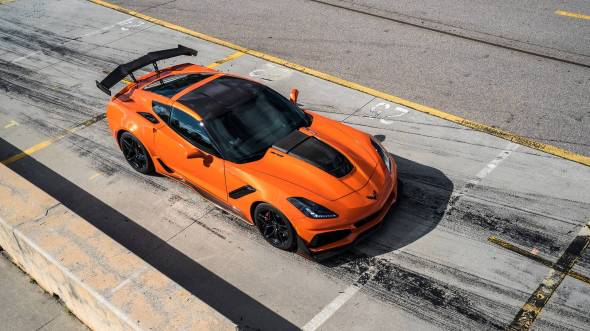
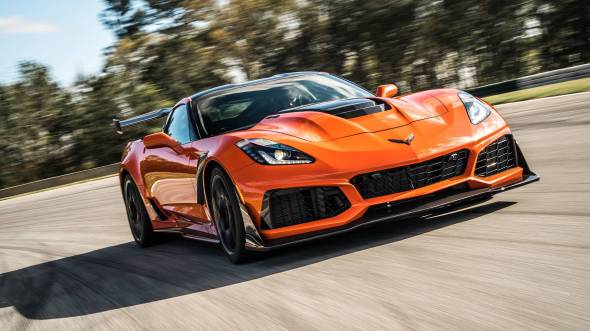


According to a report by CorvetteBlogger, Matt Beaver of Whitmoyer Chevrolet in Pennsylvania discloses that there are still 289 units of the 2019 Corvette C7 showing as available in dealerships spread across the country. So, if you aren’t a fan of the new mid-engine layout, there’s a good chance you’ll still be able to buy a brand new unit in a dealership near you.
Among the states that have the most number of C7s still available are New Hampshire, Illinois, and Florida – all with more than 20 units waiting for their rightful owners. There’s no information about their prices, though.
Get Into The ‘Vette Mill:
Also, if you’re looking for a manual Corvette, which is something missing on the C8 generation of the sports car, you’ll be glad to know that there are still a few MT units left within these dealerships. There’s one manual Stingray Convertible, while nine Stingray Z51 coupes still come with a stick shift. Out of the 138 Grand Sport Coupe units left in the U.S., seven of them come with a third pedal.Save Thousands On A New Chevrolet Corvette

MSRP $ 56,995Save on average over $3,400 off MSRP* with
Motor1.com Car Buying ServiceSEE PRICING
And yes, if you’re in the hunt for a 2019 Corvette ZR1, there are still four units up for grabs – three manual, one automatic – but all of them are dealer demo units, according to Beaver’s list.
The catch? It wasn’t disclosed at which exact dealerships do these MT Corvettes are located at, so you better be asking for assistance from your local dealership if you’re interested.
2020 C8 Corvette Production Rolling Without Incident

With constrained production, these cars are instant modern collectibles.
General Motors has a lot of orders to fulfill for the 2020 C8 Corvette and the Corvette Assembly plant in Bowling Green, Kentucky is finally getting back to production. Originally, the factory was idled and employees furloughed back on March 20, a move that GM painted as lasting for only two weeks. Here we are a little over two months later with few C8 Corvettes made, guaranteeing the 2020 model year is an instant collectible due to small production numbers.

The so-called “COVID Corvettes” are about to increase in number, but don’t expect anything dramatic. This week only 550 of the 1,200 workers for the Corvette Assembly plant have returned to the production line.
Those workers are having to wear protective equipment like masks and deal with revised procedures designed to maximize sanitary conditions on the assembly line. However, all those changes will slow the production process down significantly.

On top of that, reports claim at least 230 C8 current builds were set aside unfinished when the factory was idled. Each car was wrapped tightly in plastic to avoid dust and other debris, so that must be removed, the Corvettes moved to their appropriate places in the production line, and the assembly process finished for each one. Some are speculating this could take several weeks.
Thanks to many suppliers for Corvette Assembly having closed as well, there aren’t enough parts to bring on the rest of the assembly line workers. Those who are going to work have been selected by seniority. They must answer a series of questions about coronavirus symptoms before entering the factory floor. In addition, each worker’s temperature is taken.

GM hasn’t provided any official word on how many 2020 Chevrolet Corvettes will be made. Unofficial estimates peg it at a small fraction of the normal production levels, meaning many who ordered a C8 will have to wait until 2021 to get one. The lucky few who do get a 2020 model are sitting on a rare COVID Corvette that’s a part of history at this point.
Source: WKU
Next-Gen Corvette C9 Renderings Imagine Return Of Front-Engine Layout

Will the C9 even have a gas engine?
The 2020 Chevy Corvette C8 debuted almost a year ago to tremendous fanfare. Production ramped up in early February after a delay, and many customers now have the new car in their driveways. Chevrolet moved the engine from the front to the back for the first time after decades of false starts, teases, and rumors. It’s too early to tell if customers warm to the new layout, and far too early to speculate about the C9, but what if Chevy flipped the design again, moving the engine back to the front – what would it look like? New renderings from Pedro Ruperto Mallosto on Behance.net provide a glimpse.
While the Corvette’s return to a front-engine layout for the next generation is unlikely, it doesn’t make imagining the possibilities any less exciting. The renderings show yet another evolution of the car’s angular design that the automaker introduced with the C7. Here, it’s much more refined than that, and looks much more like the classic Corvette millions have known for over half a century. The greenhouse is iconic, especially as it tapers in the bumper, reminiscent of the C6.


Imagining the next generation of a new model isn’t easy. We don’t know when the C9 will arrive. Chevy has a ton of C8 variants to deliver first, and by the time we reach the next-gen Corvette, the automotive landscape could be radically different. General Motors has said it’s all-in on fully electric vehicles, and that includes the Corvette. A next-gen, front-engine Corvette sounds exciting, but what would an all-electric Corvette look like if the design never had to accommodate a gasoline engine?
Source: Behance.net
2022 Chevrolet Corvette Z06

What We Know So Far

Overview
Now that the bubble of anticipation surrounding the mid-engine Corvette has burst, excitement is building for the even-mightier Z06 model. With an exotic flat-plane-crank V-8 engine, the 2022 Chevy Corvette Z06 will sound unlike any Vette that’s come before. It’ll also look meaner than the mainstream C8 thanks to flared fenders, larger air scoops, and aerodynamic addendum that actively adjusts to maximize high-speed downforce and cornering traction. Along with its exclusive powertrain and enhanced appearance, the super Chevy will inherit all the best features and technology from the regular model. Although we still don’t have all the juicy details about the new Z06, here’s what we know so far.
What’s New for 2022?
The first mid-engine Corvette Z06 is expected to go on sale in early 2021 as a 2022 model. As is tradition, it’s a more hardcore, track-focused version of the standard Vette, complete with bolder styling cues and serious performance attributes.
Pricing and Which One to Buy
- Z06: $85,000 (est.)
It should make sense that, since Chevy hasn’t officially revealed the new Corvette Z06, we can only speculate on how much it’ll cost. Its front-engine predecessor started at about $25,000 more than the base model, so we think it’s safe to add that number to the starting price of the 2020 Corvette, which starts at $59,995. That means the 2022 Z06 should open at around $85,000 when it eventually goes on sale.
Engine, Transmission, and Performance
The upcoming Corvette Z06 will receive a special engine that should make it sound similar to the supercars it’s trying to dethrone. The naturally aspirated 5.5-liter V-8 features a flat-plane crank, which means it should rev to between 8500 and 9000 rpm. This engine is expected to make over 600 horsepower, and it’s Ferrari-like howl is all but guaranteed to send shivers down the spine of bystanders. The unconventional V-8 will hook up to an eight-speed dual-clutch automatic transmission and rear-wheel drive. Considering that the 495-hp 2020 Corvette Z51 we tested rocketed from zero to 60 mph in just 2.8 seconds and completed the standing quarter-mile in 11.2 seconds at 122 mph, the Z06 will be even quicker in a straight line. A set of wider, stickier tires and more powerful brakes will help it corner harder and stop shorter than the regular Vette, too. Chevy will also strengthen the structure and recalibrate the suspension tune on the Z06 to help make sure its performance advantages are most obvious at the racetrack. A host of active aerodynamics that automatically adjust to optimize downforce will join the party for this new generation. We’ll have to wait until we get our hands on one to evaluate how its myriad improvements compare with the outgoing Corvette Z06.
Fuel Economy and Real-World MPG
Neither Chevy nor the EPA have indicated how efficient—or inefficient—the 2022 Corvette Z06 will be in the city and on the highway. Since the company’s flat-plane-crank V-8 is currently only found in the Corvette C8.R race car, we don’t have any government ratings for comparison. Once the Z06’s fuel-economy figures are released, and we have the opportunity to test one on our 75-mph highway route, we can evaluate its real-world mpg.
Interior, Comfort, and Cargo
The Bow Tie brand went above and beyond to ensure that the mid-engine Corvette’s interior could not be called boring. While the design certainly transcends what’s found on every other Chevy model, the square steering wheel and wall of climate-control buttons on the center console are unusual elements, to say the least. Still, the cabin layout caters to the driver, and the list of standard and optional features is extensive. This includes a 12.0-inch fully digital gauge cluster, a head-up display, heated and ventilated seats, and wireless charging. All of this and more will continue inside the new Z06. We expect its track-worthiness to be made apparent through additional carbon-fiber and microsuede interior accents as well as a set of even more aggressively bolstered seats. The Corvette’s capacious rear trunk should continue to provide a spot for drivers to carry two sets of golf clubs.
Infotainment and Connectivity
Cooked into the Corvette’s multilayered dashboard is an 8.0-inch touchscreen that supports Chevy’s Infotainment 3 Plus system. While we’ve only had minimal exposure to this specific setup, we found it to be mostly intuitive and responsive. We’re confident the Z06 will share the same interface and features, which include Apple CarPlay, Android Auto, and a Wi-Fi hotspot. Likewise, two separate Bose stereos are expected to be offered: a standard 10-speaker system and an optional 14-speaker setup. The new Z06 will continue to offer the Performance Data Recorder, which allows you to record video of everything from your track exploits to relaxed country-road cruises. And if you dare leave your Z06 with a valet, there’s a setting that keeps track of any nefarious activities the car-parker might try.
Safety and Driver-Assistance Features
The 2022 Corvette Z06 hasn’t been crash tested by the National Highway Traffic Safety Administration (NHTSA) or the Insurance Institute for Highway Safety (IIHS). While the regular C8 Corvette only has a handful a driver-assistance technology, such as blind-spot monitoring and rear cross-traffic alert, we expect those features to be available on the Z06.
Warranty and Maintenance Coverage
Chevy provides all of its models with a middle-of-the-road limited and powertrain warranty. While the company offers more complimentary maintenance than automakers who skip the free service altogether, it’s one of the shortest such plans in the industry.
- Limited warranty covers three years or 36,000 miles
- Powertrain warranty covers five years or 60,000 miles
- Complimentary maintenance is covered for the first visit
Everything You’ve Ever Wanted To Know About Hot Wheels (But Never Asked)

Many gearheads have a strange affinity to Hot Wheels. Here is everything you’ve ever wanted to know about the company, but never asked.

Toy cars can be divided into two categories: Hot Wheels and everybody else. For over 50 years, Mattel has dominated with what is now recognized as the best-selling toy in the world. It’s impossible to count how many car buffs, from mechanics to real race stars to TV personalities, grew up playing with these cars. Whether it was just a few models or massive collections, Hot Wheels has been part of car culture for decades and is never going to stop. Whether it’s a simple model or some fancy licensed vehicle, Hot Wheels simply enthralls.
Yet it’s incredible how some people are unaware of the facts of the company and its history. From its unique origins to how these cars are put together, the story behind Hot Wheels is fascinating. There are also touches from how some of these cars are more expensive than real ones to some unique touches on the culture. Here are 20 amazing facts about Hot Wheels to prove they’re more than just “kids toys.”‘
20/20 Real-Life Hot Wheels Jump Was A World Record

Growing up a massive Hot Wheels fan, racer Tanner Foust decided to honor them in a fun way. At the 2011 Indy 500, Foust talked the management into seeing up a massive orange ramp and raced down it in a rally car.
After 90 feet of track, Foust sailed 332 feet, the longest record for such a move. He topped it by driving through a 66-foot loop in 2012 to live out the dreams of every kid.
19 Technology In Car Building Is Amazing…
Making toys has become a very high-tech business today. Just like real car companies, Hot Wheels has adapted to the 21st century nicely. Computers and 3-D technology are utilized to make sure the designs are perfected before the building begins.
It also helps them keep on top of the latest car trends to ensure that today’s Hot Wheels are sleeker and more natural than the ones of the past.
18 But They’re Still Diecast
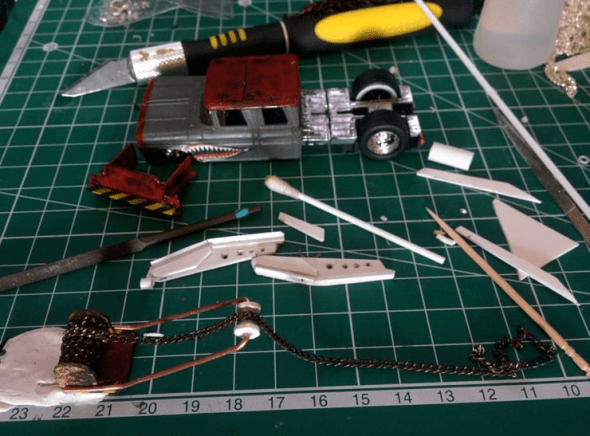
There are many toy car lines out there, but Hot Wheels is still the king of the bunch. The key reason is that, for all the advances in technology, every car is still diecast and built mostly by hand.
Even when cheaper materials are available, Mattel knows the diecast is what the fans want. It’s also helped in making customized cars at home for popular models. After 50 years, Mattel doesn’t want to mess with success and do away with diecast.
17 They’ve Worked With NASA

Hot Wheels have done a few astronaut-themed toys over the years. But that’s not the only connection they have with NASA. In 1998, they were able to work with the agency to create an exact replica of the Mars Rover, which landed on the Red Planet that very year.
They also worked with them in 2012 for scale models of the Curiosity rover. It’s amazing how the company got access to top-secret plans to make these toys.
16 Collectors Take It Seriously

Some may dismiss Hot Wheels as “just for kids.” But collectors take it more seriously than real automobiles. The 1969 Volkswagen Beach Bomb (only 16 prototypes were made) is known to go for at least $15,000.
Some rare models can go for a hundred grand, and collectors are always on the lookout for unique mint models. Entire museums are devoted to various cars as some Hot Wheels collections put legit car collectors to shame.
15 Scaling Down The Cars Was Tricky

A key to the company’s success is that they work with scores of real car companies to get looks at plans for their toy models. Yet it’s not so simple as just “make a smaller version.” The biggest challenge is to achieve the proper scale for the toys in a diecast model yet retain the details of the actual car.
That can be complex with some fancy vehicles. That every model has to be sized to fit the same tracks just adds to why it takes as long developing a toy car as a real one.
14 NASCAR Star Has The Record For The Longest Track

Ever since the Hot Wheels tracks were created, fans have been trying to top themselves making the most extended and most complex. A few have achieved great ones, but it’s fitting a NASCAR star holds the record for the longest.
In 2019, Joey Logano unveiled a 1,941-foot long track stretched across his garage. It weaves through his car collection with 1222 boosters before ending in Logano’s own 2018 HW Ford Mustang. Add yet another title to Logano’s list of accolades.
13 They Made A Car Coated In Diamonds
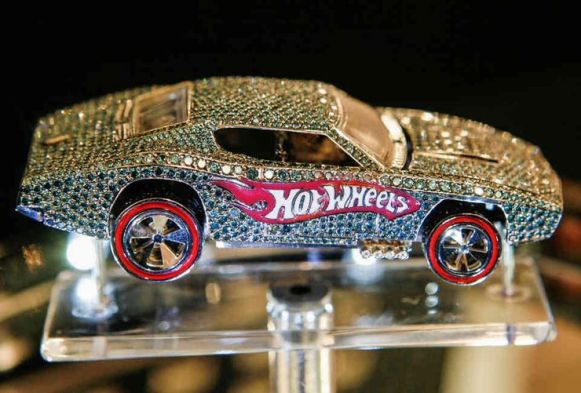
In 2008, Mattel made a big deal of celebrating the 40th anniversary of the Hot Wheels line. As a special reward, Mattel had Jasons of Beverly Hills craft the most expensive Hot Wheels car on the planet.
Cast in 18-karat gold, it’s covered with 2700 diamonds and gems totaling nearly $150,000 today. It’s become a rotating exhibit at toy museums for the glitziest Hot Wheels you could see.
12 The Darth Car Is A Speed Machine

While they do stick to toys, the company has been busy creating some real-sized cars for collectors. One of the most notable is based on Darth Vader, with the hood looking like his fearsome helmet and in jet black.
This isn’t just for show as it’s based on a C5 Corvette with a GM LS3 V-8 engine capable of 526 hp and 150 mph. The Dark Lord of the Sith would be proud of this powerful craft.
11 Every Car Is Tested To Make Sure It Can Run A Track

Almost from the beginning, Hot Wheels car fans had to have a track with the cars. They’ve gone from straight lines to elaborate roller-coaster-like loop systems to leave kids entertained for hours.
What few realize is that the track determines if a car makes it as Mattel prides itself on “every car can fit every track.” More than once, a prototype has to be altered when it won’t fit as the track decides a car’s final form.
10 There Are More Hot Wheels Cars Than Real Cars

While it’s tricky to figure out for sure, most sources agree there are at least one billion cars on the planet (give or take a few hundred thousand in auto graveyards). In contrast, since 1968, six billion Hot Wheels cars have been created.
True, many have been trashed and/or recycled, and it’s impossible to count how many have been lost in backyards. But given how 16 cars are produced every second, it’s no shock the toys outnumber the real deals.
9 Several Creators Are Legit Car Designers

The one constant of Hot Wheels is that the cars look just as good as the real deal. There’s an excellent reason for that as scores of the manufacturers are legitimate car designers. Larry Wood was a veteran of Ford before becoming one of the first Hot Wheels designers.
He’s not alone as Jack Ryan was a rocket designer who crafted the bearings that made the cars so great. Scores of the car designers were in real automobiles first, so it’s no wonder the vehicles look so good.
8 The Original Camaro Is Worth A Fortune

Mint conditions of the Original 16 Hot Wheels releases are all pretty collectible items. But one dominates from the pack. While versions of a Camaro were produced, a few had white enamel paint.
They had been meant to discover flaws in a prototype but accidentally released. A mint version of one went for a hundred thousand dollars and made this one of the most expensive toys on the planet
7 They Released A Custom Corvette Before GM Did

An early standout for the company at a custom Corvette in 1968. What made it notable was that the toy was released before GM had their actual Corvette in car dealerships.
The fact designer Harry Bradley had worked at GM indicates he may have “borrowed” the designs before he left to allow Mattel to beat GM to releasing a Corvette to the masses.
6 The Red Stripes Are Expensive

If you find what looks like an old Hot Wheels car, take a good look at the wheels. If they have red stripes, then you’ve just found a fantastic collector’s item. From 1968 to 1977, designers hand-painted red lines onto the wheels to make the cars look distinctive.
As a cost-cutting measure, they switched to all-black wheels in 1978. Some mint condition red-striped vehicles have been known to go for thousands online.
5 One Of The Original Cars Was Based On A Car With No Doors

The first wave of Hot Wheels was just 16 cars, and any of them can be valuable today. One is notable, the 1965 Dodge Deora. This car boasted no doors but rather a hatch for folks to crawl into.
It was based on a fun design used by Mike and Larry Alexander but in an irony, no real Dodge Deoras were built, to make this a truly unique model
4 A Tie-In Cartoon Got Pulled By The FCC

Today, cartoons based on toy lines are commonplace. But in 1969, Hot Wheels got in trouble when they put out a cartoon series about some teenage car drivers. Despite good messages, the show was hit by complaints about being a “half-hour commercial.”
The FCC agreed, and it was yanked off the air. The company was just ahead of their time with a cartoon tie-in for a hit toy line.
3 There’s A Fight On Where The Name Came From

Much of Hot Wheels is shrouded in myth, and that includes just where the name comes from. The familiar story is that when Eliot Handler saw the first models from designer Fred Adickes, he remarked: “those are some hot wheels you’ve got there.”
Another version is that Handler just blurted the name out in a meeting with a designer. Regardless, it just stuck to become one of the most popular toys on the planet.
2 They’re Number One…Because They Remain So Cheap

In the ranks of the most popular toys on the planet, Hot Wheels dominates. They’re not just the biggest toy vehicle sellers but also the number one selling toy in the entire world. The reason is that in many markets, the cars can still go for only a dollar each.
True, they can be put out in packs, and some nations charging a few bucks more. But many stores do sell the cars for less than a bottle of water, which is the reason they are so dominant.
1 Its Creator Was Married To Barbie’s Creator

Elliott and Ruth Handler were the First Couple of the toy world. The two had founded Mattel as a picture frame company in 1945. While making a dollhouse, Ruth decided to craft a series of dolls she named Barbie.
It was an instant hit to make Mattel a success. Elliott then realized how a toy car line could be great for boys to craft what would become Hot Wheels. The two remained together until Ruth’s death in 2002 (Elliott passed on nine years later) to be icons of their industry.
Sources: Mentalfloss.com, hotwheels.com, hotwheelsmedia.com, thrillist.com
Watch a Track-Day Comparison Between the Shelby GT500 and C8 Corvette

Both cars retail for about $81,000, but one is a lot more accessible.
 SPEED PHENOM ON YOUTUBE
If you’ve got $80,000 to spend and want an American high-performance car, now’s a pretty good time to be in the market. In addition to tire-shredding stalwarts like the Camaro ZL1 and Challenger Hellcat, Ford and Chevy have recently launched high-profile, track-ready sports cars. And thanks to a new video by Speed Phenom, we now know how they directly compare on track.
Naturally, we wanted to do this comparison ourselves. But the GT500 wasn’t ready during our Performance Car of the Year competition when we had an early C8 to test. And now that both cars are on sale, stay-at-home orders and track closures mean we’ll have to wait for an opportunity to do a full R&T comparison.
In the meantime, Speed Phenom does a good job of breaking down how they perform. With the caveat that he’s got a base model GT500 without the optional Pilot Sport Cup 2 tires, he notes that the car struggles for grip more often than the similarly-tired Corvette. It’s also less composed through mid-corner bumps, with slower cornering all around. Thanks to its massive horsepower advantage, though, it jets through straightaways.
The C8, meanwhile, benefits from serious mechanical grip. The better-balanced midship car fires through corners and has no problem putting its power down. That makes it more approachable, not surprising given that it’s the tamest version of the C8 while the GT500 is stretching the limits of the S550 platform. We’re sure to see more track-ready Corvettes soon, but for now the Stingray is a surprisingly capable start.
Mack Hogan- Road&Track
Watch a C8 Mid-Engine Corvette Hit 173 MPH on a Dry Lake Bed

Even off the pavement, the new ‘Vette is a rocket ship.
The 2020 C8 Chevy Corvette is a fast car. In base form, it can hit a staggering 194 mph flat-out. Even with the drag-inducing Z51 performance package, the car can still do 184. Hennessey Performance took theirs to 182 mph with ease before they turbocharged it to oblivion. Now, there’s another C8 top-speed run on the internet, and this time, it takes place on a dry lake bed.
Popular YouTube TheStradman took his new Z51-equipped Corvette to a dry lake bed in Utah to test out the top speed of the car. He managed to hit an impressive 173 mph before slowing down—not bad considering the uneven and bumpy surface. It helps that there’s absolutely nothing for miles in either direction. In fact, from inside the cabin, it looks a bit uneventful. Here’s a perspective from outside the car to give you a sense of how fast 173 mph is:
If the base Corvette is this quick right out of the box, we’re curious to see how the upcoming Z06 stacks up. Considering the last-gen car could hit 200 mph, we’re expecting big things.
Source: Brian Silvestro; for RoadandTrack
Mid-Engined Chevy Corvette Video Analyses The 2LT Interior

The Goldilocks zone of Corvette C8 interiors?
By now, you should know that Chevrolet has started deliveries of the mid-engine 2020 Corvette. Lucky owners of the ‘Vette C8 are starting to receive their newest toy and most likely you’ve already seen one on the streets – that’s if the state you’re in is not affected by the coronavirus lockdown.
If you’re among those who are planning to purchase the new Corvette but are undecided with the trim level to choose, this video might be able to help you – especially if you’re particular with a car’s interior.
The Corvette C8 comes with three trim levels: 1LT, 2LT, and 3LT. The differences lie mainly in the features offered on each trim level, which defines that the cabin will look and feel like. That’s pretty important, considering that we spend so much time inside the car rather than staring at our investment from a distance. So, here’s a little guide.


The base 1LT trim isn’t really basic. With the entry-level trim, you already get the GT1 seats wrapped in mulan leather, a customizable 12-inch gauge cluster, push-button ignition and keyless entry, and an 8-inch Chevy MyLink infotainment system with Apple CarPlay and Android Auto, 4G LTE Wi-Fi, and 10-speaker Bose sound system. The Corvette 1LT trim is available in three color options: black, gray, or red.
Going up the 2LT trim gives you more interior color options plus features like a rearview camera mirror, a colored head-up display, heated/cooled seats, heated steering wheel, advanced blind-spot monitor, and rear cross-traffic warning. The infotainment gets upgraded as well with a wireless charger and a 14-speaker Boss audio system.
Finally, the 3LT trim dials up the ante by adding a premium Nappa leather with suede microfiber accents – all in combination with the GT2 seats that have more bolsters. These seem not a lot but the range-topping trim adds luxury to the sports coupe.
If you’re still undecided, watch the 2LT interior review on top of this page to check whether you need to take it down a notch to 1LT or go all out on the top-level 3LT.
Source: HorsePower Obsessed
Hennessey’s twin-turbo C8 Chevy Corvette V-8 makes 643 horsepower early in development


It took 30 hours for Hennessey Performance Engineering to tear apart a new 2020 Chevrolet Corvette, install twin-turbo setup, and put it back together.
It’s no surprise, then, that the twin-turbo C8 Corvette isn’t ready to be sold to customers. The engine lacks intercoolers and Hennessey hasn’t cracked the code of GM’s new electrical architecture to reprogram the ECU.

“This is just the beginning, our own car, doing R&D,” company founder and CEO John Hennessey told Motor Authority.
On Monday, the engine made 643 horsepower and 570 pound-feet of torque at the wheels on a Dynojet dyno while running just 5 psi of boost. That compares to baseline testing HPE performed on the stock car which revealed 466 hp and 451 lb-ft of torque. HPE plans to offer a 1,200-hp version of the C8, which Hennessey said could make 18-20 psi of boost.
Hennessey took delivery of an orange C8 Corvette in Detroit on March 13. He and his daughter, Emma, drove back to the performance outfitter’s Texas headquarters and performed baseline testing before the Hennessey team tore apart the car.
The orange C8 fired back to life on Friday with twin 62-mm Precision Turbos and twin blow-off valves connected to the throttle body mounted behind the catalytic converters. Both turbos are oil-cooled with twin scavenge pumps that feed back into the motor.
The system is not intercooled. Instead, there’s a methanol injection setup to keep things from getting too hot. HPE is considering where to put intercoolers. The current packaging has limited space for intercoolers without cutting into trunk space, which Hennessey does not want to do. 2020 Chevrolet Corvette Stingray undergoes twin-turbo conversion at Hennessey
Hennessey told Motor Authority his team currently can’t tune the factory ECU, but it is looking at aftermarket solutions for the engine management system. He noted it took a year for solutions to come to market for the C7 and added, “hopefully, it won’t take a year.”
Hennessey said when the turbocharged C8 was first started it didn’t throw any codes, errors, or a check engine light. “The computer seems happy with the turbos,” Hennessey noted. A check engine light did appear when the front wheel speed sensors were disconnected to put the car on the dyno, Hennessey said.
The orange C8 will used for R&D of upcoming modifications. Hennessey said he doesn’t expect to deliver modified customer C8s for at least six months, and all will have intercoolers and full plumbing.
Joel Feder for Motor Authority
2020 Chevrolet Corvette vs. 2020 Ford Mustang Shelby GT500 at the Drag Strip

Did you see the two race on YouTube? We’ve tested them, too; here’s why the results were no surprise.

- We have tested both the 2020 Chevrolet Corvette (11.2 seconds at 122 mph) and the 2020 Ford Mustang Shelby GT500 (11.4 seconds at 132 mph) in the quarter-mile.
- A video on YouTube, however, shows flipped results: 11.5 seconds at 120 mph for the Corvette and 10.8 seconds at 132 mph for the GT500.
- As always, the driver and track conditions are critical, and our two-run average is far more repeatable than any one-off run at a drag strip.
When we tested Ford’s new 2020 Mustang Shelby GT500 against the top-dog 2020 Chevrolet Camaro ZL1 1LE, the Mustang came out on top on the drag strip. But how does the front-engine Shelby stack up against the other, now mid-engine, threat from Chevy?
Greg PajoCar and Driver

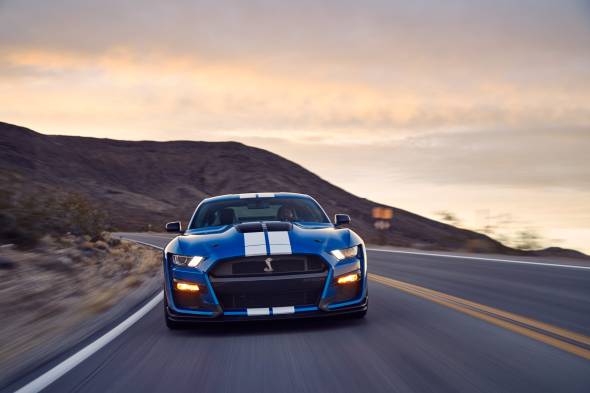
During our testing, the GT500 hurtled through the quarter-mile in 11.4 seconds at 132 mph. But that was on a regular street-like surface, not a sticky, prepped drag strip. We struggled mightily with traction at launch, and our best run was with the launch control set to the lowest rpm allowed (1200 rpm) to prevent igniting a rear-tire fire. However, no surprise: with more traction far, better numbers are possible, and we’ve seen numbers below 11 seconds at drag strips, including this kid, who ran a 10.665 shortly after he acquired the car.’Murica Which Ultimate Pony Car Is the 1/4-Mile King?This Kid Ran a 10.66 Quarter Mile In His GT500
On the other hand, the 2020 Corvette has far fewer launch struggles, as it benefits from its newly acquired mid-engine layout and rear weight bias. Moving the weight distribution rearward improves launch traction, helping it jump off the line much quicker. During our testing, and despite far less horsepower, the mid-engine Vette outaccelerated the GT500 through the quarter-mile by two tenths of a second, reaching it in 11.2 seconds at 122 mph.Advertisement – Continue Reading Below
We’re starting to see other people’s numbers from both of these cars, though, as customers are starting to take deliveries of their C8 Corvettes and GT500s. Contrary to our test results, there’s a video circulating on YouTube that shows the new GT500 beating the C8 Corvette through the quarter-mile by seven-tenths of a second. It raced to the quarter-mile in 10.8 seconds while the Corvette reached it in 11.5 seconds.
Keep in mind that the driver and conditions are huge factors in quarter-mile and acceleration results. We suspect that here, the Corvette likely got bogged down on the high-grip surface, as the launch control isn’t optimized for those conditions, and the 760-hp Mustang benefited from the extra traction on the track.
Connor Hoffman for CarandDriver
Chevy Camaro Mid-Engine Rendering Could Be Corvette’s Cool Sidekick


It’s not such a crazy idea.
The Chevrolet Corvette went mid-engine, so why not the Camaro? That’s the question this particular rendering from Carlifestyle on Facebook asks, figuratively and literally in the post. Sometimes, these oddball renderings can go off the rails but if we’re honest, this one has our interest … in a good way.
It’s not hard to see shades of the Lamborghini Huracan in this design, presumably because that’s the car this rendering is based upon. The side intake and lower rocker trim is a dead giveaway, but beyond that, this car definitely looks like a proper good ol’ Camaro.
And what are the attributes of this, dare we say, Lamaro? As with all things mid-engine, the nose is short and the hips are wide to accommodate an engine behind the driver. From this angle, it’s quite impressive how well the pony car adapts to life as a mid-engine supercar. Of course, this is also an exceptionally well-done rendering that could pass for something real if we didn’t know otherwise.
Here’s a radical thought. The Corvette and Camaro were a stout one-two punch for Chevrolet as front-engine performance machines from America. Camaro sales have fallen sharply in recent years, and the Corvette has transitioned to its new mid-engine form. Maybe creating a mid-engine Camaro could be the pony car’s salvation. Keep the one-two Bowtie punch, just move both the ‘Vette and ‘Maro to the mid-engine world. The Camaro certainly wouldn’t have any domestic competition in such form, and we wouldn’t have even a teeny problem driving the car you see here – be it a V6, V8, or even a neat hybrid.
Alas, Chevrolet already had the guts to build the C8 Corvette with its engine behind the driver. As such we suspect that absorbed all of GM’s gambling chips so the Camaro’s future will likely be far less interesting. The car is expected to disappear in the next couple of years as the current generation winds down, fading into the annuls of automotive history for a second time.
Christopher Smith for Motor1