
2020 Corvettes are Now Shipping from the Corvette Assembly Plant (Again!)


Thanks to our friends at the MidEngineCorvetteForum.com, we’ve got two different confirmations that newly completed 2020 Corvettes are once again shipping from the Corvette Assembly Plant in Bowling Green
The shipping confirmation comes from the Jack Cooper Transport website. Owners can post their VIN into the search box and it returns the shipping manifest.
Yesterday, the National Corvette Museum received four new 2020 Corvettes while another shipping manifest shows 2020 Corvettes with VINs ranging from 2814 to 3354 heading to multiple Chevy dealers in the midwest.

Thanks to some of the sleuths on the MECF, we also see a few CTF Convertibles heading up to the Detroit area:

This is great news for customers who have been “patiently” waiting for shipping of the new 2020 C8 Corvettes for the first time since the Corvette Assembly Plant reopened on May 26th after being closed for two months due to the coronavirus.
How to Track Your 2020 Corvette
CorvetteBlogger contributor Jeremy Welborn previously wrote this post on how to Track the Shipping of your C8 Corvette via Jack Cooper. To find the shipping status of your 2020 Corvette, go to https://www.palsapp.com/, then click on the search icon on the top right of the page (looks like a magnifying glass). Enter your VIN and click the search icon to the right of the input field.
Source:
MidEngineCorvetteForum.com
How The Corvette Will Evolve Over The Next Five Years

The future of the mid-engine Corvette should be long and very fast.
Future variations of the new-generation Chevrolet Corvette have been the cause of much debate over the past year. Hagerty recently claimed that it has the scoop, via an “industry leak” on the roadmap for the Corvette’s’ development in trim and model variations. Between that and a lot of industry chatter and some leaks, we’re sure that the Corvette is not only going to evolve over the coming years but mutate into something incredibly special. Here’s how the future lineup of the Corvette should shape up.

2021 C8 Corvette Stingray
The first iteration of the new Corvette is on the road, although in limited supply due to the pandemic. It comes with an LT2 6.2-liter naturally aspirated V8, making 490-495 hp and 465-470 lb-ft depending on trim level. There’s no manual option, and power is controlled and delivered to the rear wheels by a Tremec supplied 8-speed automatic transmission.
Only 2,700 C8 Corvettes were built before the virus struck, then production had to be paused. The years given below are the planned model years. However, development programs throughout GM have been paused, and there could be significant delays.


2022 C8 Corvette Z06
The Z06 badge means added performance, and initial reports claimed the first heated up C8 Corvette would arrive with 650 hp and 600 lb-ft from a 5.5-liter LT6 V8. The race-inspired LT6 engine is set to have a flat-plane crank design that’s rumored to rev past 8,000 rpm. Since then, though, credible sources have reset expectations at 600 hp and 470-500 lb-ft of torque, but will, indeed, rev fast and long. The Z06 will also have a wider body to accommodate larger brakes inside the larger wheels and tires, as well as a more aggressive suspension setup. There’s also reports that an optional aero package will include a unique rear wing.

2023 C8 Corvette E-Ray
Some enthusiasts aren’t going to like this, but the Corvette is going to go hybrid in the 2023 model year. It will use the same 6.2-liter LT2 V8 as the Corvette Stingray, but it’ll be bolstered with an electric motor located between the front wheels. The 1.94-kWh lithium-ion battery pack will be located in the middle of the car, and the electrical system’s peak output will be 85 kW. Total output should sit at around 600 hp and 575 ft-lb of torque – around the same as the Z06 model. Unlike the Z06, the E-Ray isn’t expected to have the widebody setup and will be the first-ever all-wheel-drive Corvette.


2023 C8 Corvette Grand Sport
There are conflicting reports on this one with some claiming the Grand Sport will be the hybrid model, and others suggesting that the Grand Sport will be powered by the Stingray’s 6.2L LT2 V8, but with the chassis and aerodynamic enhancements from the Z06. Using the base model V8 and upgrading the chassis is the traditional recipe for the Grand Sport. We’re trying to verify either way, but we currently suspect the Grand Sport will be the name of the hybrid model.


2024 C8 Corvette ZR1
The ZR1 has traditionally been the flagship Corvette, cranked up then honed to hunt down supercars at the track. The ZR1 will come with a twin-turbo variant of the flat plane crank 5.5L V8 LT6 engine making a fearsome 850 hp and 825 lb-ft of torque. For reference, the C7 generation ZR1 made 755 hp and 715-lb-ft of torque and that was frightening enough for the uninitiated.
The C8 generation Corvette ZR1 promises to be the fastest Corvette yet, and that’s before adding the upgraded chassis with track-oriented suspension, brakes, and active aero. However, in 2025 something even faster should arrive.


2025 C8 Corvette Zora
The Corvette Zora is named after Zora Arkus-Duntov, the man who turned the Corvette into a serious performance car but didn’t live long enough to see his dream of a mid-engined version come true. Fittingly, the fastest Corvette in its history will have his name on it, and use the twin-turbo 5.5L LT7 V8 from the ZR1 paired with a hybrid-electric system. Total power output is set to be astounding at around 1,000 hp and 900-1000 lb-ft of torque. It’ll be all-wheel-drive, wide-bodied, track-ready, and feature active aerodynamics. It will also put to bed any argument of whether the Corvette is a supercar or not.


Watch A Corvette C8 Hunt Down A Dodge Viper ACR

It seems comfortable at the limit.
The C8 Corvette is Chevrolet’s first stab at building a true mid-engine supercar. While much faster versions will follow, the C8 Stingray in base form can hold its own against more exotic and more powerful machinery. We recently wrote about a C8 Stingray demolishing the quarter-mile, but now we shift our focus to the Laguna Seca Raceway, where a C8 goes up against one of the meanest American performance cars out there: the Dodge Viper ACR.
The C8 is clearly at home on a track as we can see in the video. This Torch Red Corvette gets pushed to its limits and comes out as an unexpected hero.


The 2020 C8 Chevrolet Corvette is no wimp when it comes to numbers: powered by a naturally aspirated 6.2-liter V8, this car produces 490 horsepower and 470 lb-ft of torque. That’s enough to launch it to sixty in only 2.9 seconds when fitted with the Z51 package. This translates into a car that is deceptively fast, especially when compared to big dogs such as the Viper ACR.
In the video, we can see the Vette slowly warming up to the track conditions, with that naturally-aspirated engine filling the cabin with the best noise you could imagine. It is clear that the driver is trying to find his comfort zone.


After a short sprint, the driver and car seem to be clicking, and the pace increases. In the distance, you can see some cars getting closer and closer: it turns out that it’s a Porsche 911 GT3. The action starts at around the 3:15 mark, but you’ll have to wait until the 6:40 mark to see the battle between the Viper and C8.
We have no doubt that in the hands of an experienced driver the Viper would be the faster car, but getting the most out of the downforce capability of this car takes a serious driver and it’ss clear to see that the C8 Corvette is an easier car to drive at the limit. If this is what the Stingray is capable of, we can’t wait to see what faster versions will do.
Michael Butler for CarBuzz
Time Is Running Out To Buy A 2019 Chevrolet Corvette C7

With demand for the C8 outstripping supply, it’s a great time to buy a nearly new C7.
Last year saw the introduction of a mid-engined Chevrolet Corvette Stingray for the first time when the C8 took over from the front-engined C7. It marked a major departure for any Corvette, but thankfully, the C8 has retained the unmatched bang-for-buck performance and power that made the C7 so impressive.
For customers who still want to purchase a 2019 C7, time is running out. According to a report by Corvette Forum, there are now fewer than 300 examples of the 2019 C7 for sale in the country. That said, it may still be easier to get hold of one than the 2020 C8, of which only a few are on sale at dramatically marked-up prices.


As of June 4, there were 289 C7s listed for sale based on information from a Chevy dealership in Pennsylvania. With zero-percent APR financing over 72 months along with a rebate of $3,250, the incentives are attractive and in stark contrast to the 2020 C8s, with many examples of the new car selling for over $100,000.
The 2019 C7 inventory includes 62 Z06s, 44 of the Z51 variants, and just four examples of the crazy ZR1. Of course, the latter was the ultimate C7 with its 755-horsepower supercharged V8 engine sending it to 60 mph in less than three seconds. State availability of C7s varies significantly, with 28 models in New Hampshire and 22 in Illinois, but nothing at all in Kansas, Maine, Alaska, and South Dakota.Most Extreme Brabus Creations EverMcLaren Special Operations Finest Creations


With the current sky-high demand for the C8, purchasing a nearly new C7 could be the perfect solution until the C8 increases in availability. Plus, you’ll save a lot of money. Around three weeks ago, car rental company Hertz was selling 100th Anniversary Editions of the C7 (based on the Z06) for as little as $57,000. Although that’s close to the base C8’s starting price, it’s just about impossible to find a C8 in this spec at the moment.
Besides, whether the engine is midship or in front, the Corvette offers as much driving enjoyment at the price as anything else out there. The new C8 may have moved the game on, but the C7 is far from disgraced and remains a cracking sports car.


Karl Furlong for Carbuzz
Fewer Than 300 New Corvette C7s Are Still Available (With Lots Of MT)


Some states even have more than 20 units up for grabs.
The 2020 Chevrolet Corvette sold like hotcakes, with some pending orders still underway. In fact, Chevrolet is aiming to hit the 20,000-unit production mark this year, covering both coupe and convertible versions of the C8 Stingray. Now, production of the remaining 2020 Corvette orders has already commenced, but if you’re among those who have ordered, patience should be your virtue.
Alas, Chevrolet is moving on to the production of the 2021 model year Corvette C8 by November, but did you know that there are still a few units of the Corvette C7 left in the dealers?
Gallery: 2019 Chevrolet Corvette ZR1 First Drive


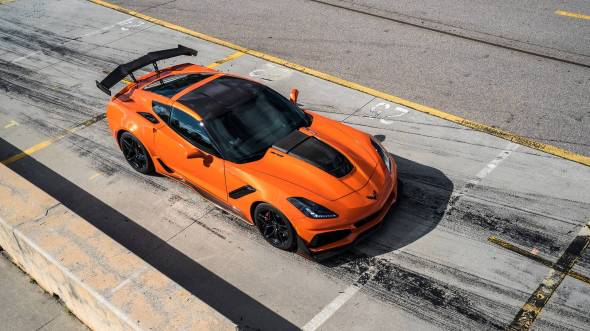
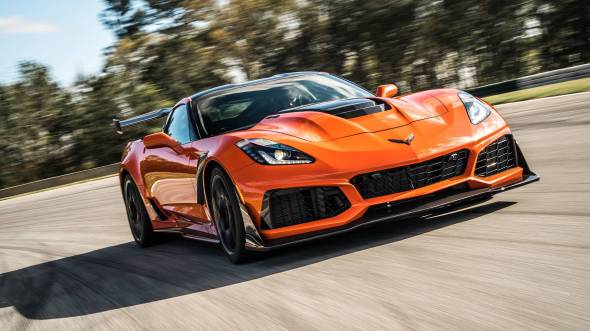


According to a report by CorvetteBlogger, Matt Beaver of Whitmoyer Chevrolet in Pennsylvania discloses that there are still 289 units of the 2019 Corvette C7 showing as available in dealerships spread across the country. So, if you aren’t a fan of the new mid-engine layout, there’s a good chance you’ll still be able to buy a brand new unit in a dealership near you.
Among the states that have the most number of C7s still available are New Hampshire, Illinois, and Florida – all with more than 20 units waiting for their rightful owners. There’s no information about their prices, though.
Get Into The ‘Vette Mill:
Also, if you’re looking for a manual Corvette, which is something missing on the C8 generation of the sports car, you’ll be glad to know that there are still a few MT units left within these dealerships. There’s one manual Stingray Convertible, while nine Stingray Z51 coupes still come with a stick shift. Out of the 138 Grand Sport Coupe units left in the U.S., seven of them come with a third pedal.Save Thousands On A New Chevrolet Corvette

MSRP $ 56,995Save on average over $3,400 off MSRP* with
Motor1.com Car Buying ServiceSEE PRICING
And yes, if you’re in the hunt for a 2019 Corvette ZR1, there are still four units up for grabs – three manual, one automatic – but all of them are dealer demo units, according to Beaver’s list.
The catch? It wasn’t disclosed at which exact dealerships do these MT Corvettes are located at, so you better be asking for assistance from your local dealership if you’re interested.
See Hennessey’s Chevy Corvette C8 Drag Race Bone Stock C7

Its’s not a fair race to begin with, but at least they’re both painted white.
It’s no secret that Hennessey Performance is working on the 2020 Chevrolet Corvette C8 by giving it a twin-turbo conversion. We’ve heard it roar in its initial stage before, plus it has hit the dyno in a previous video as well, but we have yet to see it in action again. We’re guessing that Hennessey is still wrapping up its development.
What we see from the Texas-based tuner, however, is its slightly tuned mid-engine ‘Vette. Fitted with stainless steel exhaust, lightweight wheels, and Hoosier race tires, we’ve seen the white C8 drag race several cars before, including a Huracan and a Mustang Shelby GT500.
Gallery: C8 Corvette Dyno At Hennessey


Now, Hennessey pits the altered C8 versus a bone-stock Corvette C7. We’re not really sure what the purpose of this head-to-head comparison is because it has already been decided right before it even started. Plus, the C8 has performance upgrades, albeit not much, on its employ but still, we wouldn’t say that this is an apple-to-apple comparison.
But then again, a stock C8 and C7 comparison isn’t fair either. On paper alone, the C8 has the major advantage in terms of total output, with the latest model producing 490 horsepower (365 kilowatts) – a quite massive update from the former’s 455 hp (339 kW). The C8 also gets a better 8-speed dual-clutch transmission.
Jacob Oliva for Motor1
2020 C8 Corvette Production Rolling Without Incident

With constrained production, these cars are instant modern collectibles.
General Motors has a lot of orders to fulfill for the 2020 C8 Corvette and the Corvette Assembly plant in Bowling Green, Kentucky is finally getting back to production. Originally, the factory was idled and employees furloughed back on March 20, a move that GM painted as lasting for only two weeks. Here we are a little over two months later with few C8 Corvettes made, guaranteeing the 2020 model year is an instant collectible due to small production numbers.

The so-called “COVID Corvettes” are about to increase in number, but don’t expect anything dramatic. This week only 550 of the 1,200 workers for the Corvette Assembly plant have returned to the production line.
Those workers are having to wear protective equipment like masks and deal with revised procedures designed to maximize sanitary conditions on the assembly line. However, all those changes will slow the production process down significantly.

On top of that, reports claim at least 230 C8 current builds were set aside unfinished when the factory was idled. Each car was wrapped tightly in plastic to avoid dust and other debris, so that must be removed, the Corvettes moved to their appropriate places in the production line, and the assembly process finished for each one. Some are speculating this could take several weeks.
Thanks to many suppliers for Corvette Assembly having closed as well, there aren’t enough parts to bring on the rest of the assembly line workers. Those who are going to work have been selected by seniority. They must answer a series of questions about coronavirus symptoms before entering the factory floor. In addition, each worker’s temperature is taken.

GM hasn’t provided any official word on how many 2020 Chevrolet Corvettes will be made. Unofficial estimates peg it at a small fraction of the normal production levels, meaning many who ordered a C8 will have to wait until 2021 to get one. The lucky few who do get a 2020 model are sitting on a rare COVID Corvette that’s a part of history at this point.
Source: WKU
Charlotte Motor Speedway Becomes Pit Stop for Atrium Health Coronavirus Testing


CHARLOTTE, N.C., March 24, 2020 – For more than 60 years, Charlotte Motor Speedway has been a place for “firsts.” Today, in yet another first, the speedway has become the first professional sports venue in the country to serve the community as a remote testing site during the ongoing coronavirus disease 2019 (COVID-19) pandemic.
In partnership with the speedway, Atrium Health has created a Coronavirus Testing Center at zMAX Dragway, part of the Charlotte Motor Speedway complex. The remote testing site provides a convenient location for residents of northern Mecklenburg and Cabarrus Counties to have their tests performed when ordered by their physician. Atrium Health has several additional sites throughout the Charlotte region, each in locations designed to provide a secure, private environment for patients to be tested.
Testing for COVID-19 is conducted without patients having to get out of their cars, which reduces the possibility of infecting other patients and healthcare workers. Healthcare providers will make appointments and direct patients to designated testing centers where medical professionals will approach the patients at their cars. These tests involve obtaining swabbed samples, which are then tested at Atrium Health’s in-house lab, and patients are typically notified of the results in approximately 24 hours. Atrium Health can test approximately 1,000 samples each day and is one of the only health systems in the nation to have this capability.
“Having these types of remote locations, away from a hospital or other care locations, yet convenient for people in need of testing, is essential to helping contain the spread of the coronavirus,” said Jim Hunter, MD, senior vice president and chief medical officer, Atrium Health. “It’s important to note that patients still need to meet the established criteria for testing by a healthcare provider, which will keep other patients and healthcare workers safe, as well as protect our testing supplies. We deeply appreciate this partnership opportunity with Charlotte Motor Speedway to make a significant impact on the health of our community.”
“At Charlotte Motor Speedway, we work for the fans, salute our military and serve our community,” said Greg Walter, Charlotte Motor Speedway executive vice president and general manager. “During these unprecedented times, we want to support our neighbors and the region with what we can do to keep people healthy. Atrium Health has been a longtime partner of ours and we’re happy to work with them to provide a well-known, accessible and safe place to host this remote testing site for as long as there is a need.”
Atrium Health continues to work to keep the communities it serves safe and informed. The latest information including prevention tips, frequently asked questions and care options are found at www.AtriumHealth.org/Coronavirus:
• COVID-19 Risk Assessment: Answer a few quick questions using a new automated and interactive digital COVID-19 assessment tool to get immediate recommendations on next steps in care.
• Atrium Health Line (704-468-8888): Talk live with an Atrium Health healthcare professional to answer questions, 24 hours, 7 days a week.
• Symptom Checker Chart: Is it COVID-19, the flu, a cold, or seasonal allergies? Click here to help distinguish between typical symptoms of each.
• Virtual Visits: Secure, face-to-face video chat with a trusted healthcare provider from the comfort of home for a reduced cost of $25.
• eVisits: Care through a secure message for minor illnesses like flu or cold for a reduced cost of $10.
About Atrium Health
Atrium Health is a nationally recognized leader in shaping health outcomes through innovative research, education and compassionate patient care. Headquartered in Charlotte, North Carolina, Atrium Health is an integrated network not-for- profit healthcare system with over 70,000 teammates at nearly 40 hospitals and more than 900 care locations. With locations throughout the Carolinas as well as Georgia, Atrium Health is a leading-edge innovator in virtual care and mobile medicine. It provides top-ranked pediatric, cancer and heart care to patients, as well as specialized musculoskeletal programs and organ transplants. Ranked among U.S. News & World Report’s Best Hospitals in seven different specialties, it has also received the American Hospital Association’s Quest for Quality Prize, and the only healthcare system to receive the 2020 CMS Health Equity Award. Its flagship hospital, Atrium Health’s Carolinas Medical Center, is the region’s only Level I trauma center and is consistently rated among the nation’s best. With a commitment to every community it serves, Atrium Health seeks to improve health, elevate hope and advance healing – for all. Last year alone, Atrium Health provided more than $2.07 billion in free an uncompensated care and other community benefits.
About Charlotte Motor Speedway
Celebrating its 60th anniversary season, Charlotte Motor Speedway has set the standard in motorsports entertainment for fans of all ages. Known as America’s Home for Racing, Charlotte Motor Speedway is the only race vacation destination where fans can immerse themselves in the heart of NASCAR country. Visitors can attend one-of-a-kind race spectacles including the NASCAR All-Star Race, Coca-Cola 600 and Bank of America ROVALTM 400; take behind-the-scenes speedway and race shop tours; explore the NASCAR Hall of Fame and drive an 800-horsepower stock car. The 1,000 plus acre speedway complex also includes state-of-the-art facilities zMAX Dragway and The Dirt Track at Charlotte. Through every event and every decade, Charlotte Motor Speedway puts FANS FIRST with a never-ending commitment to enhance the fan experience. That tradition continues with unmatched value through affordable tickets, unparalleled pre-race entertainment and opportunities for fans to see their favorite drivers. For all the latest news and information, visit www.charlottemotorspeedway.com, follow on Twitter, Facebook and Instagram or download the Charlotte Motor Speedway mobile app.
2020 Chevrolet Corvette gets ‘Lambo doors’

The mid-engine 2020 Chevrolet Corvette Stingray aims to deliver an exotic car experience on a budget, but it’s missing one key element: doors.
Oh, the $59,995 coupe has two, but they’re just regular old doors that swing out like the ones on most cars, not the cool “scissors-style” doors originally made famous by Lamborghini.

Well, owners will soon be able to remedy that oversight thanks to Eikon Motorsports, a company that specializes in ‘Lambo Doors’ conversions on a wide variety of vehicles ranging from the Dodge Challenger and Cadillac Escalade to the … the Lamborghini Huracan, which doesn’t have them either.
The Scottsdale, Ariz., outfit is offering a kit for the C8 that attaches to the same bolts as the factory doors and is reversible, in case you tire of making a grand entrance whenever you get out of the car. Pre-orders are currently available for $2,999, or $4,300 installed with lifetime warranty.
You may end up getting the kit before your car, however, as the start of Corvette production was delayed several weeks due to last fall’s UAW strike and has since been suspended due to the coronavirus pandemic. Only 2,700 2020 model year Corvettes have been produced so far, according to Motor Authority, and the automaker may not be able to satisfy its current order list before the end of the calendar year.
2022 Chevrolet Corvette Z06

What We Know So Far

Overview
Now that the bubble of anticipation surrounding the mid-engine Corvette has burst, excitement is building for the even-mightier Z06 model. With an exotic flat-plane-crank V-8 engine, the 2022 Chevy Corvette Z06 will sound unlike any Vette that’s come before. It’ll also look meaner than the mainstream C8 thanks to flared fenders, larger air scoops, and aerodynamic addendum that actively adjusts to maximize high-speed downforce and cornering traction. Along with its exclusive powertrain and enhanced appearance, the super Chevy will inherit all the best features and technology from the regular model. Although we still don’t have all the juicy details about the new Z06, here’s what we know so far.
What’s New for 2022?
The first mid-engine Corvette Z06 is expected to go on sale in early 2021 as a 2022 model. As is tradition, it’s a more hardcore, track-focused version of the standard Vette, complete with bolder styling cues and serious performance attributes.
Pricing and Which One to Buy
- Z06: $85,000 (est.)
It should make sense that, since Chevy hasn’t officially revealed the new Corvette Z06, we can only speculate on how much it’ll cost. Its front-engine predecessor started at about $25,000 more than the base model, so we think it’s safe to add that number to the starting price of the 2020 Corvette, which starts at $59,995. That means the 2022 Z06 should open at around $85,000 when it eventually goes on sale.
Engine, Transmission, and Performance
The upcoming Corvette Z06 will receive a special engine that should make it sound similar to the supercars it’s trying to dethrone. The naturally aspirated 5.5-liter V-8 features a flat-plane crank, which means it should rev to between 8500 and 9000 rpm. This engine is expected to make over 600 horsepower, and it’s Ferrari-like howl is all but guaranteed to send shivers down the spine of bystanders. The unconventional V-8 will hook up to an eight-speed dual-clutch automatic transmission and rear-wheel drive. Considering that the 495-hp 2020 Corvette Z51 we tested rocketed from zero to 60 mph in just 2.8 seconds and completed the standing quarter-mile in 11.2 seconds at 122 mph, the Z06 will be even quicker in a straight line. A set of wider, stickier tires and more powerful brakes will help it corner harder and stop shorter than the regular Vette, too. Chevy will also strengthen the structure and recalibrate the suspension tune on the Z06 to help make sure its performance advantages are most obvious at the racetrack. A host of active aerodynamics that automatically adjust to optimize downforce will join the party for this new generation. We’ll have to wait until we get our hands on one to evaluate how its myriad improvements compare with the outgoing Corvette Z06.
Fuel Economy and Real-World MPG
Neither Chevy nor the EPA have indicated how efficient—or inefficient—the 2022 Corvette Z06 will be in the city and on the highway. Since the company’s flat-plane-crank V-8 is currently only found in the Corvette C8.R race car, we don’t have any government ratings for comparison. Once the Z06’s fuel-economy figures are released, and we have the opportunity to test one on our 75-mph highway route, we can evaluate its real-world mpg.
Interior, Comfort, and Cargo
The Bow Tie brand went above and beyond to ensure that the mid-engine Corvette’s interior could not be called boring. While the design certainly transcends what’s found on every other Chevy model, the square steering wheel and wall of climate-control buttons on the center console are unusual elements, to say the least. Still, the cabin layout caters to the driver, and the list of standard and optional features is extensive. This includes a 12.0-inch fully digital gauge cluster, a head-up display, heated and ventilated seats, and wireless charging. All of this and more will continue inside the new Z06. We expect its track-worthiness to be made apparent through additional carbon-fiber and microsuede interior accents as well as a set of even more aggressively bolstered seats. The Corvette’s capacious rear trunk should continue to provide a spot for drivers to carry two sets of golf clubs.
Infotainment and Connectivity
Cooked into the Corvette’s multilayered dashboard is an 8.0-inch touchscreen that supports Chevy’s Infotainment 3 Plus system. While we’ve only had minimal exposure to this specific setup, we found it to be mostly intuitive and responsive. We’re confident the Z06 will share the same interface and features, which include Apple CarPlay, Android Auto, and a Wi-Fi hotspot. Likewise, two separate Bose stereos are expected to be offered: a standard 10-speaker system and an optional 14-speaker setup. The new Z06 will continue to offer the Performance Data Recorder, which allows you to record video of everything from your track exploits to relaxed country-road cruises. And if you dare leave your Z06 with a valet, there’s a setting that keeps track of any nefarious activities the car-parker might try.
Safety and Driver-Assistance Features
The 2022 Corvette Z06 hasn’t been crash tested by the National Highway Traffic Safety Administration (NHTSA) or the Insurance Institute for Highway Safety (IIHS). While the regular C8 Corvette only has a handful a driver-assistance technology, such as blind-spot monitoring and rear cross-traffic alert, we expect those features to be available on the Z06.
Warranty and Maintenance Coverage
Chevy provides all of its models with a middle-of-the-road limited and powertrain warranty. While the company offers more complimentary maintenance than automakers who skip the free service altogether, it’s one of the shortest such plans in the industry.
- Limited warranty covers three years or 36,000 miles
- Powertrain warranty covers five years or 60,000 miles
- Complimentary maintenance is covered for the first visit
Everything You’ve Ever Wanted To Know About Hot Wheels (But Never Asked)

Many gearheads have a strange affinity to Hot Wheels. Here is everything you’ve ever wanted to know about the company, but never asked.

Toy cars can be divided into two categories: Hot Wheels and everybody else. For over 50 years, Mattel has dominated with what is now recognized as the best-selling toy in the world. It’s impossible to count how many car buffs, from mechanics to real race stars to TV personalities, grew up playing with these cars. Whether it was just a few models or massive collections, Hot Wheels has been part of car culture for decades and is never going to stop. Whether it’s a simple model or some fancy licensed vehicle, Hot Wheels simply enthralls.
Yet it’s incredible how some people are unaware of the facts of the company and its history. From its unique origins to how these cars are put together, the story behind Hot Wheels is fascinating. There are also touches from how some of these cars are more expensive than real ones to some unique touches on the culture. Here are 20 amazing facts about Hot Wheels to prove they’re more than just “kids toys.”‘
20/20 Real-Life Hot Wheels Jump Was A World Record

Growing up a massive Hot Wheels fan, racer Tanner Foust decided to honor them in a fun way. At the 2011 Indy 500, Foust talked the management into seeing up a massive orange ramp and raced down it in a rally car.
After 90 feet of track, Foust sailed 332 feet, the longest record for such a move. He topped it by driving through a 66-foot loop in 2012 to live out the dreams of every kid.
19 Technology In Car Building Is Amazing…
Making toys has become a very high-tech business today. Just like real car companies, Hot Wheels has adapted to the 21st century nicely. Computers and 3-D technology are utilized to make sure the designs are perfected before the building begins.
It also helps them keep on top of the latest car trends to ensure that today’s Hot Wheels are sleeker and more natural than the ones of the past.
18 But They’re Still Diecast
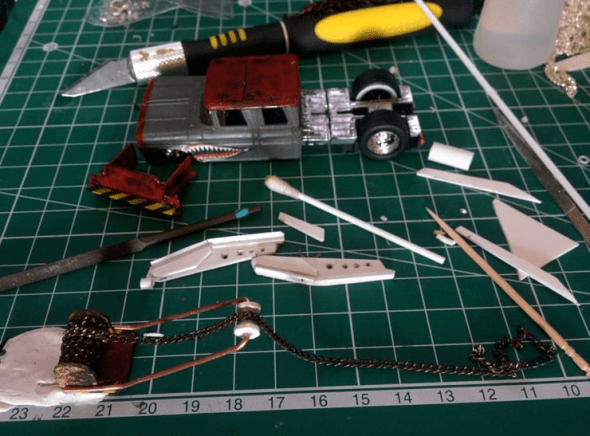
There are many toy car lines out there, but Hot Wheels is still the king of the bunch. The key reason is that, for all the advances in technology, every car is still diecast and built mostly by hand.
Even when cheaper materials are available, Mattel knows the diecast is what the fans want. It’s also helped in making customized cars at home for popular models. After 50 years, Mattel doesn’t want to mess with success and do away with diecast.
17 They’ve Worked With NASA

Hot Wheels have done a few astronaut-themed toys over the years. But that’s not the only connection they have with NASA. In 1998, they were able to work with the agency to create an exact replica of the Mars Rover, which landed on the Red Planet that very year.
They also worked with them in 2012 for scale models of the Curiosity rover. It’s amazing how the company got access to top-secret plans to make these toys.
16 Collectors Take It Seriously

Some may dismiss Hot Wheels as “just for kids.” But collectors take it more seriously than real automobiles. The 1969 Volkswagen Beach Bomb (only 16 prototypes were made) is known to go for at least $15,000.
Some rare models can go for a hundred grand, and collectors are always on the lookout for unique mint models. Entire museums are devoted to various cars as some Hot Wheels collections put legit car collectors to shame.
15 Scaling Down The Cars Was Tricky

A key to the company’s success is that they work with scores of real car companies to get looks at plans for their toy models. Yet it’s not so simple as just “make a smaller version.” The biggest challenge is to achieve the proper scale for the toys in a diecast model yet retain the details of the actual car.
That can be complex with some fancy vehicles. That every model has to be sized to fit the same tracks just adds to why it takes as long developing a toy car as a real one.
14 NASCAR Star Has The Record For The Longest Track

Ever since the Hot Wheels tracks were created, fans have been trying to top themselves making the most extended and most complex. A few have achieved great ones, but it’s fitting a NASCAR star holds the record for the longest.
In 2019, Joey Logano unveiled a 1,941-foot long track stretched across his garage. It weaves through his car collection with 1222 boosters before ending in Logano’s own 2018 HW Ford Mustang. Add yet another title to Logano’s list of accolades.
13 They Made A Car Coated In Diamonds
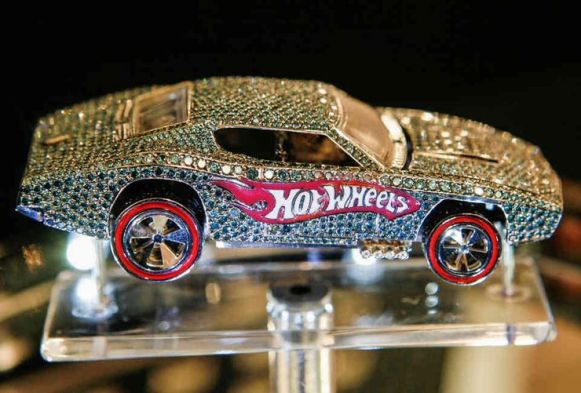
In 2008, Mattel made a big deal of celebrating the 40th anniversary of the Hot Wheels line. As a special reward, Mattel had Jasons of Beverly Hills craft the most expensive Hot Wheels car on the planet.
Cast in 18-karat gold, it’s covered with 2700 diamonds and gems totaling nearly $150,000 today. It’s become a rotating exhibit at toy museums for the glitziest Hot Wheels you could see.
12 The Darth Car Is A Speed Machine

While they do stick to toys, the company has been busy creating some real-sized cars for collectors. One of the most notable is based on Darth Vader, with the hood looking like his fearsome helmet and in jet black.
This isn’t just for show as it’s based on a C5 Corvette with a GM LS3 V-8 engine capable of 526 hp and 150 mph. The Dark Lord of the Sith would be proud of this powerful craft.
11 Every Car Is Tested To Make Sure It Can Run A Track

Almost from the beginning, Hot Wheels car fans had to have a track with the cars. They’ve gone from straight lines to elaborate roller-coaster-like loop systems to leave kids entertained for hours.
What few realize is that the track determines if a car makes it as Mattel prides itself on “every car can fit every track.” More than once, a prototype has to be altered when it won’t fit as the track decides a car’s final form.
10 There Are More Hot Wheels Cars Than Real Cars

While it’s tricky to figure out for sure, most sources agree there are at least one billion cars on the planet (give or take a few hundred thousand in auto graveyards). In contrast, since 1968, six billion Hot Wheels cars have been created.
True, many have been trashed and/or recycled, and it’s impossible to count how many have been lost in backyards. But given how 16 cars are produced every second, it’s no shock the toys outnumber the real deals.
9 Several Creators Are Legit Car Designers

The one constant of Hot Wheels is that the cars look just as good as the real deal. There’s an excellent reason for that as scores of the manufacturers are legitimate car designers. Larry Wood was a veteran of Ford before becoming one of the first Hot Wheels designers.
He’s not alone as Jack Ryan was a rocket designer who crafted the bearings that made the cars so great. Scores of the car designers were in real automobiles first, so it’s no wonder the vehicles look so good.
8 The Original Camaro Is Worth A Fortune

Mint conditions of the Original 16 Hot Wheels releases are all pretty collectible items. But one dominates from the pack. While versions of a Camaro were produced, a few had white enamel paint.
They had been meant to discover flaws in a prototype but accidentally released. A mint version of one went for a hundred thousand dollars and made this one of the most expensive toys on the planet
7 They Released A Custom Corvette Before GM Did

An early standout for the company at a custom Corvette in 1968. What made it notable was that the toy was released before GM had their actual Corvette in car dealerships.
The fact designer Harry Bradley had worked at GM indicates he may have “borrowed” the designs before he left to allow Mattel to beat GM to releasing a Corvette to the masses.
6 The Red Stripes Are Expensive

If you find what looks like an old Hot Wheels car, take a good look at the wheels. If they have red stripes, then you’ve just found a fantastic collector’s item. From 1968 to 1977, designers hand-painted red lines onto the wheels to make the cars look distinctive.
As a cost-cutting measure, they switched to all-black wheels in 1978. Some mint condition red-striped vehicles have been known to go for thousands online.
5 One Of The Original Cars Was Based On A Car With No Doors

The first wave of Hot Wheels was just 16 cars, and any of them can be valuable today. One is notable, the 1965 Dodge Deora. This car boasted no doors but rather a hatch for folks to crawl into.
It was based on a fun design used by Mike and Larry Alexander but in an irony, no real Dodge Deoras were built, to make this a truly unique model
4 A Tie-In Cartoon Got Pulled By The FCC

Today, cartoons based on toy lines are commonplace. But in 1969, Hot Wheels got in trouble when they put out a cartoon series about some teenage car drivers. Despite good messages, the show was hit by complaints about being a “half-hour commercial.”
The FCC agreed, and it was yanked off the air. The company was just ahead of their time with a cartoon tie-in for a hit toy line.
3 There’s A Fight On Where The Name Came From

Much of Hot Wheels is shrouded in myth, and that includes just where the name comes from. The familiar story is that when Eliot Handler saw the first models from designer Fred Adickes, he remarked: “those are some hot wheels you’ve got there.”
Another version is that Handler just blurted the name out in a meeting with a designer. Regardless, it just stuck to become one of the most popular toys on the planet.
2 They’re Number One…Because They Remain So Cheap

In the ranks of the most popular toys on the planet, Hot Wheels dominates. They’re not just the biggest toy vehicle sellers but also the number one selling toy in the entire world. The reason is that in many markets, the cars can still go for only a dollar each.
True, they can be put out in packs, and some nations charging a few bucks more. But many stores do sell the cars for less than a bottle of water, which is the reason they are so dominant.
1 Its Creator Was Married To Barbie’s Creator

Elliott and Ruth Handler were the First Couple of the toy world. The two had founded Mattel as a picture frame company in 1945. While making a dollhouse, Ruth decided to craft a series of dolls she named Barbie.
It was an instant hit to make Mattel a success. Elliott then realized how a toy car line could be great for boys to craft what would become Hot Wheels. The two remained together until Ruth’s death in 2002 (Elliott passed on nine years later) to be icons of their industry.
Sources: Mentalfloss.com, hotwheels.com, hotwheelsmedia.com, thrillist.com
Watch a Track-Day Comparison Between the Shelby GT500 and C8 Corvette

Both cars retail for about $81,000, but one is a lot more accessible.
 SPEED PHENOM ON YOUTUBE
If you’ve got $80,000 to spend and want an American high-performance car, now’s a pretty good time to be in the market. In addition to tire-shredding stalwarts like the Camaro ZL1 and Challenger Hellcat, Ford and Chevy have recently launched high-profile, track-ready sports cars. And thanks to a new video by Speed Phenom, we now know how they directly compare on track.
Naturally, we wanted to do this comparison ourselves. But the GT500 wasn’t ready during our Performance Car of the Year competition when we had an early C8 to test. And now that both cars are on sale, stay-at-home orders and track closures mean we’ll have to wait for an opportunity to do a full R&T comparison.
In the meantime, Speed Phenom does a good job of breaking down how they perform. With the caveat that he’s got a base model GT500 without the optional Pilot Sport Cup 2 tires, he notes that the car struggles for grip more often than the similarly-tired Corvette. It’s also less composed through mid-corner bumps, with slower cornering all around. Thanks to its massive horsepower advantage, though, it jets through straightaways.
The C8, meanwhile, benefits from serious mechanical grip. The better-balanced midship car fires through corners and has no problem putting its power down. That makes it more approachable, not surprising given that it’s the tamest version of the C8 while the GT500 is stretching the limits of the S550 platform. We’re sure to see more track-ready Corvettes soon, but for now the Stingray is a surprisingly capable start.
Mack Hogan- Road&Track
1977 Chevrolet Corvette IMSA “SuperVette” race car for sale

Some fans complain that race cars don’t have much in common with road vehicles, but that wasn’t a priority in the 1970s. Loose regulations in the period allowed teams to erase nearly all road-car DNA as they searched for greater performance. This 1977 Chevrolet Corvette, dubbed the “SuperVette,” is an example of the era’s excesses.

Offered for sale by noted Porsche 959 restorer Canepa, the SuperVette was built to take advantage of a rule change in IMSA road racing. In 1976, the sanctioning body allowed full tube-frame cars to compete in its top-level series. Corvette racer John Greenwood saw this as an opportunity to build a more competitive car, and teamed up with designer Bob Reilly to make a tube-frame Corvette. This Corvette—COV002—is one of two chassis completed in 1977.

This car has almost nothing in common with a stock 1977 Corvette, which is a good thing because Corvettes offered very little performance at the timie. Underneath the swollen bodywork is a chassis and roll cage made from 2.0-inch chrome-moly tubing. Its bulging hood hides an aluminum 500-cubic-inch big-block V-8, making more than 750 horsepower. It was built by Don Nichols, whose Shadow Racing team competed in Formula 1, Can-Am, and F5000. The engine is harnessed to a Jerico 4-speed manual transmission.

COV002 was bought by John Paul, Sr. for the 1978 season. Paul raced with his son, John Paul, Jr., and both were later convicted for running an illegal marijuana trafficking operation. It was a different time, for sure.


It was the elder Paul who specified the Nichols-built engine, rather than one built by Greenwood. In an effort to reduce drag, the car also got a narrower track and more aerodynamic bodywork than its sibling.

Paul raced the ‘Vette during the 1978 IMSA season in the GTX class, primarily competing against Porsche 935s. The car earned two podiums that year. After that, it was sold but continued to race through the 1982 season. After retirement, the car changed hands a few more times before being bought by Canepa.


The Corvette has been restored to its 1978 racing specifications, and is currently eligible for to compete in vintage racing, according to Canepa. The seller didn’t list a price, but we don’t expect a car with this pedigree to sell cheap.


Stephen Edelstein for Motor Authority
Watch a C8 Mid-Engine Corvette Hit 173 MPH on a Dry Lake Bed

Even off the pavement, the new ‘Vette is a rocket ship.
The 2020 C8 Chevy Corvette is a fast car. In base form, it can hit a staggering 194 mph flat-out. Even with the drag-inducing Z51 performance package, the car can still do 184. Hennessey Performance took theirs to 182 mph with ease before they turbocharged it to oblivion. Now, there’s another C8 top-speed run on the internet, and this time, it takes place on a dry lake bed.
Popular YouTube TheStradman took his new Z51-equipped Corvette to a dry lake bed in Utah to test out the top speed of the car. He managed to hit an impressive 173 mph before slowing down—not bad considering the uneven and bumpy surface. It helps that there’s absolutely nothing for miles in either direction. In fact, from inside the cabin, it looks a bit uneventful. Here’s a perspective from outside the car to give you a sense of how fast 173 mph is:
If the base Corvette is this quick right out of the box, we’re curious to see how the upcoming Z06 stacks up. Considering the last-gen car could hit 200 mph, we’re expecting big things.
Source: Brian Silvestro; for RoadandTrack
IMSA Announces Updates to 2020 IMSA WeatherTech SportsCar Championship and IMSA Michelin Pilot Challenge Schedules


The International Motor Sports Association (IMSA) today announced schedule updates for three 2020 IMSA WeatherTech SportsCar Championship and IMSA Michelin Pilot Challenge events.
- The Acura Sports Car Grand Prix at Mid-Ohio has been moved to the weekend of Sept. 25-27, 2020. It was originally scheduled for the weekend of May 1-3.
- The IMSA Monterey SportsCar Championship at WeatherTech Raceway Laguna Seca has been moved up one weekend to run on Sept. 4-6. It was originally scheduled for the weekend of Sept. 11-13. This date adjustment was made to accommodate IMSA competitors planning to participate in the 24 Hours of Le Mans, which now will run on Sept. 19-20.
- The 23rdannual Motul Petit Le Mans at Michelin Raceway Road Atlanta has been moved back one week and now will run Oct. 14-17 to provide teams a more balanced schedule as the season comes to its conclusion. The original dates of the event were Oct. 7-10.
These three event date changes are in addition to the previously announced reschedule of the Mobil 1 Twelve Hours of Sebring Presented by Advance Auto Parts, which now is set for Nov. 11-14. Previously purchased tickets for all four events will be valid on the new dates.
IMSA will provide additional series updates, broadcast information and event schedules as they become available.
Mid-Engined Chevy Corvette Video Analyses The 2LT Interior

The Goldilocks zone of Corvette C8 interiors?
By now, you should know that Chevrolet has started deliveries of the mid-engine 2020 Corvette. Lucky owners of the ‘Vette C8 are starting to receive their newest toy and most likely you’ve already seen one on the streets – that’s if the state you’re in is not affected by the coronavirus lockdown.
If you’re among those who are planning to purchase the new Corvette but are undecided with the trim level to choose, this video might be able to help you – especially if you’re particular with a car’s interior.
The Corvette C8 comes with three trim levels: 1LT, 2LT, and 3LT. The differences lie mainly in the features offered on each trim level, which defines that the cabin will look and feel like. That’s pretty important, considering that we spend so much time inside the car rather than staring at our investment from a distance. So, here’s a little guide.


The base 1LT trim isn’t really basic. With the entry-level trim, you already get the GT1 seats wrapped in mulan leather, a customizable 12-inch gauge cluster, push-button ignition and keyless entry, and an 8-inch Chevy MyLink infotainment system with Apple CarPlay and Android Auto, 4G LTE Wi-Fi, and 10-speaker Bose sound system. The Corvette 1LT trim is available in three color options: black, gray, or red.
Going up the 2LT trim gives you more interior color options plus features like a rearview camera mirror, a colored head-up display, heated/cooled seats, heated steering wheel, advanced blind-spot monitor, and rear cross-traffic warning. The infotainment gets upgraded as well with a wireless charger and a 14-speaker Boss audio system.
Finally, the 3LT trim dials up the ante by adding a premium Nappa leather with suede microfiber accents – all in combination with the GT2 seats that have more bolsters. These seem not a lot but the range-topping trim adds luxury to the sports coupe.
If you’re still undecided, watch the 2LT interior review on top of this page to check whether you need to take it down a notch to 1LT or go all out on the top-level 3LT.
Source: HorsePower Obsessed
How to Pump Gas without Passing Germs Around

The etiquette of doing something you do regularly while staying safe and clean.
- We might need new gas-pumping etiquette rules for the 21st century, both for selfish and altruistic reasons.
- We’ve known since 2011 that gas pump handles can be filthy—they’re worse than ATMs or escalators, even—but there’s no reason to worry if you take the right precautions.
- You can lower your risk by using gloves or paper towels to gas up, using touch-free pay options, and staying as physically separate from others as possible as you refuel.
You may have heard this one before: the best way to avoid catching some sort of communicable disease is to wash your hands well, and often. This advice isn’t exactly new, which hints at how reasonable and responsible it is.
Washing your hands to stay clean was the takeaway lesson from a 2011 study conducted by Kimberly-Clark Professional, which found gas pump handles were “the filthiest surface that Americans encounter on the way to work,” according to Reuters. The Los Angeles Times reported back then that the study found 71 percent of gas pump handles the Kimberly-Clark researched tested were considered “‘highly contaminated’ with the kinds of germs most associated with a high risk of illness.” Compare that to only 41 percent of ATM buttons and 43 percent of escalator rails.
The Kimberly-Clark Professional tests were done in big cities (Atlanta, Chicago, Dallas, Los Angeles, Miami, and Philadelphia) almost a decade ago, but when something like the coronavirus impacts pretty much every corner of the world, it’s a good reminder to take care when gassing up. When it comes to the COVID-19 coronavirus specifically, the National Institutes of Health has issued information that explains that coronavirus can be stable for 24 hours on some surfaces like cardboard and “up to two to three days on plastic and stainless steel.”
If you’re not already carrying disinfecting wipes in the car with you, this is a good time to start, assuming you have some available, and wipe off the pump handle and touchscreen, or any other surfaces you plan to touch, before your hands make contact. Even better, it might be a good idea to search out a station that accepts contactless payment at the pump, so you won’t need to come into physical contact with the touchscreen or anything else other than the pump handle. Two easy solutions to this issue are to either wear gloves or to use the paper towels commonly provided for window cleaning as a guard between your hands and the screen, buttons, and pump handle. Keeping gloves in the car is a good idea, but they shouldn’t be the disposable sterile gloves that hospitals can use when there’s a need for them there. If you don’t have gloves, keep some hand sanitizer in the car to use on your hands after filling up.
As for social distancing, it’s convenient that gas pumps are relatively far apart from one another, contagion-wise, but even so, choosing to fill up your tank at an off-peak time can be safer. If there are other people getting gas at the same time, keeping at least six feet between you and them is a good idea for everyone involved. And it should go without saying that you shouldn’t go into the store unless there’s a reasonable need to do so if there’s still a rapidly spreading disease going around.
The actual chance that you will catch a transmittable viruses at the gas station is low. As the Illinois TV station ABC-20 reported based on answers from a medical expert, the sequence of events that have to happen to get the virus from someone who has it (someone coughing onto the pump handle or touching the touchscreen with virus on their hands, and then you touching it and then your face) can be interrupted in any number of ways. Even so, there’s no harm in being extra careful in these potentially dangerous times.
Sebastian Blanco- Car and Driver
Hennessey’s twin-turbo C8 Chevy Corvette V-8 makes 643 horsepower early in development


It took 30 hours for Hennessey Performance Engineering to tear apart a new 2020 Chevrolet Corvette, install twin-turbo setup, and put it back together.
It’s no surprise, then, that the twin-turbo C8 Corvette isn’t ready to be sold to customers. The engine lacks intercoolers and Hennessey hasn’t cracked the code of GM’s new electrical architecture to reprogram the ECU.

“This is just the beginning, our own car, doing R&D,” company founder and CEO John Hennessey told Motor Authority.
On Monday, the engine made 643 horsepower and 570 pound-feet of torque at the wheels on a Dynojet dyno while running just 5 psi of boost. That compares to baseline testing HPE performed on the stock car which revealed 466 hp and 451 lb-ft of torque. HPE plans to offer a 1,200-hp version of the C8, which Hennessey said could make 18-20 psi of boost.
Hennessey took delivery of an orange C8 Corvette in Detroit on March 13. He and his daughter, Emma, drove back to the performance outfitter’s Texas headquarters and performed baseline testing before the Hennessey team tore apart the car.
The orange C8 fired back to life on Friday with twin 62-mm Precision Turbos and twin blow-off valves connected to the throttle body mounted behind the catalytic converters. Both turbos are oil-cooled with twin scavenge pumps that feed back into the motor.
The system is not intercooled. Instead, there’s a methanol injection setup to keep things from getting too hot. HPE is considering where to put intercoolers. The current packaging has limited space for intercoolers without cutting into trunk space, which Hennessey does not want to do. 2020 Chevrolet Corvette Stingray undergoes twin-turbo conversion at Hennessey
Hennessey told Motor Authority his team currently can’t tune the factory ECU, but it is looking at aftermarket solutions for the engine management system. He noted it took a year for solutions to come to market for the C7 and added, “hopefully, it won’t take a year.”
Hennessey said when the turbocharged C8 was first started it didn’t throw any codes, errors, or a check engine light. “The computer seems happy with the turbos,” Hennessey noted. A check engine light did appear when the front wheel speed sensors were disconnected to put the car on the dyno, Hennessey said.
The orange C8 will used for R&D of upcoming modifications. Hennessey said he doesn’t expect to deliver modified customer C8s for at least six months, and all will have intercoolers and full plumbing.
Joel Feder for Motor Authority
2020 Chevrolet Corvette vs. 2020 Ford Mustang Shelby GT500 at the Drag Strip

Did you see the two race on YouTube? We’ve tested them, too; here’s why the results were no surprise.

- We have tested both the 2020 Chevrolet Corvette (11.2 seconds at 122 mph) and the 2020 Ford Mustang Shelby GT500 (11.4 seconds at 132 mph) in the quarter-mile.
- A video on YouTube, however, shows flipped results: 11.5 seconds at 120 mph for the Corvette and 10.8 seconds at 132 mph for the GT500.
- As always, the driver and track conditions are critical, and our two-run average is far more repeatable than any one-off run at a drag strip.
When we tested Ford’s new 2020 Mustang Shelby GT500 against the top-dog 2020 Chevrolet Camaro ZL1 1LE, the Mustang came out on top on the drag strip. But how does the front-engine Shelby stack up against the other, now mid-engine, threat from Chevy?
Greg PajoCar and Driver

During our testing, the GT500 hurtled through the quarter-mile in 11.4 seconds at 132 mph. But that was on a regular street-like surface, not a sticky, prepped drag strip. We struggled mightily with traction at launch, and our best run was with the launch control set to the lowest rpm allowed (1200 rpm) to prevent igniting a rear-tire fire. However, no surprise: with more traction far, better numbers are possible, and we’ve seen numbers below 11 seconds at drag strips, including this kid, who ran a 10.665 shortly after he acquired the car.’Murica Which Ultimate Pony Car Is the 1/4-Mile King?This Kid Ran a 10.66 Quarter Mile In His GT500
On the other hand, the 2020 Corvette has far fewer launch struggles, as it benefits from its newly acquired mid-engine layout and rear weight bias. Moving the weight distribution rearward improves launch traction, helping it jump off the line much quicker. During our testing, and despite far less horsepower, the mid-engine Vette outaccelerated the GT500 through the quarter-mile by two tenths of a second, reaching it in 11.2 seconds at 122 mph.Advertisement – Continue Reading Below
We’re starting to see other people’s numbers from both of these cars, though, as customers are starting to take deliveries of their C8 Corvettes and GT500s. Contrary to our test results, there’s a video circulating on YouTube that shows the new GT500 beating the C8 Corvette through the quarter-mile by seven-tenths of a second. It raced to the quarter-mile in 10.8 seconds while the Corvette reached it in 11.5 seconds.
Keep in mind that the driver and conditions are huge factors in quarter-mile and acceleration results. We suspect that here, the Corvette likely got bogged down on the high-grip surface, as the launch control isn’t optimized for those conditions, and the 760-hp Mustang benefited from the extra traction on the track.
Connor Hoffman for CarandDriver
Chevy Camaro Mid-Engine Rendering Could Be Corvette’s Cool Sidekick


It’s not such a crazy idea.
The Chevrolet Corvette went mid-engine, so why not the Camaro? That’s the question this particular rendering from Carlifestyle on Facebook asks, figuratively and literally in the post. Sometimes, these oddball renderings can go off the rails but if we’re honest, this one has our interest … in a good way.
It’s not hard to see shades of the Lamborghini Huracan in this design, presumably because that’s the car this rendering is based upon. The side intake and lower rocker trim is a dead giveaway, but beyond that, this car definitely looks like a proper good ol’ Camaro.
And what are the attributes of this, dare we say, Lamaro? As with all things mid-engine, the nose is short and the hips are wide to accommodate an engine behind the driver. From this angle, it’s quite impressive how well the pony car adapts to life as a mid-engine supercar. Of course, this is also an exceptionally well-done rendering that could pass for something real if we didn’t know otherwise.
Here’s a radical thought. The Corvette and Camaro were a stout one-two punch for Chevrolet as front-engine performance machines from America. Camaro sales have fallen sharply in recent years, and the Corvette has transitioned to its new mid-engine form. Maybe creating a mid-engine Camaro could be the pony car’s salvation. Keep the one-two Bowtie punch, just move both the ‘Vette and ‘Maro to the mid-engine world. The Camaro certainly wouldn’t have any domestic competition in such form, and we wouldn’t have even a teeny problem driving the car you see here – be it a V6, V8, or even a neat hybrid.
Alas, Chevrolet already had the guts to build the C8 Corvette with its engine behind the driver. As such we suspect that absorbed all of GM’s gambling chips so the Camaro’s future will likely be far less interesting. The car is expected to disappear in the next couple of years as the current generation winds down, fading into the annuls of automotive history for a second time.
Christopher Smith for Motor1
2020 Chevrolet C8 Corvette Test Drive: Automobile All-Stars Winner


William Walker: Photographer Manufacturer Photographer Mar 11, 2020
It’s weird to say, but immediately after my first test drive in the new mid-engine, eighth-generation 2020 Chevrolet C8 Corvette, I was angry. Angry not because the car didn’t do what it should, but precisely because it did everything I asked of it, and did it beautifully—and I’d been led to believe it was a hot, understeering mess by the reviews I’d read elsewhere. How could they all have been so wildly off base?
There are many possible explanations, of course—differing driver skill levels, evaluation methods, and conditions. But two variables stand out among the rest: the C8 Corvette’s option for track or street alignments, and the length of exposure to the car. Addressing the latter issue first, we were lucky enough to spend the better part of week with the new C8, a rare chance given the limited availability of test cars so early in the Corvette’s production (All-Stars testing took place in early December 2019). That greater exposure to the car allowed us more time to get a feel for its behavior in a wide array of situations, both on the road and on the Streets of Willow Springs racetrack.
Perhaps even more importantly, however, was the choice of track and street suspension alignments. You see, the 2020 C8 Corvette has two official specifications for its alignment settings; the street alignment sets the camber at 0 degrees, while the track alignment sets the camber to 3 degrees negative. The result is the difference between a (somewhat) understeer-biased street setup and a balanced, ready-to-rotate super sports car. The former is intended to help Corvette owners new to the world of low polar-moment mid-engine cars make the transition without ending up backward in a guardrail their first time out. We spent our week with the Corvette in track-alignment mode, whether hammering out laps or zooming around the mountains near Lake Hughes.

But wait, isn’t that cheating, you ask? It might seem like it at first—track settings are meant for the track, not the street, right?–but Chevrolet itself recommends owners who use the track setting for track go ahead and leave the car setup that way all the time. No, it won’t cause excessive or premature tire wear, at least according to Chevy’s engineers. For the record, we did visually notice more wear to the front tires’ inside shoulders than we’d expect with the more conventional setup, so we’d be curious to see the state of the rubber after 5,000 or so miles with this alignment. It’s certainly something for owners to be aware of and to keep an eye on, at the very least.
Regardless, and not for nothing, the two alignment settings might better be named “beginner” and “advanced”. If you’re a moderately accomplished driver who’s comfortable with a car that’s willing to rotate, don’t leave the lot with your new Corvette until you’ve had the car set to its more aggressive alignment.
With that out of the way, holy cow, is this thing good! The nearly instant-on torque from the 6.2-liter V-8 means you’re never left wanting for thrust, the quick-shifting eight-speed dual-clutch transmission bangs out upshifts with authority, and the steering feel, while not telepathic, is still abundantly communicative. Detroit bureau chief Todd Lassa did note, however, that several of our evaluators found “the steering in its own separate Track mode is too heavy without doing anything for feel,” and resident professional race driver Andy Pilgrim pointed out, “The gearbox is very good on the street, but did not always give me the lower gear I wanted on the track.” If those are the worst things we could think to say after back-to-back runs in hardware as exotic as the $474,000-plus Ferrari F8 Tributo and the nearly as pricey McLaren GT, it’s pretty apparent the mid-engine Corvette is something special.
Braking is remarkably stable for a mid-engine car, as is power application, the latter thanks at least in part to the car’s Performance Traction Management system. Chevy’s PTM is one of the key technology transfers from the factory Corvette Racing program, and it shows its racing roots when put to the test. But of course even the best traction-control programs can’t work when the tires aren’t in contact with the road; that’s where the Corvette’s excellent suspension tune comes in.

“Glides over broken mountain roads like a hovercraft—but still sticks like crazy,” wrote contributor Arthur St. Antoine in his evaluation notes. Pilgrim agreed, noting the C8 Corvette “has more suspension travel than the Porsche 992, and feels more compliant, allowing more roll in transition; none of which is a bad thing for everyday driving comfort.”
In fact, far from a rabid, on-the-edge supercar, it’s clear the Chevy engineers behind the new C8 Corvette put a great deal of time and effort into the car’s daily driving demeanor, or, as features editor Rory Jurnecka noted, “It should make a nice road car with good interior space. Feels pretty easy to live with.” Not only is there a rear trunk that’ll fit two golf bags (or several carry-on bags or backpacks), there’s a front trunk (or frunk) that’ll hold some more. But the new C8 Corvette’s interior is what truly stands out in terms of daily comfort, especially in comparison to previous Corvettes.
“When I took the C8 on the road trip between the hotel and the winners’ shoot location, I was blown away at how good of a GT car it is,” social media editor Billy Rehbock said. “I put on the cooled seats, played music over the crystal-clear sound system, and rolled in complete comfort. My only complaint was that it was actually a bit quiet, even when being driven hard, but subsequent performance versions will fix that, no doubt.”
Beyond even the excellent interior feature set (though the verdict is still out on the extra-long button strip in the center console), the most notable and immediately noticeable upgrade to the C8 Corvette’s interior is the massive improvement of materials and build quality over previous generations. Our test car’s 3LT interior trim specification included Chevy’s upgraded infotainment system, a 14-speaker Bose audio system, and a head-up display. And in addition to the upgraded materials, it featured extended leather surface treatments, and GT2 bucket seats—though ours swapped the GT2 seats for “competition sport bucket” seats for an extra $500); the 3LT spec added $11,950 to the car’s $59,995 base price. Tack that cash onto the additional list of optional extras like the Z51 performance package ($5,000), magnetic ride control suspension system ($1,895), front lift system ($1,495), upgraded 19-inch front/20-inch rear wheels and tires ($1,495), and engine appearance package ($995), among others. Total price, as configured: a surprisingly reasonable $83,825.
Admittedly, this was a pre-production car, but it was also one of just a handful of streetable C8 Corvettes available at the time, meaning it had already lived a rather hard life before our testing even began. Sitting in the C8 back-to-back with the Ferrari F8, the Italian doesn’t come off as insanely luxurious or refined—and the F8’s interior is already perfectly lovely.
It’s no revelation that the 2020 Chevrolet C8 Corvette is a great performance value; the Corvette has been that way for decades. But for Chevy to have done such an impressive job on its first go with the engine behind the driver, and to have included so many improvements to the luxury and quality of the C8, all for a price that’s a fraction of the cars with which it competes, it’s easy to see why I was so angry after experiencing the car for myself—and it’s hard not to agree with Jurnecka when he says, “So glad this car is what I’d hoped for. Worth the wait.”
Nelson Ireson for Automobile
2020 Chevrolet Corvette C8: Top 10 Reasons To Buy


All-new 2020 Chevrolet Corvette is now on sale, and buyers are lining up
With deliveries of the all-new 2020 Chevrolet Corvette beginning this month we know there are a lot of very excited Corvette buyers out there who are just now getting familiar with Chevrolet’s newest sports car. What drove those shoppers to the new eighth generation Corvette C8, and what are they likely discovering as their ownership experience begins?
We’ve been fortunate to drive the new Corvette on multiple occasions, on both public roads and at a closed course race facility. This has given us sufficient seat time to understand the 2020 Chevrolet Corvette’s upgraded design cues and capabilities. We could make a nearly endless list of why people want the new Corvette, but here are the top 10 reasons we think new, and prospective, Corvette buyers are lining up to sample Chevrolet’s latest supercar.
- Zero-to-60 Performance: The 2020 Chevrolet Corvette’s “base” 6.2-liter V8 engine makes 490 horsepower and 465 pound-feet of torque. That’s enough power and twisting force to catapult the Corvette to 60 mph in 3 second flat. Spring for the $5,000 Z51 performance package, with 495 hp and 470 lb-ft, plus more effective engine cooling, more advanced brake and suspension components, stickier Michelin Pilot Sport 4S tires, along with aerodynamic enhancements, and the Corvette can hit 60 mph in 2.8 seconds.
- Exceptional Value: The 2020 Corvette starts at a meager $59,995, including delivery charges. Once again, that price includes a zero-to-60 time of 3 seconds flat, making the new Corvette not only one of the quickest street-legal cars you can buy, but one of only a very few cars capable of hitting those numbers for less than $100,000. The Corvette has always offered exceptional “bang-for-the-buck” performance specs. The C8 takes this longstanding Corvette tradition to new dimension.
- Top Speed=194 MPH: Not that we endorse going almost 200 mph in any vehicle, and certainly never on a public road. But – IF you have a safe, closed course facility to do it – the Corvette can indeed hit 194 mph. That’s in base form, at the $59,995 starting price. Pro tip: ordering the Z51 performance package actually reduces the car’s top speed even at it improves the Corvette’s zero-to-60 time. The Z51’s aggressive aerodynamics increase downforce, but the added drag reduces top speed to “just” 184 mph.
- 8-Speed Dual Clutch Transmission: Unlike a traditional manual transmission (which is not offered on the new Chevrolet Corvette), a dual-clutch transmission (DCT) has the benefit of keeping the rear wheels connected to the engine, even while shifting The “dual” in dual clutch means the incoming gear is engaged even before the outgoing gear is disengaged. This makes for shifts in under 100 milliseconds, far quicker than a human. The transmission’s design and placement also lowers the Corvette’s center of gravity.
- Magnetic Selective Ride Control: General Motors perfected this advanced active suspension technology years ago. How perfect? Ferrari licenses the use of this tech from GM for its own cars. When buyers equip the new Corvette with the FE4 $1,895 option they’ll have multiple driving modes, including Tour, Sport and Track. This enables a smooth, comfortable ride during relaxed driving conditions or track-ready stiffness when driving a 2020 Corvette on a closed course. It’s the definition of the “best of both worlds”.
- Cargo Capacity: A sports car with functional cargo capacity is relatively rare, and a 3-second sports car with 13 cubic feet of cargo capacity is unheard of…until now. The new Corvette has adequate space behind the engine to fit two full sets of golf clubs, while a front trunk, under the hood, can swallow a large carry-on bag with room leftover. We’re not sure how often Corvette owners actually pick up a buddy to hit the links, but for those that do, the 2020 Corvette is ready and willing, with cargo space to spare.
- Fuel Efficiency: Yet another longstanding Corvette character trait that continues in the new Corvette. Between the car’s slippery shape, torque-laden engine and 8-speed transmission there’s the potential for very little energy expenditure while cruising at a steady highway speed…assuming the driver’s goes light on the throttle. If he does, the new Corvette can deliver between 25 and 30 mpg.
- Driver-Focused Cabin: Everything from the squared-off steering wheel to the 12-inch, reconfigurable gauge cluster to the driver-angled 8-inch touchscreen confirms the Corvette’s performance-oriented purpose. The smaller front-end provides excellent forward visibility, which adds to driver confidence when navigating corners, and all three seats options provide excellent lateral support while remaining comfortable for long drives. The days of disappointing Corvette cabins are finally in the rearview mirror.
- Open Air Cruising: The new Corvette comes as a coupe or convertible, but even in coupe form the Corvette’s roof panel is easily removed and securely stored in the rear cargo area. The convertible uses a retractable hardtop design, the first in Corvette history, that folds away in 16 seconds at speeds up to 30 mph. Powered by electric motors, the Corvette convertible offers the same coefficient of drag as the coupe, with two cool nacelles behind each seat to smooth airflow at higher speeds.
- So Many Options: Almost as exciting as the new Corvette’s performance and value is the car’s range of personalization. The option list long, and can’t be remotely covered in this top 10 list. So head over to the Corvette Configurator and play with exterior colors, interior colors, stripe designs, seat designs, wheel designs, performance upgrades and exterior accents to your heart’s desire. But be prepared to spend quite a long time there. And don’t say we didn’t warn you.
Karl Brauer for Forbes
Review: 4 days with the 2019 Chevrolet Corvette Grand Sport


Mike Stapley, KSL.com Contributor
By Mike Stapley, KSL.com Contributor | Posted – Mar. 4, 2020 at 2:32 p.m.
AMERICAN FORK — The Chevrolet Corvette had humble beginnings.
In 1953, only 300 were produced with fewer than 200 sold. With only 150 horsepower, the car failed to move fans of more lively British roadsters and refined American sedans.
A couple of years later, the original V-6 engine gave way to a more powerful V-8, and the Corvette began to find its way. The 1956 model brought styling changes and additional horsepower that laid the groundwork for what would become America’s sports car.
The second-generation car, dubbed C2, debuted in 1963 and offered a coupe option for the first time. That same year, the Sting Ray moniker made its mark, and Chevy began offering its first production racing model Z06 with 360 horsepower.
In 1965, Chevy made its big-block 425 horsepower V-8 available in the Corvette. The C3 (called the Sharknado for its unique design) was released just a few years later. According to true aficionados, the modern Corvette originates with the C3, since Chevy eliminated any true rear storage area and debuted a Targa-style removable roof panel.
In 2020, the Corvette will experience its most stunning transformation to date and become a mid-engine supercar, sharing a powertrain layout with European competitors for the first time ever.
Despite its rich history and reputation for power, the Corvette has been subjected to a messy, mixed reputation among car enthusiasts. America’s sports car is often viewed as a value offering for middle-aged drivers, and stories abound of Corvette engineers feeling limited in their offerings.
With the new car entering production, there is no better time to pay homage to the outgoing C7, which changed the Corvette’s reputation for the better. The 2019 Grand Sport model combines the power and value of the Sting Ray with Z06 styling.
“The Grand Sport has long been the best value in the sports car world. You simply can’t match what’s available, dollar for dollar, anywhere in the world,” said Zach Madsen, fleet sales manager for Ken Garff Chevrolet in American Fork.

Pros
The Grand Sport model offers the body kit and downforce stylings of the top-end Z06, and the car is stunning from almost every angle. The fastback-style roofline meets massive rear fenders that blend and create a rear end that makes the Corvette seem much larger than it is. When parked next to other cars, the ‘Vette’s true size becomes quickly apparent.
There is no mistaking this car for another from behind. The traditional quad lens taillights flank the huge Corvette emblem on the rear, and all four exhaust outlets are located at the center of the rear bumper rather than split among each side.
The Z06 rear deck spoiler is tall enough to require an opening in the center so the driver can see behind. The rear fenders are squared off more than prior generations, but the front fenders still provide a sweeping arc that screams Corvette. Large front fender air vents provide color contrast and sport the Grand Sport logo.
From the front, the hoodline rakes down sharply, stretching elongated headlight housings on either side. A black hood vent down the center and a three-tiered front splitter provide color contrast and make it seem like the car is floating just barely above the ground.
The ‘Vette’s best attribute, and my most pleasant surprise, is the handling. The beefier body and chassis of the Z06 is present on the Grand Sport, and buyers can choose the even beefier Z07 suspension package.

The word “compromise” has always been part of Corvette lore, and I didn’t anticipate a car that felt confident on nearly every road I threw at it. The C7 is a capable track car and most track-capable cars don’t make the transition well to the mean, uneven, pothole-filled streets of America.
I’ve been disappointed by some of the best cars in the world, where even the seams of an elevated canyon road can throw them every which way. The C7 Grand Sport, in my humble opinion, is only bested in this area by the Porsche 911. It’s a bold statement, but I stand by it.
Cons
The lore of “compromise” is true inside the Corvette, though. It isn’t fair, of course, to compare the interior of a sub $80,000 car to those of cars costing three and four times as much. It’s difficult not to, though, when Corvette competes for buyers with those cars from Italy and Germany.
There’s no doubt the interior is much improved over the prior C6 generation: nothing about the fit, finish and quality of the materials stands out as subpar. At the same time, nothing stood out as exceptional or distinctive from any Cadillac or Denali on the road. In a car like this, something should.
The two-tone dash layout is nice, and the cockpit-like feel of the driver’s seat is unrivaled. The entire center console pushes out toward the driver and ends on the lower passenger side with a grab handle for wary riders. The passengers will also find their separate climate and heated/cooled seat controls built into the passenger vent itself — a nice and convenient touch.

But Corvette tech is a mixed bag.
The heads-up display is excellent and adjustable to provide a wide range of information, and the center touch screen reveals a James Bond-like secret storage bin when lowered mechanically.
GM has an excellent MyLink infotainment system, but the Corvette seems to have been given a lesser model — though, the Bose sound system is superb. Perhaps the intent was to “enhance” the display so it would stand out from Chevy’s other offerings, but the result is a mess of poor layout and overlapping controls.
Fortunately, both Apple Carplay and Android Auto are available to rescue it.
In betweens
I might lose some Corvette fans by saying this, but hear me out. The powertrain is excellent but left me wanting more.
While the Grand Sport borrows from the upper-end Z06 in terms of appearance and handling, it also borrows the engine and transmission from the base model Sting Ray. The 6.2-liter LT1 V-8 provides 460 horsepower and 465 pound-feet of torque and moves the ‘Vette from zero to 60 in 3.7 seconds with the smooth eight-speed automatic.
It’s quick, it’s gloriously loud at startup, and yet, it left me feeling like the experience was less than spectacular. Perhaps the C7 is a bit too refined for its own good. Perhaps Corvette engineers have favored the stereotypical mid-life buyer a little too much.

The glorious sound loses some luster at highway speeds. The G-forces are clearly there when moving that quickly, but they aren’t felt the way one would expect. The engine lacks initial “oompf” but makes up for it while the transmission spins through the gears in a way that seems impossible. The paddle shifters added some fun, and I’m curious whether the seven-speed manual transmission would “un-tame” the beast in the way I would want.
Don’t get me wrong, I prefer the Corvette to the wonky, jolting shift pattern of an Aston, and the handling more than makes up for any ethereal shortcomings. Best of all, it’s the first sports car I’ve brought home that my wife actually enjoyed riding in. She paid it high praise one evening with the light Targa top removed and actually said she could get used to this one.
In the end, the Corvette left me very impressed and quelled the mythical shortcomings that preceded it.
I doubt many potential Corvette buyers care, but the EPA fuel economy comes in at 19 combined mpg, aided by a less than 3,300-pound weight. The manufacturer’s suggested retail price for this car, as tested, was $77,840.
Source: Mike Stapley; KSL
2020 Chevrolet Corvette C8 Base Model Review: Here’s What You Get for $60,000

And also what you don’t get

Although we test hundreds of cars every year, we rarely get to take a look at base trims—especially when it comes to supercars. But during the media launch of the 2020 Chevrolet Corvette C8 last week, we were able to see the much hyped $59,995 model, and we got a chance to sit in it and see how the materials compare with the car we evaluated last year and ultimately named our 2020 Car of the Year. We didn’t drive the $60K model, but we got to drive a non-Z51 Corvette C8 for the first time, which was very similar to the base car. We were impressed to see the long list of standard equipment on the base model and appreciated how there are almost no compromises with its performance. Here’s an overview of what you get when you buy the cheapest C8 Corvette model in the lineup.
Mechanical Features

You buy a Corvette because you care about driving, and the C8 delivers on that front. That’s one of the reasons we named it Car of the Year. And even on the $60,000 car, you still get a lot for your money. The 6.2-liter V-8 engine produces 490 hp and 465 lb-ft of torque, which is 5 hp and 5 lb-ft less than what you get with the optional performance exhaust. Just like on the higher trims, an eight-speed dual-clutch transmission sends power to the rear wheels. Four-piston Brembo brakes are also standard, so you’ll get that hard stopping power when you need to. And you still get the mechanical limited-slip differential.
Non-Z51 C8 Corvettes ride on all-season tires, so this was our first time driving the car with the Michelin Pilot Sport all-seasons and the standard suspension. The ride is a little stiffer with this setup, but it still continues to be comfortable on the road. You’ll have to drive the Z51 and regular models back to back to notice the difference. The standard suspension is also very competent, though I still prefer the optional magnetic Ride Control adaptive damping system, which adjusts every millisecond to the road surfaces and rides more comfortably than the base suspension when set to Tour mode (driving modes are still offered even without the MR shocks on the base C8).
Interior Materials

There’s no doubt about it—the C8’s interior design is just as good as (or perhaps even better than) its exterior design. You’ll note that the biggest difference between the 1LT (base) and 3LT (top trim) is on the dashboard, where the absence of leather is notable. But even then, you’re still getting a lot of standard equipment. The dash still has a premium feel, and you still get the contrast stitching throughout the cabin. You also get a lot of leather in the standard interior. The seats and steering wheel are wrapped in leather and you don’t really see any hard plastics (except where the wireless charger is located, which you can’t get on the base trim). You don’t get the suede headliner, but the standard fabric headliner is pretty decent.
Technology

The 8.0-inch touchscreen with Apple CarPlay and Android Auto is standard on the Corvette C8, so you don’t lose any major technology. What you don’t get is the Performance Data Recorder (PDR), which is able to record the view of the front camera along with the speed and g force readings when you’re on a track. The reason you don’t get the PDR is because the base C8 doesn’t come with the front camera. You’ll miss that feature when parking as the display automatically shows the camera view when you’re approaching a curb block or other potentially front end-scraping object. Another pro is the 10-speaker Bose audio system, which sounds crisp and will have you rockin’ and rollin’ wherever you go.
Although it’s weird not to see them on a $60,000 car, blind-spot monitor and rear-cross traffic alert are not included on the base C8. Those are part of the 2LT package, which increases the price by more than $7,000.
Convenience Features

Although you might not get some safety features, there’s a long list of convenience features that come at no extra charge. Keyless access with push-button start, dual-zone climate control, power adjustable GT1 bucket seats, automatic LED headlights, and a 12.0-inch digital cluster display are standard on the base C8. The removable roof panel is also standard, so every C8 can be driven topless.
Miguel Cortina for Motor Trend