
2020 Chevrolet Corvette vs. 2020 Ford Mustang Shelby GT500 at the Drag Strip

Did you see the two race on YouTube? We’ve tested them, too; here’s why the results were no surprise.

- We have tested both the 2020 Chevrolet Corvette (11.2 seconds at 122 mph) and the 2020 Ford Mustang Shelby GT500 (11.4 seconds at 132 mph) in the quarter-mile.
- A video on YouTube, however, shows flipped results: 11.5 seconds at 120 mph for the Corvette and 10.8 seconds at 132 mph for the GT500.
- As always, the driver and track conditions are critical, and our two-run average is far more repeatable than any one-off run at a drag strip.
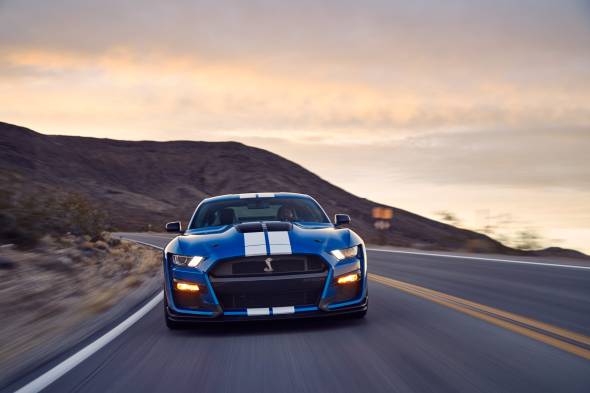
When we tested Ford’s new 2020 Mustang Shelby GT500 against the top-dog 2020 Chevrolet Camaro ZL1 1LE, the Mustang came out on top on the drag strip. But how does the front-engine Shelby stack up against the other, now mid-engine, threat from Chevy?
Greg PajoCar and Driver

During our testing, the GT500 hurtled through the quarter-mile in 11.4 seconds at 132 mph. But that was on a regular street-like surface, not a sticky, prepped drag strip. We struggled mightily with traction at launch, and our best run was with the launch control set to the lowest rpm allowed (1200 rpm) to prevent igniting a rear-tire fire. However, no surprise: with more traction far, better numbers are possible, and we’ve seen numbers below 11 seconds at drag strips, including this kid, who ran a 10.665 shortly after he acquired the car.’Murica Which Ultimate Pony Car Is the 1/4-Mile King?This Kid Ran a 10.66 Quarter Mile In His GT500
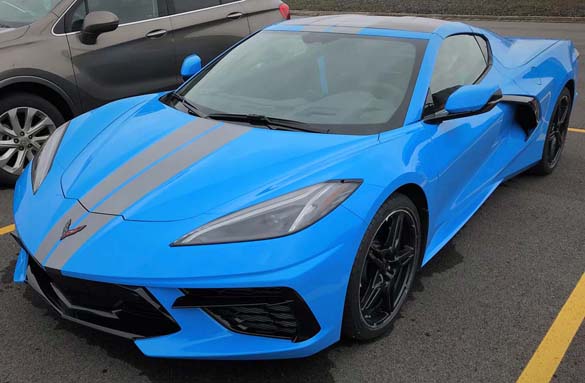
On the other hand, the 2020 Corvette has far fewer launch struggles, as it benefits from its newly acquired mid-engine layout and rear weight bias. Moving the weight distribution rearward improves launch traction, helping it jump off the line much quicker. During our testing, and despite far less horsepower, the mid-engine Vette outaccelerated the GT500 through the quarter-mile by two tenths of a second, reaching it in 11.2 seconds at 122 mph.Advertisement – Continue Reading Below
We’re starting to see other people’s numbers from both of these cars, though, as customers are starting to take deliveries of their C8 Corvettes and GT500s. Contrary to our test results, there’s a video circulating on YouTube that shows the new GT500 beating the C8 Corvette through the quarter-mile by seven-tenths of a second. It raced to the quarter-mile in 10.8 seconds while the Corvette reached it in 11.5 seconds.
Keep in mind that the driver and conditions are huge factors in quarter-mile and acceleration results. We suspect that here, the Corvette likely got bogged down on the high-grip surface, as the launch control isn’t optimized for those conditions, and the 760-hp Mustang benefited from the extra traction on the track.
Connor Hoffman for CarandDriver
2020 Chevrolet Corvette C8: Top 10 Reasons To Buy


All-new 2020 Chevrolet Corvette is now on sale, and buyers are lining up
With deliveries of the all-new 2020 Chevrolet Corvette beginning this month we know there are a lot of very excited Corvette buyers out there who are just now getting familiar with Chevrolet’s newest sports car. What drove those shoppers to the new eighth generation Corvette C8, and what are they likely discovering as their ownership experience begins?
We’ve been fortunate to drive the new Corvette on multiple occasions, on both public roads and at a closed course race facility. This has given us sufficient seat time to understand the 2020 Chevrolet Corvette’s upgraded design cues and capabilities. We could make a nearly endless list of why people want the new Corvette, but here are the top 10 reasons we think new, and prospective, Corvette buyers are lining up to sample Chevrolet’s latest supercar.
- Zero-to-60 Performance: The 2020 Chevrolet Corvette’s “base” 6.2-liter V8 engine makes 490 horsepower and 465 pound-feet of torque. That’s enough power and twisting force to catapult the Corvette to 60 mph in 3 second flat. Spring for the $5,000 Z51 performance package, with 495 hp and 470 lb-ft, plus more effective engine cooling, more advanced brake and suspension components, stickier Michelin Pilot Sport 4S tires, along with aerodynamic enhancements, and the Corvette can hit 60 mph in 2.8 seconds.
- Exceptional Value: The 2020 Corvette starts at a meager $59,995, including delivery charges. Once again, that price includes a zero-to-60 time of 3 seconds flat, making the new Corvette not only one of the quickest street-legal cars you can buy, but one of only a very few cars capable of hitting those numbers for less than $100,000. The Corvette has always offered exceptional “bang-for-the-buck” performance specs. The C8 takes this longstanding Corvette tradition to new dimension.
- Top Speed=194 MPH: Not that we endorse going almost 200 mph in any vehicle, and certainly never on a public road. But – IF you have a safe, closed course facility to do it – the Corvette can indeed hit 194 mph. That’s in base form, at the $59,995 starting price. Pro tip: ordering the Z51 performance package actually reduces the car’s top speed even at it improves the Corvette’s zero-to-60 time. The Z51’s aggressive aerodynamics increase downforce, but the added drag reduces top speed to “just” 184 mph.
- 8-Speed Dual Clutch Transmission: Unlike a traditional manual transmission (which is not offered on the new Chevrolet Corvette), a dual-clutch transmission (DCT) has the benefit of keeping the rear wheels connected to the engine, even while shifting The “dual” in dual clutch means the incoming gear is engaged even before the outgoing gear is disengaged. This makes for shifts in under 100 milliseconds, far quicker than a human. The transmission’s design and placement also lowers the Corvette’s center of gravity.
- Magnetic Selective Ride Control: General Motors perfected this advanced active suspension technology years ago. How perfect? Ferrari licenses the use of this tech from GM for its own cars. When buyers equip the new Corvette with the FE4 $1,895 option they’ll have multiple driving modes, including Tour, Sport and Track. This enables a smooth, comfortable ride during relaxed driving conditions or track-ready stiffness when driving a 2020 Corvette on a closed course. It’s the definition of the “best of both worlds”.
- Cargo Capacity: A sports car with functional cargo capacity is relatively rare, and a 3-second sports car with 13 cubic feet of cargo capacity is unheard of…until now. The new Corvette has adequate space behind the engine to fit two full sets of golf clubs, while a front trunk, under the hood, can swallow a large carry-on bag with room leftover. We’re not sure how often Corvette owners actually pick up a buddy to hit the links, but for those that do, the 2020 Corvette is ready and willing, with cargo space to spare.
- Fuel Efficiency: Yet another longstanding Corvette character trait that continues in the new Corvette. Between the car’s slippery shape, torque-laden engine and 8-speed transmission there’s the potential for very little energy expenditure while cruising at a steady highway speed…assuming the driver’s goes light on the throttle. If he does, the new Corvette can deliver between 25 and 30 mpg.
- Driver-Focused Cabin: Everything from the squared-off steering wheel to the 12-inch, reconfigurable gauge cluster to the driver-angled 8-inch touchscreen confirms the Corvette’s performance-oriented purpose. The smaller front-end provides excellent forward visibility, which adds to driver confidence when navigating corners, and all three seats options provide excellent lateral support while remaining comfortable for long drives. The days of disappointing Corvette cabins are finally in the rearview mirror.
- Open Air Cruising: The new Corvette comes as a coupe or convertible, but even in coupe form the Corvette’s roof panel is easily removed and securely stored in the rear cargo area. The convertible uses a retractable hardtop design, the first in Corvette history, that folds away in 16 seconds at speeds up to 30 mph. Powered by electric motors, the Corvette convertible offers the same coefficient of drag as the coupe, with two cool nacelles behind each seat to smooth airflow at higher speeds.
- So Many Options: Almost as exciting as the new Corvette’s performance and value is the car’s range of personalization. The option list long, and can’t be remotely covered in this top 10 list. So head over to the Corvette Configurator and play with exterior colors, interior colors, stripe designs, seat designs, wheel designs, performance upgrades and exterior accents to your heart’s desire. But be prepared to spend quite a long time there. And don’t say we didn’t warn you.
Karl Brauer for Forbes
Blaser and Florian in the hunt for top 20 of men’s skeleton World Championships


ALTENBERG, Germany (Feb. 27, 2020)– Andrew Blaser (Meridian, Idaho) and Austin Florian (Southington, Conn.) finished the first day of men’s skeleton World Championships in 22nd and 24th position, respectively. The developing athletes have little experience on the challenging course. Florian has competed in one World Cup race and two European Cup competitions in Altenberg before, while this is Blaser’s first time racing the German track.
“I like this track, I enjoy it,” Blaser said. “I’ve been struggling in Kreisel and the second run it got away from me. Trying to be dialed in for my first worlds is kind of a big task. Being here for my first big championship and racing the Germans on home ice and on a track with a reputation like Altenberg is going to pay off.”
Blaser pushed off with the 23rd best start time of 5.17 seconds and drove himself up a few spots into 21st with a downtime of 57.54 seconds in the first heat. Florian was just four-hundredths of a second off his teammate’s pace after clocking the 10th best start time of 5.04 seconds for a run of 57.58.
Blaser bettered his start to 5.12 in the second run and posted a time of 57.58 seconds to finish day one in 22nd with a total time of 1:55.12.
“If I can dial it in first run tomorrow, I can close the gap to the top 20,” Blaser said.
Florian was a tad slower in his second push with a 5.10, and he crossed the finish line in 57.71 seconds for a two-run total of 1:55.29. He’s in 24th position heading into tomorrow’s finale.
“I feel good about my start times, but it doesn’t mean anything if I can’t get down the hill,” Florian said. “When my push has been off, my driving has been on and vice versa. It’s unacceptable. I don’t feel as sharp as I did last season and I need to spend some time getting back mentally to where I was last year.”
Germans currently occupy the top three positions. Christopher Grotheer leads with a total time of 1:52.03, and he set a new track record in run two with a run of 55.86 seconds. Alexander Gassner is 0.09 seconds off the pace in second with a cumulative time of 1:52.12. Axel Jungk has a combined time of 1:52.38 for third spot. World Cup title winner Martins Dukurs from Latvia is currently fourth in 1:52.55, and can’t be counted out for the medals.
Racing continues tomorrow with the first two heats of the women’s skeleton competition at 9:30 a.m. local time, followed by the men’s skeleton finale at 1 p.m.
NBC Sports and the Olympic Channel will have broadcast and digital streaming coverage. Fans can catch all the action in spectacular high definition via NBC Sports online at NBCSports.com/Live, or through the NBC Sports app. Additional coverage will be available on OlympicChannel.com and the Olympic Channel app.
Please contact USABS Marketing & Communications Director Amanda Bird at 518-354-2250, or amanda.bird@usabs.com, with media inquiries.
Results
1. Christopher Grotheer (GER) 1:52.03 (56.17, 55.86);
2. Alexander Gassner (GER) 1:52.12 (56.21, 55.91);
3. Axel Jungk (GER) 1:52.38 (56.15, 56.23);
22. Andrew Blaser (USA) 1:55.12 (57.54, 57.58);
24. Austin Florian (USA) 1:55.29 (57.58, 57.71);
About USA Bobsled & Skeleton
USA Bobsled & Skeleton (USABS), based in Lake Placid, N.Y., is the national governing body for the sports of bobsled and skeleton in the United States. USABS would like to thank its sponsors, suppliers and contributors for their support: BMW of North America, Under Armour, Omaze, Kampgrounds of America, Snap Fitness, Boomerang Carnets, Qwixskinz, Machintek, deBotech and Carpenter. For more information, please visit the USABS website atwww.usabs.com.
C8 Corvette Secrets: The 2020 Corvette Has a Flying Car Mode


As we continue to digest all the new information that came out of last week’s First Drive Event with the 2020 Corvette Stingrays in Las Vegas, there is a new “Mode” to discuss that most Corvette enthusiasts have never heard of.
The 2020 Corvette Stingray has several “modes” that help drivers get the most out of their cars. We are already familiar with the regular driving modes that feature settings for Weather, Touring, Sport and Track, as well as the two customizable modes called MyMode and Z-Mode. But what you may not be aware of is that the 2020 Corvette Stingray’s equipped with Magnetic Ride Control also features a “Flying Car” mode.
Well, it is the 21st century after all!
Corvette’s Vehicle Performance Manager Alex MacDonald is responsible for the chassis tuning of the new Corvette and he was tasked with explaining much of the on-track performance capabilities of the new Corvette to those at Spring Mountain last week.
For the C8 Corvette, engineers have rolled out version 4.0 of Magnetic Ride Control with the biggest change to the system is the use of accelerometers rather than position sensors that measured wheel height. Here is the slide that was offered on the new Mag Ride for the C8 Corvette:

The Magnetic Ride Control is tied into the Corvette’s Performance Traction Management system and that’s where the Flying Car Mode comes into play.
When your crest an incline and the Corvette’s wheels are off the ground, they will spin faster like they are on ice or another slippery surface because there is no resistance. The performance traction control senses that and sends commands to slow the wheels. But that’s not the best reaction when on the track. The system now senses when the car’s front wheels leave the ground (and assumes that the rears will be leaving as well), and the system tells the performance traction control to ignore it because it knows that it’s temporary and that all four wheels will be back on the ground momentarily.
Here is Alex talking about the Flying Car Mode:
“The other interesting note about MR is that it communicates with the performance traction system and it tells that performance traction system that if the front wheels have just gone over a big crest that we know that one wheel-base later the rear is about to go over that same crest, we can adapt the traction control to work in that situation and we call that Flying Car Mode, which is a cool name for it, because it does detect when the car is airborne and we can alter the chassis controls to deal what happens when the car lands.”
Source:
Video by Keith Cornett
Church and Williamson finish 19th in two-man bobsled World Championships


ALTENBERG, Germany (Feb. 23, 2020)– Hunter Church (Cadyville, N.Y.) and Josh Williamson (Lake Mary, Fla.) gained a spot to finish 19th in the two-man bobsled World Championship finale in Altenberg today. It rained throughout the night, creating wet and frosty conditions for today’s final two heats.
“It was a much different day, the ice was much slower from the rain,” Church said. “Overall I’m happy to be able to clean up some things from yesterday, and I’m feeling better heading into four-man. It’s good that I’m experiencing these challenges now, and hopefully I can continue to get better.”
Church and Williamson posted start times of 5.38 and 5.35 seconds today for runs of 57.17 and 56.57 seconds, respectively. His third run was 16th best of the heat, and his final run was 10th fastest. Church and Williamson edged closer to the field and finished 19th with a four-run combined time of 3:44.49.
“Today was a good note to end on in two-man,” said USA Bobsled Head Coach Mike Kohn. “Hunter has the same championship mentality as Kaillie Humphries. He’s 23 years old and this is only his second world championship. He’s doing great.”
Germany’s Francesco Friedrich won his sixth consecutive two-man World Championship today with Thorsten Margis. The duo was dominant, and won by 1.65 seconds with a total time of 3:40.44. Johannes Lochner and Christopher Weber from Germany moved into silver medal position with an aggregate time of 3:42.09. Oskars Kibermanis and Matiss Miknis from Latvia denied the Germans a sweep of the medals. The Latvians moved up from fifth to claim the bronze medal with a cumulative time of 3:42.23. Germans Nico Walther and Eric Franke dropped back into fourth.
The 2020 World Championships will continue next week with the women’s and men’s skeleton races, a mixed skeleton team event, and the four-man bobsled competition. Raced pick up again on Thursday, Feb. 27, and will conclude on Sunday, March 1.
NBC Sports and the Olympic Channel will have broadcast and digital streaming coverage. Fans can catch all the action in spectacular high definition via NBC Sports online at NBCSports.com/Live, or through the NBC Sports app. Additional coverage will be available on OlympicChannel.com and the Olympic Channel app.
Please contact USABS Marketing & Communications Director Amanda Bird at 518-354-2250, or amanda.bird@usabs.com, with media inquiries.
Results
1. Francesco Friedrich and Thorsten Margis (GER) 3:40.44 (54.00, 54.09, 55.98, 56.37);
2. Johannes Lochner and Christopher Weber (GER) 3:42.09 (54.59, 54.59, 56.36, 56.55);
3. Oskars Kibermanis and Matiss Miknis (LAT) 3:42.23 (54.49, 54.72, 56.35, 56.67);
19. Hunter Church and Josh Williamson (USA) 3:44.49 (55.25, 55.50, 57.17, 56.57);
About USA Bobsled & Skeleton
USA Bobsled & Skeleton (USABS), based in Lake Placid, N.Y., is the national governing body for the sports of bobsled and skeleton in the United States. USABS would like to thank its sponsors, suppliers and contributors for their support: BMW of North America, Under Armour, Omaze, Kampgrounds of America, Snap Fitness, Boomerang Carnets, Machintek, deBotech and Carpenter. For more information, please visit the USABS website at www.usabs.com.
Humphries and Gibbs lead women’s bobsled World Championships after first two heats

Photo credit: IBSF
ALTENBERG, Germany (Feb. 21, 2020)– Kaillie Humphries (Carlsbad, Calif.) and Lauren Gibbs (Los Angeles, Calif.) currently lead the women’s bobsled World Championships after the first day of racing in Altenberg, Germany. The Americans have a lead of 0.21 seconds, but Humphries isn’t celebrating yet.
“There are still two more runs tomorrow and a lot can happen and change,” Humphries said. “I’m going to treat tomorrow like another race. I’ll debrief with the coaches to go over what worked and what didn’t, and we’ll come back tomorrow with our best.”
Humphries and Gibbs matched Germans Stephanie Schneider and Leonie Fiebig at the start with the fastest push time of 5.63 seconds in the opening heat. Humphries guided the Omaze branded sled to the finish in 56.47 seconds to pull away from the Germans by 0.03 seconds.
Germany’s Kim Kalicki and Kira Lipperheide put pressure on the field in the second heat with a run of 56.45 seconds, which moved them ahead of Schneider and Fiebig by a large margin of 0.33 seconds. Humphries and Gibbs responded with a blistering start time of 5.62 and downtime of 56.33 seconds to pull away even further from the field. The U.S. pair has a two-run total of 1:52.80 to give them a lead of 0.21 seconds heading into tomorrow’s final heats.
“It’s great having coach Shauna Rohbock here to go over lines at the finish, because we could debrief right away after each run to make a plan for the next run,” Humphries said. “I’ve been through four heat races before, and it’s not time to get excited yet. There’s still a lot racing left.”
Rohbock is an expert driver to gain advice from, and today is the 14-year anniversary of Rohbock’s silver medal finish at the 2006 Winter Olympic Games.
Kalicki, who won her first career World Cup medals earlier this season in Lake Placid, N.Y., and Lipperheide and currently in second place with a total time of 1:53.01. Schneider and Fiebig are in third with an aggregate time of 1:53.34. Reigning Olympic champions Mariama Jamanka and Annika Drazek from Germany are also in the medal hunt in fourth position with a cumulative time of 1:53.44.
The deciding heats for the women’s bobsled competition will take place tomorrow at 3:30 p.m. local time, following the opening heats of the men’s two-man bobsled event at 11:30 a.m.
NBC Sports and the Olympic Channel will have broadcast and digital streaming coverage. Fans can catch all the action in spectacular high definition via NBC Sports online at NBCSports.com/Live, or through the NBC Sports app. Additional coverage will be available on OlympicChannel.com and the Olympic Channel app.
Please contact USABS Marketing & Communications Director Amanda Bird at 518-354-2250, or amanda.bird@usabs.com, with media inquiries.
Results
1. Kaillie Humphries and Lauren Gibbs (USA) 1:52.80 (56.47, 56.33);
2. Kim Kalicki and Kira Lipperheide (GER) 1:53.01 (56.56, 56.45);
3. Stephanie Schneider and Leonie Fiebig (GER) 1:53.34 (56.50, 56.84);
About USA Bobsled & Skeleton
USA Bobsled & Skeleton (USABS), based in Lake Placid, N.Y., is the national governing body for the sports of bobsled and skeleton in the United States. USABS would like to thank its sponsors, suppliers and contributors for their support: BMW of North America, Under Armour, Omaze, Kampgrounds of America, Snap Fitness, Boomerang Carnets, Machintek, deBotech and Carpenter. For more information, please visit the USABS website at www.usabs.com.
Tech We Would Like to See on the C8 Corvette: Active Aero

With the highest performance versions of the seventh generation Corvette, customers were forced to make a choice. Did they want their car to have the highest possible top speed, or did they want to sacrifice some of that by bolting a slew of aerodynamic aids to their car for maximum cornering ability?
We would love for Chevrolet to take that decision out of the ordering equation for buyers of the upcoming Z models and the Grand Sport. They could give buyers the best of both worlds with the incorporation of Active Aerodynamics.
Active Aerodynamics can take many forms, from grille vents that close at high speeds to streamline a car, to suspension that lowers at speed to reduce lift. We know that the Corvette team would build a fully functional system that integrates several of these technologies into a cohesive package, just like they did on the C7 ZR1’s chassis-mounted wing and innovative balancing front underwing, but what we mostly want to focus on here is the most visible piece of such a system, the rear wing.
This unit would elevate both the performance and even the prestige of GM’s looming halo car. There are several benefits of an active rear wing that accompany their off-the-charts cool factor.
1. An active rear wing can be lowered, causing it, for all intents and purposes, to disappear, along with any drag that it was creating. Top-end General Motors Products have become so fast that the most track-worthy editions have suffered at the dragstrip because of massive fixed wings. The effects of the C7 Z06/Z07’s wickerbill spoiler have been well documented. Chevrolet officially listed the top speed of ZR1’s with the “big-wing” ZTK package as 10 MPH lower than their stock counterparts, and the Camaro ZL1 with the 1LE package has proven slower than the car it is based on, even in distances as short as a quarter-mile. Allowing these serious track performers to retract their wing, and the ZTK/Z07/1LE models become the best version of their respective model-line with no excuses or asterisks, which is what buyers that dole out more funds expect.

Photo Credit: https://www.sciencelearn.org.nz
2. Just as these wings can retract to reduce drag and improve top speed, they can be “actively” placed in full “attack mode” for maximum downforce in the corners. This increases cornering speed, stability, and driver confidence which can lead to drastically lower lap times.
3. Upon hard braking, an active wing can also go vertical, transforming into an air brake. This assists the actual brakes, resulting in shorter stopping distances. It also keeps more weight in the rear of the car, again helping with stability and, especially in a rear-wheel drive car, improved corner exit speeds.

Photo Credit: Car Magazine (UK)
All three of these traits brought to the table by an active wing radically assist the driver and make the car faster in all aspects. The coolest thing is that, with the right programming, the wing does all three automatically with seamless transitions, and, did we mention how awesome they also look?
There has been speculation about Active Aero coming to the Corvette for several years now. These rumors were fueled by GM’s own patent filings which showed a sketch of a C7 fitted with advanced aerodynamic trickery. We think the top dog mid-engine offerings are the perfect place for the General to finally deploy this technology that can already be found on the majority of the world’s supercars.
Watch These Multiple C8 Corvettes Utilize Launch Control

For the last two days we’ve been in Corvette Heaven as we were invited by Chevrolet to come out to Las Vegas and test drive the 2020 Corvette Stingray. The test consisted of two parts that included a route through the Valley of Fire state park and then today we drove the new mid-engine sports cars at Spring Mountain Motor Resort & Country Club.
Today’s driving session culminated with the very talented instructors from the Ron Fellows Performance Driving School offering hot laps around the track. Each driver gave their passenger a demonstration of the capabilities of the new Corvette and those two fast laps started with engaging launch control as each car took to the track.
With 60% of the weight of the 2020 Corvette residing over the back wheels, the Launch Control demonstration shows just how quick these cars are able to put power to the pavement as those Michelin Pilot Sport 4S summer tires quickly hook up to send the car on the track.
We will be traveling from Las Vegas to home in Tampa on Wednesday, but keep checking back as we got a lot of great photos and videos from our 2020 Corvette drive on deck!
Source:
Video by Keith Cornett
Official C8 Corvette Driving School at Spring Mountain To Start Classes this April


The Corvette Owner’s School at the Ron Fellows Performance Driving School will officially kick off its new program for the mid-engine 2020 Corvette with the first classes to start in April. And once again, Chevrolet is offering huge savings on the enhanced two-day program for just $1,000.
This announcement comes from Spring Mountain Motor Resort and Country Club, home of the Ron Fellows Performance Driving School.
“We are thrilled to be able to continue our relationship with Chevrolet and Ron Fellows here at our world-class facility. There has been an incredible buzz around the 8th generation Corvette, and what better way to kick off 2020 and our twelfth year of the school, with the all-new mid-engine Corvette,” said John Morris, CEO and co-owner of Spring Mountain.
The new C8 Corvette program features a two-day curriculum designed to provide drivers of all experience levels the skills and techniques of performance driving. You will experience both classroom and on-track driving instruction in a manner that builds upon your skills and increases your confidence with each session. You will come away from the Spring Mountain experience more knowledgeable and confident in the incredible capabilities of the 2020 Corvette.
Located just 55 miles from downtown Las Vegas, the Ron Fellows Performance Driving School offers some of the most fun you can have in a Corvette. Tuition for the two-day class is only $1,000 and includes a one-night stay in one of Spring Mountain’s luxurious condominiums. Enjoy access to the clubhouse for meals and drinks with breakfast and lunch prepared by Spring Mountain’s onsite chef.
“Our entire team here at Spring Mountain are incredibly excited about the 8th generation Corvette and cannot wait to get the new Owners School program started. I know that everyone responsible for the day-to-day operations of our school are really looking forward to providing our outstanding service and a great overall experience showcasing the next-level engineering of the new mid-engine Corvette,” said Ron Fellows, charter member of Corvette Racing and co-founder of his school at Spring Mountain.
To book your C8 Corvette Owners School, Call 800 391-6891 or view online at www.CorvetteOwnersSchool.com
Check out this photo gallery from Spring Mountain featuring the 2020 Corvette Stingray Z51 Coupes on the track!


Source: Corvette Blogger
America’s Cup: American Magic release video of Test Boat nosedive


New York Yacht Club’s America’s Cup team, American Magic have released a video of their test boat doing a spectacular nosedive while sailing off the team’s base in Newport.
The team is now in Pensacola, Florida their training base during the northern hemisphere winter.
They have taken their AC75 Defiant to Pensacola.
The video is shot from one of the team’s drones flying above and astern, whether the nosedive was intentional (to get test/simulator data) or accidental is not clear.
While splashdowns (where the bow enters the water with a spectacular splash) are commonplace on the larger AC75’s, only one boat (and maybe two) have capsized, most of the foiling mishaps have occurred on the test boats. American Magic’s test boat, named “The Mule” is designed (apart from the 38ft production M38 hull) to be as close to an AC75 as possible.
The reason for this nosedive is two-fold. First, the boat is flying very high on her foils, and second, the rudder wing breaks free of the water about midway through the low-resolution clip, and at that point the nosedive becomes inevitable. The “phenomenon” is common to all boats that have similar foiling physics such as the AC50, F50, AC72 and AC75. In the AC50 it was reckoned that a rudder wing contributed 500kg of downforce when immersed in the water, and if it breaks clear of the water then that 500kg of downforce is suddenly released triggering the nosedive.
It is not known if The Mule was flying under manual or automatic flight height control at the time.
Within the leadup to the nosedive The Mule is flying high and level, rather than going through a rear up, followed by a crash/splash which is the common routine on an AC75.
At the end of the video an on-board sequence shows the top of the rudder post being moved fore and aft – this controls the angle of attack of the wing rudder – and it is this movement coupled with the high flight height that triggered the incident causing The Mule to trip over her foils, nosedive and then capsize.
Source Sail Word
The B-21 Bomber Is the Coolest Plane We’ve Never Seen

The B-21 Raider will be the service’s first new bomber in more than 30 years.
 NORTHROP GRUMMAN
- The U.S. Air Force and Northrop Grumman released the first new images of the B-21 Raider in nearly four years.
- The bomber is similar to the B-2A Spirit but subtle differences hint at some major changes.
- The B-21 Raider is expected to fly for the first time sometime in 2022.
The U.S. Air Force and Northrop Grumman have released the first new image of the B-21 Raider bomber in nearly four years. The image, designed to show the plane in hangars at air bases across the country, shows a few more details of the stealthy bomber. According to aviation experts, the new plane looks like the B-2 bomber with some key differences.
The images were shared by Northrop Grumman, the prime contractor on the B-21 Raider program. The three images show the plane sitting in hangars at Ellsworth Air Force Base in South Dakota, Whiteman Air Force Base in Missouri, and Dyess Air Force Base in Texas. Ellsworth and Dyess are currently home to B-1B Lancer bombers while Whiteman is home to America’s fleet of B-2A Spirit bombers. The B-21 Raider will eventually replace both types.

The first image of the B-21 Raider unveiled in 2016. Some details, such as the prominent nose or beak, were not as apparent as they are in the new images.U.S. AIR FORCE
The B-21 Raider is the first new Air Force bomber since 1988, the year the B-2A Spirit was unveiled. Named after “Doolittle’s Raiders,” the force of B-25 Mitchell bombers that bombed Tokyo in the Spring of 1942, the B-21 is designed to overcome modern air defense threats, including such systems as the Russian S-400 surface-to-air missile system and Chinese J-20 stealth fighter to penetrate enemy airspace. The B-21 will be capable of carrying precision-guided conventional missions and nuclear weapons.
The B-21 will be a flying wing design, a specialty of Northrop Grumman’s since the end of World War II. The blending of the fuselage and wing, combined with the lack of horizontal and vertical stabilizers in the rear, is generally thought of as the best shape possible to avoid enemy radars from all directions. A bomber penetrating deeply into enemy territory will likely have radar waves bouncing off it from multiple angles, making all-around stealth a necessity.ADVERTISEMENT – CONTINUE READING BELOW
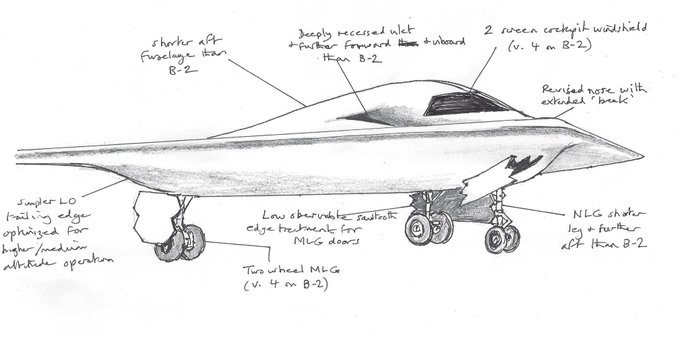
The new images sparked some conversation, as reporters and aviation enthusiasts discussed the new plane’s features. Here’s a sketch of the B-21 with notes by reporters from Aviation Week & Space Technology:Guy Norris@AvWeekGuy
@TheDEWLine and I take a stab at likely design changes on B-21 v B-2 after @northropgrumman @usairforce release new rendition. https://aviationweek.com/defense-space/new-b-21a-renderings-reveal-diminutive-size-compared-b-2a … and here’s our 1st version…
The aviation blog The Aviationist also took a stab at analysis of the photos, which you can see here.
Overall, the trend for the B-21 is a refinement of the B-2A’s original flying wing shape. The leading edge shape of the B-21 is simpler than the B-2A’s sawtooth trailing edge. The cleaner, simpler trailing edge is probably how the original stealth bomber was supposed to look, but in the 1980s a last-minute demand by the Air Force that the Spirit be capable of low-altitude flight necessitated an expensive design change. As a result, as Aviation Week’s analysts point out, the plane is likely optimized for medium- and high-altitude flight.

The B-2’s trailing edge is more pronounced than the B-21’s, as a result of a need to strengthen the plane against the stresses of low-altitude flight.JEROD HARRISGETTY IMAGES
Experts believe the B-21 will be smaller than the B-2A, running about two-thirds the size and weight of the older bomber. This is reflected in the fact that the B-21 rendering features fewer main landing gear wheels. The aircraft simply needs fewer landing wheels to support a lighter airplane. Aviation Week points out that the rendering displays a shorter fuselage and air inlets farther forward than the older bomber. This is all to increase internal volume for crew life support, fuel, sensors, and weapons. As a stealthy airplane, the B-21 must store all weapons, sensors, fuel, and other items internally, so space is at a premium.
The U.S. Air Force plans to buy at least 100 B-21 Raiders for $550 million each in 2012 dollars, or about $654 million in 2020 dollars. Ideally, the service would like 200 or more. The aircraft is currently under development at Northrop Grumman’s facilities in Palmdale, California, with the first demonstrator aircraft in the construction phase. The bomber was originally supposed to fly in late 2021, but that date will likely slide into early 2022.
Source: Kyle Mizokami Aviation Week and The Aviationist
Rare drawings, documents reveal secret history of mid engine Corvette

From an acclaimed concept car John DeLorean reportedly dismissed because he wanted something “smaller and more European,” to the design that ended a feud between a pair of GM giants — but may have set the Corvette back decades — a trove of unique documents, sketches and models tells a secret history of the 60-year quest to build a mid engine Chevrolet Corvette.
The story begins in the late 1950s with legendary Corvette chief engineer Zora Arkus-Duntov and came to fruition when the first mid engine 2020 Corvette Stingray sold for $3 million at auction in January.
Titled “The Vision Realized: 60 Years of Mid engine Corvette Design” and created by GM Design Archive & Collections, the exhibit included 19 original sketches by designers including Larry Shinoda and Tom Peters, the massive 4-Rotor rotary engine from the 1973 Aerovette engineering, a wood wind-tunnel model, even letters from Arkus-Duntov’s personal files.
“The story of the mid engine Corvette is incredibly complicated, full of fits and starts,” said Christo Datini, manager of the GM Design Archive & Collections. 
Cristo Datini at the General Motors Warren Technical Center in Warren, Michigan on Friday, January, 31, 2020 (Photo: Eric Seals, Detroit Free Press)
A mid engine Corvette was a dream shared by GM designers and engineers. The layout, in which the engine is behind the passenger compartment and immediately over the rear wheels, improves acceleration and handling. It’s been a mainstay at Ferrari for decades, and inspired repeated design and engineering projects at GM. None of them made it to production till now, largely because the Corvette’s original front-engine layout was so successful.
“Why would we change the Corvette?” GM chairman and CEO Richard Gerstenberg said to Arkus-Duntov before both men retired in the mid-1970s. “We sell every one we can make.”
‘Design without limit’
A generation of GM designers and engineers had already fought that attitude toward the sports car that debuted in 1953 model, and a couple more would before the midengine eighth-generation C8 Corvette Stingray debuted last year.
The exhibition included dozens of sketches, models, photos and documents.
“Our mission is to preserve the heritage of GM Design and educate our designers on GM’s prominence in the world of design,” Datini said. The archive also is working with the Detroit Institute of Arts on a massive exhibition dedicated to automotive design that opens this summer.
The Corvette exhibition closed at the end of January, but elements of it are likely to be displayed at other events and locations, possibly including the National Corvette Museum in Bowling Green, Kentucky, which provided materials for the collection.
Original magazines with drawings of what Corvettes could have looked like on display at the General Motors Warren Technical Center in Warren, Michigan on Friday, January, 31, 2020 (Photo: Eric Seals, Detroit Free Press)
Chevrolet Engineering Research Vehicle I, Also called SERV I and XP-708, was the beginning. A running model that debuted in 1960, the car had the looks of an Indy car and a chassis that tested what a midengine layout could do. It was “a design without limit” and an “admirable tool” to help Chevy figure out “what to put in Corvette,” said Duntov, himself a former driver in the 24 Hours of Le Mans sports car race.
CERV I was used as a test vehicle for years. Larry Shinoda, who would go on to be known as the father of the ’63 Corvette Stingray and the Mako Shark concept car, tweaked its design repeatedly as engineers tested it with seven different power trains.
GM eventually retired CERV I, selling it to the Briggs Cunningham Automotive Museum for $1. When the museum failed in the 1980s, GM bought it back for “somewhat more,” Datini said.
A model of the 1968 Chevrolet mid-engine Corvette Roadster that is one of many items for General Motors workers to see at the Corvette design display at the General Motors Warren Technical Center in Warren, Michigan on Friday, January, 31, 2020 (Photo: Eric Seals, Detroit Free Press)
Corvettes the world never saw
Shortly thereafter, Duntov heard rumors Ford was developing a Le Mans racer to challenge Ferrari and launched work on CERV II. GM decided not to race, Ford and Carroll Shelby built the GT40 that inspired “Ford vs. Ferrari,” and the CERV II was used as an engineering test bed at secret proving grounds and never seen by the public during its active lifetime. Built in 1964, CERV II had a 500-horsepower V8, 210-mph top speed and 2.8-second 0-60 mph time.
A picture of the CERV II Corvette. The sports car never went into production but it was influential in the design of the C5 production Corvette. (Photo: Eric Seals, Detroit Free Press)
“By that time, engineers and designers knew a midengine chassis was necessary” to get maximum performance from the ‘Vette, Datini said. Putting the engine behind the passenger compartment puts the car’s weight over the rear wheels to put down more power without spinning. Shifting balance from the production ‘Vette’s nose-heavy weight distribution would also improve handling.
Also in 1964, the XP-819 experimental car was being tested. Designed by Shinoda, it bore a strong resemblance to 1970 Corvettes, but Duntov hated it, calling it an “ugly duckling” at least in part because he wished his engineering team got some of the budget allotted to designing the car. It had a 327 cubic-inch V8 and pop-up headlights.
Like many concept and engineering vehicles, XP-819 was destroyed, chopped up. Years later, the pieces were found in NASCAR designer and mechanic Smokey Yunick’s garage.
Half Corvette, half Porsche
With a name GM would later recycle on a minivan, the Astro II XP-880 was never publicly identified as a Corvette, but it was one, intended for production in 1970, but never got there. It debuted at the New York auto show, featuring a nose, front fenders and Firefrost Blue paint that that foreshadowed 1970s production cars.
DeLorean, then Chevrolet general manager, asked for a rush program to create a different midengine design to match the midengine Pantera Ford was developing with Italian sports car maker De Tomaso to debut at the 1970 New York auto show. The XP-882 had a tapering body with dramatic fender flares and a louvered rear window like the Mako Shark II concept car. Like so many midengine ‘Vettes before and after, GM brass decided to stick with the tried and true front-engine layout.
Also in the 1970s GM president Ed Cole — another legendary engineer who led the development of the small block V8 and catalytic converter, among other achievements — became enamored with the Wankel rotary engine. Duntov built two midengine experimental ‘Vettes with rotary engines, glad for Cole’s support despite not sharing his enthusiasm for the engine.
Sketching and notes about the Corvette, one of the many originals on display for workers to see at the General Motors Warren Technical Center in Warren, Michigan on Friday, January, 31, 2020 (Photo: Eric Seals, Detroit Free Press)
The 1973 Corvette 2-Rotor XP-987GT was a smaller, European-scale sports car with a rotary engine. The body was all Corvette, but its chassis came from a Porsche 914. Italian design house Pininfarina built its body. GM displayed the 2-Rotor at auto shows in Frankfurt and Paris before the car disappeared, probably sold to a collector.
Bill Mitchell’s most beautiful car
At the same time, Duntov wanted to develop a bigger midengine Corvette. He and Cole hadn’t been on speaking terms since Duntov refused an annual bonus he thought was insultingly small. They made up, at least in part because Duntov wanted a budget to develop what would become the Corvette 4-Rotor Aerovette, an iconic, gull wing design. Duntov believed it was the most beautiful vehicle GM design chief Bill Mitchell oversaw in a career that included the ’57 Chevy Bel Air and ’66 Buick Riviera.
Duntov recycled the XP-882’s chassis for the Aerovette, which featured silver leather interior trim.
A picture of the Aerovette featuring bi-fold gulping doors in the sports car that was never made. It is one of many photographs, drawings and sketches on display on all things Corvette design inside the General Motors Warren Technical Center in Warren, Michigan on Friday, January, 31, 2020 (Photo: Eric Seals, Detroit Free Press)
Despite the car’s striking appearance, Duntov would come to believe his agreement to use a rotary engine was a nail in the midengine ‘Vette’s coffin.
Despite that, another midengine engineering car arrived in 1974. The XP-895 began its life with a steel body. Intrigued by the idea of lightweight materials, DeLorean asked Reynolds Aluminum to create an aluminum body. That cut the car’s weight by nearly 40%, but DeLorean pulled the plug on the project because he wanted a smaller, more European design.
That never happened, and design work on midengine ‘Vettes came to a halt for more than a decade, as GM struggled meeting the challenge of higher fuel prices.
Closing the deal
By 1986, the quest for a midengine Corvette was ready to create another giant figure, and it got one when a young designer named Tom Peters began work on the Corvette Indy concept car. Peters went on to become the chief designer of the sixth- and seventh-generation C6 and C7 Corvettes and play a key role in starting work on the 2020 C8.
With a radically short hood compared to production ‘Vettes and cutting-edge technologies including four-wheel steering, traction control and active suspension, the Indy — so named because it used a 2.65L V8 Chevy developed for Indy Car racing — kept dreams of the midengine ‘Vette alive
The 1990 CERV III — this time the C stood for “Corporate,” not Chevrolet Engineering Research Vehicle — was the next step. Datini’s research convinced him it was an attempt at a production version of the Indy.
CERV III had scissors doors and was built of Kevlar, carbon fiber and aluminum. With a 650-hp twin-turbo 5.7L V8, GM predicted a top speed of 225 mph. It debuted at the 1990 North American International Auto Show in Detroit.
After that, work on the midengine Corvette went undercover for two decades. Photos of disguised prototypes at test tracks surfaced from time to time, but the car seemed to be as much myth as metal. There are whispers the Great Recession halted work on one, setting development back years.
A display of Zora Arkus-Duntov known as “The Godfather of the Corvette” at the General Motors Warren Technical Center in Warren, Michigan on Friday, January, 31, 2020. (Photo: Eric Seals, Detroit Free Press)
Development of the 2020 Corvette Stingray began around eight years ago, a long time for most projects, but the blink of an eye when it’s the last chapter of a 60-year story.
Mark Phelan for Detroit Free Press
Chevy does a deep dive on mid-engine 2020 Corvette Stingray development in new documentary


Revolution, as the documentary is titled, will air in two parts and goes deep behind the scenes of the biggest ever change to the Corvette.
If there’s one word that describes the 2020 Chevrolet Corvette Stingray pretty darn well, it’s probably “Revolutionary.” It’s the first time in the nameplate’s history that the engine resides behind the driver, as Chevy elevates its long-running sports car to battle the world’s best.
Naturally, curious minds have to wonder what went on behind the scenes to make this car come together. Chevy has good news for you. Revolution, a two-part documentary detailing the C8-generation Corvette’s development, is set to air in the coming months, the brand said Monday.
Chevy told Roadshow the documentary will air on the Corvette’s homepage here, but for now, the quick trailer embedded above will give fans a taste of what the upcoming feature holds. There’s plenty of first-hand knowledge on display — the team that put the latest car together gets plenty of camera time. Numerous people in the mid-engine Corvette program spill how it felt to take an icon and reinvent it.
The documentary announcement comes just after Chevy announced that the production of the 2020 Corvette Stingray kicked off on Monday. With the C7-generation car in the rearview mirror, and all necessary retooling done for the mid-engine car, the workforce in Bowling Green, Kentucky is solely focused on the new Corvette.
Chevy didn’t have an exact timeline for when the first part of the documentary will air, but it should give fans eagerly awaiting their cars something to pass the time as deliveries begin in early March at the latest. Hopefully by this summer, we’ll see plenty of 2020 Corvettes on the road as the plant ships them out to their new homes.
Kaillie Humphries Wins Fourth Bobsled World Cup Of The Season In St. Moritz


Can anybody catch Kaillie Humphries? As the world cup season in bobsled approaches its end, the answer is a more and more definitive no.
Humphries clocked her fourth victory of the world cup season in St. Moritz, Switzerland, further extending her lead in the overall IBSF World Cup standings. The two-time Olympic gold medalist and her 2018 Olympic silver medalist brakewoman Lauren Gibbs tied for the best push (5.5 seconds) on their first run on the Celerina Olympia Bobrun course to secure the lead halfway through the competition with a time of 1 minute. 8.24 seconds.
Though they recorded only the fifth-best second run in 1:08.94, their overall time of 2:17.18 was enough for the win, edging Germany’s Mariana Jamanka and Kira Lipperheide by 0.16 seconds. The most consistent pair of the day, Germany’s Stephanie Schneider and Leonie Fiebig completed the podium 0.01 behind their teammates.
Download the Team USA app today to keep up with bobsled and all your favorite sports, plus access to videos, Olympic and Paralympic team bios, and more.
Thirty-four-year-old Humphries, who competed for Canada and has only been representing the United States since November, has already proven herself a valuable asset to Team USA. She and Gibbs began their 2020 season with a pair of wins in Lake Placid, New York, and Humphries drove with Sylvia Hoffman in last week’s victory in Koenigssee, Germany. Humphries also has a bronze medal from Innsbruck, Austria, to her name this season.
The U.S. will be absent from the final world cup competition over Valentine’s Day weekend in Sigulda, Latvia, in order to prepare for the world championships in Altenberg, Germany at the end of February.
With Saturday’s results taken into account, Humphries has accumulated 1,484 points in the world cup standings, extending her lead ahead of Stephanie Schneider, who holds second place with 1,411. 2019 world cup titlist Jamanka is currently third with 1,381.
Source: Blythe Lawrence, Team USA
A Le Mans Winner Ripped The C8 Corvette Around The Nürburgring In 7 Minutes 29.9 Seconds

When you’re Chevrolet and you have access to five-time Le Mans winner Oliver Gavin, it’s a smart idea to shove him behind the wheel of a new C8 Corvette with the Z51 performance package and point him out for a flying lap of the Nordschleife. These lap times are largely irrelevant as they absolutely do not correlate to driving enjoyment or real-world usable performance, but it’s a slightly abstract way to compare the relative abilities of sports cars.
With ideal conditions and an incredibly capable driver, Chevrolet managed a lap time of 7 minutes and 29.9 seconds. That’s quicker than a recent independent test Porsche 992 time, and Chevrolet’s own high-powered Camaro ZL1. That said, it’s 16 seconds off the pace of the C7-generation Corvette Z06. Interesting? Maybe.
Chevrolet confirmed to RoadShow that this was the lap time, as hidden (below) in a teaser video for its upcoming documentary on the development of the C8.

Are you and I capable of this lap time? Hell no. But the car is capable of it in the right hands, and I guess that has bragging rights of some kind.
Obviously this is still just the base model Corvette with its 495 horsepower V8 mounted in the middle. The Z51 pack adds aero bits, better tires, better suspension, and better cooling for the entire car. There will be more powerful, better, and faster Corvettes coming, but for now you can rest assured knowing a C8 Corvette is slightly faster around the ‘ring than the big bad supercharged Camaro. That is, unless the ZL1 was of the 1LE variety (which ran a 7:16.04).
Bradley Brownell for Jalopnik
Chevrolet Celebrates the Start of Regular Production for the 2020 Corvette Stingray


Zora’s dream of bringing a mid-engine Corvette to market has finally been fulfilled!
Chevrolet is celebrating the Start of Regular Production (SORP) of the 2020 Corvette Stingray today and they shared this photo of a Black mid-engine Coupe on the Corvette assembly line in Bowling Green, KY.
The car is the VIN 001 Corvette that was purchased by Rick Hendrick for $3 million last month at Barrett-Jackson. Chevrolet told us previously that the first mid-engine Corvette produced for customers would be a Black Coupe with the Z51 package.
Here is Chevrolet’s tweet celebrating the start of C8 production from this afternoon:
Chevrolet is saying that initial vehicle shipments to dealers are expected to begin in late February or early March.
Congratulations to all those who worked on the new Corvette to get it to this point and we are excited for all of our friends that have a new C8 Corvette on order. The new Corvette Stingray is a grand slam home run for Chevy and from it, we will see a paradigm shift in how people will view mid-engine sports cars in the future.
And with VIN 001 coming of the Corvette assembly line today, that future is now!
Update
Chevrolet also offered up this trailer for a documentary of the C8 Corvette’s development called Revolution:
Corvette Blogger
Corvette Heaven: 2020 Corvettes at the Corvette Assembly Plant

![[PICS] Corvette Heaven Part II: 2020 Corvettes at the Corvette Assembly Plant](https://i0.wp.com/www.corvetteblogger.com/images/content/2020/020120_107c.jpg?w=590)
Following Jeremy Welborn’s insightful post last week on Customer Ordered 2020 Corvette Production Starting, a reader left a comment about stopping by the Corvette Assembly Plant and seeing twenty-five C8 Corvettes in the parking lot. Thanks to Jeremy’s follow-up, Jay sent us some of his favorites that he took and gave us permission to share.
We’re calling this Corvette Heaven Part II as it seems to dovetail perfectly with yesterday’s blog post with an instagram video showing fifteen 2020 Corvettes lined up in a row.
From Jay Shellabarger:
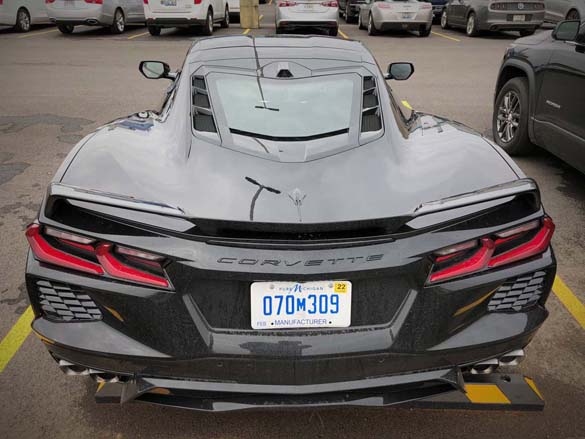
I was at the Bowling Green Assembly Plant and Museum to see Shane for my Museum Delivery on Thursday, January 30th from 2:30pm to 4:30pm. I went directly to the Assembly Plant and looked at twenty-five C8 Corvettes in the parking lot and I took a hundred photos. I had been told all the pre-production cars would be smashed. I read where you state the VIN numbers are 5100001. Starting with 51 and all the cars I saw started with 50. I took photos of the VIN numbers too. I saw cars 5000028 (#28), 30, 56, 62, 124, 137, 138. 139 many up to number 5000375 (#375). I had a fun afternoon driving into the different parking lots (including employee parking lots) and looking at the C8’s produced. They are simply BADASS looking and I can’t wait to obtain my white C8.
Jay managed to capture nine of the twelve colors and several cars have full-length body stripes. We noticed that Jay also captured a Sebring Orange 2020 Corvette Stingray Coupe wearing thr 5VM Visible Carbon Fiber Aero Kit:1

Jay tells us he has an Arctic White C8 Coupe on order and he is customizing it with the High Wing and he also tells us he’ll be adding his own stripes to the car as well as chrome wheels! Sounds like a stunner, Jay!
Here’s the photos of the C8 Corvettes from the Bowling Green Assembly Plant last week:





Source:
Photos by Jay Shellabarger
Florian top American finisher in St. Moritz’s men’s skeleton World Cup

ST. MORITZ, Switzerland (Jan. 30, 2020)– Austin Florian (Southington, Conn.) was the top American finisher in this morning’s men’s skeleton World Cup after finishing 19th in St. Moritz. This was Florian’s second career competition on the all-natural track.
Florian was tied for 16th position with Austrian Samuel Maier after a first heat time of 1:08.69. The American bettered his start time from 4.92 to 4.89 seconds in the final heat, and despite a nice looking run Florian fell back three spots with a downtime of 1:09.16. He finished 19th with a combined time of 2:17.85.
Alex Ivanov (Carlisle, Mass.) and Andrew Blaser (Meridian, Idaho) finished 26th and 29th, respectively. Blaser never competed in St. Moritz before today, and Ivanov had just two European Cup competitions under his belt heading into this week’s race. Ivanov clocked a start time of 5.06 for a run of 1:09.55, while Blaser pushed off the block in 4.90 for a downtime of 1:10.00.
Martins Dukurs from Latvia was today’s victor with a total time of 2:15.89. Germany’s Felix Keisinger claimed the silver medal with a two-run total of 2:16.20, followed closely behind by his teammate Axel Jungk in third with a cumulative time of 2:16.23. Sungbin Yun of Korea was the first run leader, but he fell back into fourth with only the ninth best second heat time. The Chinese are starting to stake their claim in the sport leading into 2022. Wengang Yan and Wenquiang Geng finished seventh and ninth today.
Racing continues with the women’s skeleton competition at 1 p.m. local time. NBC Sports and Olympic Channel will have broadcast and digital streaming coverage. Fans can catch all the action in spectacular high definition via NBC Sports online at NBCSports.com/Live, or through the NBC Sports app. Additional coverage will be available on OlympicChannel.com and the Olympic Channel app.
Please contact USABS Marketing & Communications Director Amanda Bird at 518-354-2250, or amanda.bird@usabs.com, with media inquiries.
Results
1. Martins Dukurs (LAT) 2:15.89 (1:07.73, 1:08.16);
2. Felix Keisinger (GER) 2:16.20 (1:07.98, 1:08.22);
3. Axel Jungk 2:16.23 (1:07.79, 1:08.44);
19. Austin Florian (USA) 2:17.85 (1:08.69, 1:09.16);
26. Alex Ivanov (USA) (1:09.55, DNS);
29. Andrew Blaser (USA) (1:10.00, DNS);
About USA Bobsled & Skeleton
USA Bobsled & Skeleton (USABS), based in Lake Placid, N.Y., is the national governing body for the sports of bobsled and skeleton in the United States. USABS would like to thank its sponsors, suppliers and contributors for their support: BMW of North America, Under Armour, Omaze, Kampgrounds of America, BiPro, Boomerang Carnets, Hudl, Tesa Tape, PVS International, Ferris Mfg. Corp, Machintek, deBotech and Carpenter. For more information, please visit the USABS website atwww.usabs.com.
IBSF World Cup makes seventh stop on famed St. Moritz track


ST. MORITZ, Switzerland (Jan. 29, 2020)– The famed all-natural iced track of St. Moritz will host the seventh of eight stops on the International Bobsleigh and Skeleton Federation World Cup tour this week.
This will be the last World Cup of the season for the U.S. bobsledders. The bobsled team has opted to spend extra time in Germany to prepare for the 2020 World Championships in lieu of traveling to Latvia for the eighth and final World Cup.
The detailed schedule is as follows, with all times listed in local time:
Friday, Jan. 31
9:30 a.m.: Men’s skeleton heat #1
11:15 a.m.: Men’s skeleton heat #2
1 p.m.: Women’s skeleton heat #1
2:45 p.m.: Women’s skeleton heat #2
Saturday, Feb. 1
9:30 a.m.: Women’s bobsled heat #1
11 a.m.: Women’s bobsled heat #2
1 p.m.: Men’s two-man bobsled heat #1
2:30 p.m.: Men’s two-man bobsled heat #2
Sunday, Feb. 2
10 a.m.: Four-man bobsled heat #1
11:30 a.m.: Four-man bobsled heat #2
NBC Sports and Olympic Channel will have broadcast and digital streaming coverage of the IBSF Bobsled & Skeleton World Cup in St. Moritz, Switzerland from January 31- February 2. Fans can catch all the action in spectacular high definition via NBC Sports online at NBCSports.com/Live, or through the NBC Sports app, which is available on the Apple App Store, Google Play, Windows Store, Roku Channel Store, Apple TV and Amazon Fire. Additional coverage will be available on OlympicChannel.com and the Olympic Channel app.
Savannah Graybill (Denver, Pa.), Megan Henry (Roxbury, Conn.) and Kendall Wesenberg (Modesto, Calif.) will represent Team USA in the women’s skeleton competition, while Andrew Blaser (Meridian, Idaho), Austin Florian (Southington, Conn.) and Alex Ivanov (Carlisle, Mass.) will compete in the men’s race.
Wesenberg has raced in St. Moritz five times, and she claimed her first career World Cup medal, a silver, on the Swiss course in January 2017. The gliding track suits Wesenberg’s driving style, and she’s a favorite for the medals on Friday. Henry has competed in two Intercontinental Cup competitions in St. Moritz, while Graybill has raced in three World Cup races on the famed track.
Blaser has never competed in St. Moritz before. Ivanov has two European Cup competitions under his belt on the Swiss course, while Florian has raced in one World Cup in St. Moritz.
Kaillie Humphries (Carlsbad, Calif.) and Lauren Gibbs (Los Angeles, Calif.) will team together for the fifth time this season. Humphries and Gibbs started the season with double gold medals. Humphries has a history of success in St. Moritz, having earned three World Cup medals and the 2013 World Championship title there.
St. Moritz is one of the few tracks outside of North America that Hunter Church (Cadyville, N.Y.) has some experience on. Church raced to 15th place in the 2018 Junior World Championships in Switzerland. Church will race with Josh Williamson (Lake Mary, Fla.) in Saturday’s two-man race. Williamson, Jimmy Reed (Garmisch, Germany) and Kris Horn (Pembroke, Mass.) will be Church’s push crew on Sunday in the four-man completion, which is the final four-man race of the World Cup season.
Please contact USABS Marketing & Communications Director Amanda Bird at 518-354-2250, or amanda.bird@usabs.com, with media inquiries.
About USA Bobsled & Skeleton
USA Bobsled & Skeleton (USABS), based in Lake Placid, N.Y., is the national governing body for the sports of bobsled and skeleton in the United States. USABS would like to thank its sponsors, suppliers and contributors for their support: BMW of North America, Under Armour, Omaze, Kampgrounds of America, BiPro, Boomerang Carnets, Hudl, Tesa Tape, PVS International, Ferris Mfg. Corp, Machintek, deBotech and Carpenter. For more information, please visit the USABS website at www.usabs.com.
###
Mid-Engined Chevy Corvette C8 Production Has Started: Report

[UPDATE] Contacted by Motor1.com, GM spokesperson Chris Bonelli says production of the new Corvette will begin in February.
It’s a great day for those who have signed their names on the dotted line to buy a C8 as it appears production of the mid-engined Corvette has finally started. The eighth generation of Chevrolet’s popular sports car was originally scheduled to hit the assembly line towards the end of 2019, but the UAW strike took its toll and forced General Motors to push back production until February.
It looks like they’ve managed to get everything ready a few days sooner, with production at the Bowling Green, Kentucky factory now underway. The reveal comes to us from Chevy salesperson Mike Davenport through his YouTube channel called “Chevy Dude” where he regularly posts videos about everything interesting that’s going on related to the C8 and other models that have the bowtie emblem. He was the first to break the news about Chevy cutting back on dealer allocations for the Corvette’s 2020 model year, which was shortly confirmed to Motor1.com by a spokesperson.
It goes without saying Chevy Dude is talking about the production of customer cars, including his very own C8. Another tidbit revealed is about the cancellation of the optional exposed carbon fiber ground effects for the 2020MY due to supplier issues. If you have ordered the car already with this option, Chevy will have no other way but to delete it.
For those who haven’t pre-ordered the new Corvette and are interested in getting the 2020MY, it appears April is going to be the last month when dealers will be able to ask Chevy for cars. Interestingly, Chevy Dude also knows the production of the mid-engined sports car will transition to the 2021MY in September.
That effectively means the initial model year of the C8 will only be in production for about seven months. We also get to learn the first cars will hit dealers across the country around mid-February or closer to the end of the month.
As you might have heard already, the 2021MY is rumored to come with a price bump, but nothing is official at this point. All we have for the time being is a rumor originating from a “well-placed source” cited by Motor Trend who is saying the Corvette will lose the sub-$60,000 sticker. Chevy Dude doesn’t expect the price increase to be significant, based on his 20-year experience in selling cars and analyzing Corvette pricing changes from one model year to the next.
Motor1.com has reached out to Chevy for comment and will update the article if we get a response.
Source: Chevy Dude / YouTube
ROLEX 24 AT DAYTONA – AN IMPRESSIVE DEBUT FOR THE NEW CORVETTE C8.R


The 58th Rolex 24 at Daytona, the first round of the 2020 IMSA WeatherTech SportsCar Championship season, saw the first race for the new Corvette C8.R, the participation of an all-female driver line-up, 2019 NASCAR champion Kyle Busch’s first start in a 24-hour race and Ben Keating at the wheel of two different cars.
A NOTEWORTHY DEBUT FOR THE NEW CORVETTE C8.R
The #3 Corvette C8.R finished the first 24-hour race of its career in fourth place in GTLM (the equivalent of LMGTE Pro at the 24 Hours of Le Mans). Drivers Antonio García, Jordan Taylor and Nicky Catsburg encountered zero problems with the car and completed 785 laps (nearly 5,000 kilometers). Unfortunately, the same cannot be said of the #4 Corvette C8.R of Gavin-Milner-Fässler. As the car was in the top 5 in its class going into the ninth hour, an oil leak caused the car to return to its garage. The leak was found to be in an area that forced the mechanics to remove the engine for repair and the work took almost nine hours. The #4 was then able to hit the track again and finished the race in 36th place.
Much like the 24 Hours of Le Mans, the 24 Hours of Daytona is an extremely challenging race. To make it to the checkered flag with an all-new car is already a major accomplishment for Corvette Racing. The American team’s next stop is the 6 Hours of the Circuit of The Americas on Sunday 23 February in Austin, the fifth round of the 2019-2020 FIA World Endurance Championship season.
AN ALL-FEMALE DRIVER LINE-UP
All-female driver line-up Christina Nielsen, Katherine Legge, Tati Calderon and Rahel Frey shared GEAR Racing powered by GRT Grasser’s Lamborghini Huracan GT3 in the GTD class, but the car was forced to retire after a fire.
KYLE BUSCH ENJOYS HIS FIRST ENDURANCE RACE
2019 NASCAR champion Kyle Busch took the start in his first Rolex 24 at Daytona at the wheel of the AIM VASSER SULLIVAN team’s Lexus RC-F GT3. Along with teammates Parker Chase, Jack Hawksworth and Michael de Quesada, Busch finished 26th overall and ninth in the GTD class. The American driver pulled off a double and a triple stint without the slightest mistake and said after the race he really enjoyed the experience and hopes to return for the overall win.
BEN KEATING DOUBLES DOWN
Ben Keating participated in his 10th Rolex 24 at Daytona at the wheel of not one but two cars: the #52 ORECA 07 fielded by PR1 Mathiasen Motorsports in the LMP2 class and the #74 Mercedes AMG-GT3 fielded by Riley Motorsports in GTD. Both cars crossed the finish line, the #52 ORECA 07 in 10th place overall and second in its class two laps from the winners, and the #74 Mercedes AMG-GT3 in 29th place overall and 11th in its class. This was the fifth time Keating participated in the race with two different cars.
Source: 24H LE MANS
Radical New Corvette Renews Interest In American Cars In Japan

Having just captured the North American Car of the Year gong, the revolutionary all-new Chevrolet Corvette Stingray (C8), the first-ever Vette to get a mid-engined layout and right-hand drive, has just been unveiled in Japan for the first time. Given the fact that this reveal at the Tokyo Auto Salon was the first time that this radical new Vette has been shown anywhere in Asia, the reception was nothing short of rapturous.
At the world’s third largest customizing show, after SEMA and Germany’s Essen Motor Show, the Tokyo Auto Salon, staged inside the massive Makuhari Messe site became the location for GM Japan to unveil their biggest, most high profile launch in a decade.
Sitting on the stand in Zeus Bronze Metallic with a light tan-colored leather interior, GM Japan’s president Tadashi Wakamatsu explained to the thousands of gathered press and onlookers that the Japanese market would get a US-spec “2LT” and the high performance “3LT” and that deliveries would start in early 2021.Today In: Lifestyle
Asking several of the assembled media and Vette fans in the audience about their interest in the new coupe, this writer was not surprised to learn that all interviewees found the revolutionary new mid-engined layout, in comparison to the outgoing front-engined setup employed through seven generations of Corvette since the first 1953 model, especially appealing.

All pundits also agreed that the recently launched and highly rated movie “Ford v Ferrari” had heightened their desire to see the all-new Vette.
“Sure the Vette is not a Ford, but its a reasonably-priced mid-engined American muscle car and that is more than worthy of attention,” said one Vette fan. In a country where American cars account for less than 2 percent of the market, it is rare to hear car buyers speaking in such glowing terms of American cars.
Several other audience members said that they found the all-new mid-engined layout and right-hand-drive feature “extremely appealing.” Even though the starting price in Japan will hover around $100,000, in contrast to the surprisingly low $60,000 entry level sticker price in the U.S., dozens of Japanese onlookers expressed great interest in an American-made supercar that undercuts many of its European rivals like Lamborghini, McLaren and many Ferraris by less than half.
Even at that $100,000 entry level price in Japan, one sports car fan said, “I think Chevrolet have pretty much pulled a rabbit out of a hat here. Apart from the near 500 hp V8, which has switched from front-engined to mid-engined, it gets lightweight hi-tech aluminum construction, its composite and it has carbon fiber in it. And I love that sleek supercar silhouette.”
That is all true. But one of the main ways that parent company GM was able to keep the new Corvette’s starting price under $60,000 back home is to leverage the company’s economies of scale, with specific reference to the brand’s new Global B electrical platform. At last November’s L.A. Auto Show, I listened as Corvette chief engineer Tange Juechter explained how this new platform would provide the wiring, computers and structure for active safety systems, infotainment systems and even the groundwork for future electric cars.
GM Japan’s Wakamatsu couldn’t hide his joy as he unveiled the new Vette by saying, “We have a car here that gets inspiration from both an F35 jet fighter and and F1 race car. That great design, the all-new mid-engined V8 power, 0-60mph in 3 seconds and an appealing price tag is generating tremendous buzz in Japan.” And that will no doubt lead to unprecedented Vette sales in Japan. Time will tell.
Source: Peter Lyon for Forbes
Exclusive! C8.R Corvette 5.5L DOHC V-8 Pics and How the Flat-Plane Crank Alters Its Iconic Sound


There’s A New Engine In The C8.R Corvette, And It Sounds Nothing Like Its Predecessor.
They say beauty is in the eye of the beholder, and although that’s true, it can also be in the ear of the listener.
Since the Corvette first hit the streets back in the 1950s, it was imbued with the beautiful and nearly magical sound of V-8 performance. It was a deep, bass-filled rumble that just oozed a feeling of power. Over the years, the sound emanating from Corvettes, both on the street and at the track, had a distinctive note that became synonymous with the car. When the Corvette moved to the LS1 in 1997, the firing order was tweaked a bit, and although the sound did change, it still had that deep rumble that we all love.
But the only thing constant in the world is change. For the C8.R, Chevrolet Racing really changed things up with its new mid-engine marvel, but it wasn’t the engine placement that ended the car’s iconic sound signature. It was the engine itself. Gone is the deep baritone exhaust note, replaced instead with a high-pitched Ferrari-like sound. Think puberty in reverse. And although we love the sound of a wound-out Ferrari or other Italian supercars, having that pitch emanate from the back of a Corvette is something that will be hard to get used to. We’re not saying the sound is bad—it’s actually pretty badass—but it’s not even close to the sound signature we’ve come to associate with Corvettes.

The real culprit here isn’t the new 5.5L DOHC V-8 that Chevrolet moved to. Instead, it was the choice to go with a high-revving flat-plane crank. This drastically changed the firing order of the engine and eliminated the classic American V-8 sound that’s typical with the firing sequence of a traditional cross-plane crank. But we know what you’re thinking: “Well, this is just the race car, so I’m going to be able to get my V-8 rumble fix from the production car!” Well, yeah, for now. You see, for Chevrolet Racing to run this new DOHC flat-plane crank mill in the C8.R, it has to, according to the rules, run a similar engine in at least 300 production cars. So does this mean that an eventual C8 Z06 variant will lose its iconic exhaust note?


‘Lost Corvettes’ to be given away: Photos of all 36 rare Chevrolet Corvette sports cars

52 PHOTOS2:11 p.m. EST Jan. 26, 2020 This 1953 Corvette will be given away as one of the “Lost Corvettes” in a promotion by the Corvette Heroes to benefit the National Guard Educational Foundation.CORVETTE HEROES
 This 1953 Corvette will be given away as one of the “Lost Corvettes” in a promotion by the Corvette Heroes to benefit the National Guard Educational Foundation.CORVETTE HEROES
 This 1954 Corvette will be given away as one of the “Lost Corvettes” in a promotion by the Corvette Heroes to benefit the National Guard Educational Foundation.CORVETTE HEROES
 This 1954 Corvette will be given away as one of the “Lost Corvettes” in a promotion by the Corvette Heroes to benefit the National Guard Educational Foundation.CORVETTE HEROES
 These 1954 (left) and 1955 Corvettes will be given away as one of the “Lost Corvettes” in a promotion by the Corvette Heroes to benefit the National Guard Educational Foundation.CORVETTE HEROES
 This 1954 Corvette will be given away as one of the “Lost Corvettes” in a promotion by the Corvette Heroes to benefit the National Guard Educational Foundation.CORVETTE HEROES
 This 1955 Corvette will be given away as one of the “Lost Corvettes” in a promotion by the Corvette Heroes to benefit the National Guard Educational Foundation.CORVETTE HEROES
 This 1955 Corvette will be given away as one of the “Lost Corvettes” in a promotion by the Corvette Heroes to benefit the National Guard Educational Foundation.CORVETTE HEROES
 This 1956 Corvette will be given away as one of the “Lost Corvettes” in a promotion by the Corvette Heroes to benefit the National Guard Educational Foundation.CORVETTE HEROES
 This 1956 Corvette will be given away as one of the “Lost Corvettes” in a promotion by the Corvette Heroes to benefit the National Guard Educational Foundation.CORVETTE HEROES
 This 1957 Corvette will be given away as one of the “Lost Corvettes” in a promotion by the Corvette Heroes to benefit the National Guard Educational Foundation.CORVETTE HEROES
 This 1958 Corvette will be given away as one of the “Lost Corvettes” in a promotion by the Corvette Heroes to benefit the National Guard Educational Foundation.CORVETTE HEROES
 This 1959 Corvette will be given away as one of the “Lost Corvettes” in a promotion by the Corvette Heroes to benefit the National Guard Educational Foundation.CORVETTE HEROES
 This 1960 Corvette will be given away as one of the “Lost Corvettes” in a promotion by the Corvette Heroes to benefit the National Guard Educational Foundation.CORVETTE HEROES
 This 1960 Corvette will be given away as one of the “Lost Corvettes” in a promotion by the Corvette Heroes to benefit the National Guard Educational Foundation.CORVETTE HEROES
 This 1961 Corvette will be given away as one of the “Lost Corvettes” in a promotion by the Corvette Heroes to benefit the National Guard Educational Foundation.CORVETTE HEROES
 This 1962 Corvette will be given away as one of the “Lost Corvettes” in a promotion by the Corvette Heroes to benefit the National Guard Educational Foundation.CORVETTE HEROES
 This 1963 Corvette will be given away as one of the “Lost Corvettes” in a promotion by the Corvette Heroes to benefit the National Guard Educational Foundation.CORVETTE HEROES
 This 1964 Corvette will be given away as one of the “Lost Corvettes” in a promotion by the Corvette Heroes to benefit the National Guard Educational Foundation.CORVETTE HEROES
 This 1965 Corvette will be given away as one of the “Lost Corvettes” in a promotion by the Corvette Heroes to benefit the National Guard Educational Foundation.CORVETTE HEROES
 This 1965 Corvette will be given away as one of the “Lost Corvettes” in a promotion by the Corvette Heroes to benefit the National Guard Educational Foundation.CORVETTE HEROES
 This 1966 Corvette will be given away as one of the “Lost Corvettes” in a promotion by the Corvette Heroes to benefit the National Guard Educational Foundation.CORVETTE HEROES
 This 1967 Corvette will be given away as one of the “Lost Corvettes” in a promotion by the Corvette Heroes to benefit the National Guard Educational Foundation.CORVETTE HEROES
 This 1968 Corvette will be given away as one of the “Lost Corvettes” in a promotion by the Corvette Heroes to benefit the National Guard Educational Foundation.CORVETTE HEROES
 This 1968 Corvette will be given away as one of the “Lost Corvettes” in a promotion by the Corvette Heroes to benefit the National Guard Educational Foundation.CORVETTE HEROES
 This 1969 Corvette will be given away as one of the “Lost Corvettes” in a promotion by the Corvette Heroes to benefit the National Guard Educational Foundation.CORVETTE HEROES
 This 1970 Corvette will be given away as one of the “Lost Corvettes” in a promotion by the Corvette Heroes to benefit the National Guard Educational Foundation.CORVETTE
 This 1970 Corvette will be given away as one of the “Lost Corvettes” in a promotion by the Corvette Heroes to benefit the National Guard Educational Foundation.CORVETTE
 This 1971 Corvette will be given away as one of the “Lost Corvettes” in a promotion by the Corvette Heroes to benefit the National Guard Educational Foundation.CORVETTE
 This 1972 Corvette will be given away as one of the “Lost Corvettes” in a promotion by the Corvette Heroes to benefit the National Guard Educational Foundation.CORVETTE
 This 1973 Corvette will be given away as one of the “Lost Corvettes” in a promotion by the Corvette Heroes to benefit the National Guard Educational Foundation.CORVETTE
 This 1973 Corvette will be given away as one of the “Lost Corvettes” in a promotion by the Corvette Heroes to benefit the National Guard Educational Foundation.CORVETTE
 This 1974 Corvette will be given away as one of the “Lost Corvettes” in a promotion by the Corvette Heroes to benefit the National Guard Educational Foundation.CORVETTE
 This 1975 Corvette will be given away as one of the “Lost Corvettes” in a promotion by the Corvette Heroes to benefit the National Guard Educational Foundation.CORVETTE
 This 1975 Corvette will be given away as one of the “Lost Corvettes” in a promotion by the Corvette Heroes to benefit the National Guard Educational Foundation.CORVETTE
 This 1976 Corvette will be given away as one of the “Lost Corvettes” in a promotion by the Corvette Heroes to benefit the National Guard Educational Foundation.CORVETTE
 This 1976 Corvette will be given away as one of the “Lost Corvettes” in a promotion by the Corvette Heroes to benefit the National Guard Educational Foundation.CORVETTE
 This 1977 Corvette will be given away as one of the “Lost Corvettes” in a promotion by the Corvette Heroes to benefit the National Guard Educational Foundation.CORVETTE
 This 1978 Corvette will be given away as one of the “Lost Corvettes” in a promotion by the Corvette Heroes to benefit the National Guard Educational Foundation.CORVETTE
 1979 Corvette will be given away as one of the “Lost Corvettes” in a promotion by the Corvette Heroes to benefit the National Guard Educational Foundation.CORVETTE
 This 1980 Corvette will be given away as one of the “Lost Corvettes” in a promotion by the Corvette Heroes to benefit the National Guard Educational Foundation.CORVETTE
 This 1981 Corvette will be given away as one of the “Lost Corvettes” in a promotion by the Corvette Heroes to benefit the National Guard Educational Foundation.CORVETTE
 This 1982 Corvette will be given away as one of the “Lost Corvettes” in a promotion by the Corvette Heroes to benefit the National Guard Educational Foundation.CORVETTE
 This 1984 Corvette will be given away as one of the “Lost Corvettes” in a promotion by the Corvette Heroes to benefit the National Guard Educational Foundation.CORVETTE
 This 1985 Corvette will be given away as one of the “Lost Corvettes” in a promotion by the Corvette Heroes to benefit the National Guard Educational Foundation.CORVETTE
 This 1985 Corvette will be given away as one of the “Lost Corvettes” in a promotion by the Corvette Heroes to benefit the National Guard Educational Foundation.CORVETTE
 This 1985 Corvette will be given away as one of the “Lost Corvettes” in a promotion by the Corvette Heroes to benefit the National Guard Educational Foundation.CORVETTE
 This 1986 Corvette will be given away as one of the “Lost Corvettes” in a promotion by the Corvette Heroes to benefit the National Guard Educational Foundation.CORVETTE
 This 1987 Corvette will be given away as one of the “Lost Corvettes” in a promotion by the Corvette Heroes to benefit the National Guard Educational Foundation.CORVETTE
 This 1988 Corvette will be given away as one of the “Lost Corvettes” in a promotion by the Corvette Heroes to benefit the National Guard Educational Foundation.CORVETTE
 This 1989 Corvette will be given away as one of the “Lost Corvettes” in a promotion by the Corvette Heroes to benefit the National Guard Educational Foundation.CORVETTE
 These Corvettes, known as the “Lost Corvettes,” will be given away in a promotion by the Corvette Heroes to benefit the National Guard Educational Foundation.